

Guatemala’s Arévalo Denies Joint Strikes: A Sovereignty Charade?
POLICY WIRE — Guatemala City, Guatemala — Nobody seems to agree on whether America’s shadowy hand is, or isn’t, orchestrating anti-drug operations on Guatemalan turf. And...

POLICY WIRE — Guatemala City, Guatemala — Nobody seems to agree on whether America’s shadowy hand is, or isn’t, orchestrating anti-drug operations on Guatemalan turf. And President Bernardo Arévalo? He isn’t having it—not if a recent report from a major U.S. newspaper suggested otherwise, anyway. You’d think these things would be simple, right? A clear yes or no. Instead, we’ve got layers of diplomatic speak, denials, and a peek into the ever-thorny relationship between a Latin American nation striving for autonomy and its powerful northern neighbor, ever-vigilant (or perhaps just overreaching) in the ongoing drug war.
It began when The New York Times claimed an accord had been struck. Joint strikes. Heavy stuff. But Arévalo, fresh from a political shake-up, promptly batted that notion away on Thursday, straight up denying the existence of an agreement. This isn’t just semantics; it’s a tightrope walk over national sovereignty, something any leader, from Guatemala to Pakistan, has to mind carefully. You can’t just invite foreign boots on your soil without an uproar, no matter the perceived good. That’s a lesson countless nations in the global south learned the hard way. It’s a very particular kind of delicate dance, this push-and-pull with Uncle Sam.
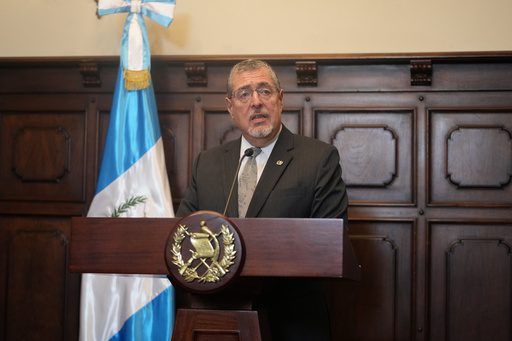
Arévalo stated unequivocally, “There’s no agreement. There’s a request that falls within the framework of existing agreements in several countries.” It’s a precise distinction, designed, you’d reckon, to reassure his constituents and, perhaps, to give Washington a diplomatic out. But it still sounds an awful lot like “yes, but no.” He continued, outlining the scope of current collaborations: “What we’re signing are types of collaboration that have been taking place in the past. We conduct maritime interdictions where the United States has been collaborating with training, capacity building and equipment.” Not exactly stealthy, boots-on-the-ground raids, is it?
The President isn’t just making a statement; he’s planting his flag. Because Arévalo said the government’s actions are in accordance with Guatemalan law — and the Constitution. And here’s the kicker, the point where legal technicality meets political reality: “The only body that can authorize operations involving soldiers on Guatemalan soil is the Congress of the Republic. The Guatemalan government is not requesting this cooperation and has no plans to do so.” That’s a firm line in the sand. Or, rather, on the map. It puts the ball squarely in his own country’s legislative court, making any U.S. desires for direct military action a considerably more complex endeavor.
The whole thing stinks of a geopolitical chess match that’s been playing out for decades. Over in Washington, when pressed on the alleged deal, acting Pentagon press secretary Joel Valdez stayed on message, sticking to the standard playbook. He couldn’t “speculate on future operations or discuss matters of operational security.” Classic. Yet, he then pivoted to a rather broad and familiar assurance that the Department of War works with partners in the region to fight drug trafficking and other transnational threats. So, collaboration? Yes. Specific details? Nope. Convenient, that.
It’s worth remembering that this isn’t an isolated incident. The ghosts of operations past, present, — and future haunt U.S. relations across the continent. Just think back to Mexico, just recently. The April deaths of two CIA agents in northern Mexico after an operation to destroy a drug lab highlighted the presence of U.S. agents in Latin America. It stirred a hornet’s nest. Suddenly, the official stance on American involvement looked a lot fuzzier, sparking fresh questions about heightened U.S. involvement throughout the region. And Mexican officials? They offered contradictory accounts on how much information the country had regarding the CIA agents’ involvement. The Mexican government acknowledges the presence of U.S. agencies on Mexican territory but says that they cannot participate in on-the-ground operations. So many unspoken understandings, eh?
But the Guatemalan government, to its credit, didn’t just issue a denial. It tried to bolster its narrative with documentation, publishing a press release and two letters in which its defense minister discusses combined military operations under pre-existing agreements with U.S. Secretary of War Pete Hegseth. So, yes, there’s coordination, just not the specific kind a major paper reported. It’s a game of parsing clauses — and denying headlines.
What This Means
This whole kerfuffle is more than just a bureaucratic spat. It represents a recurring dilemma for developing nations caught between the geopolitical ambitions of global powers and their own deeply ingrained needs for self-determination. For Guatemala, the Arévalo administration, barely settled into power, must assert its independence. Publicly allowing foreign military operations, especially U.S. ones, often sparks domestic discontent—and rightfully so, many would argue. Remember Pakistan’s own historical struggle with sovereignty vis-à-vis various foreign interventions? The drone program controversies or even the early days of foreign aid come to mind. These situations echo similar debates about economic and political interference, highlighting the continuous effort by nations to balance foreign support with domestic control. And frankly, any misstep can ignite deep nationalistic fervor that politicians can’t easily put back in the box.
Economically, this dance impacts investor confidence — and can even reshape trade deals. A nation perceived as beholden to a foreign power might find itself less attractive to diverse economic partners, or conversely, could face increased pressure for certain trade concessions. This delicate political footing directly influences the investment climate and foreign direct investment (FDI) inflows, where political stability and national autonomy are key decision factors. For example, according to a recent analysis by the World Bank, countries with perceived high levels of external military presence often see a 0.5% average decrease in their annual GDP growth due to factors ranging from political uncertainty to disruptions in key economic sectors.
It also reflects a deeper systemic issue in the broader fight against drug trafficking. The U.S. approach, frequently focused on interdiction and enforcement, sometimes bumps up against the sovereignty concerns of partners. This often leads to convoluted, clandestine operations, the kind we’re arguably seeing unfold right here. Guatemala’s carefully worded denials and explanations are about protecting its democratic institutions—it’s Congress that makes these calls, not just any executive decree. This stand could strengthen Guatemala’s domestic institutions, offering a template for other nations trying to manage international collaboration without ceding control. Pentagon’s calls for [QUOTE_PLACEHOLDER] of old operational norms come to mind here. It’s an evolving landscape, — and everyone’s just trying to stake their claim.