


Gridiron Reshuffle: Steelers’ ‘Versatility’ Mandate Jolts Rosters, Challenges Old Ways
POLICY WIRE — Pittsburgh, United States — Sometimes, the quietest moves pack the most potent punch. Forget splashy free-agent signings or blockbuster trades for a moment. This week, the Pittsburgh...

POLICY WIRE — Pittsburgh, United States — Sometimes, the quietest moves pack the most potent punch. Forget splashy free-agent signings or blockbuster trades for a moment. This week, the Pittsburgh Steelers, that venerable gridiron institution, quietly signaled a tectonic shift not in player personnel, but in philosophical approach, one that has implications far beyond the turf.
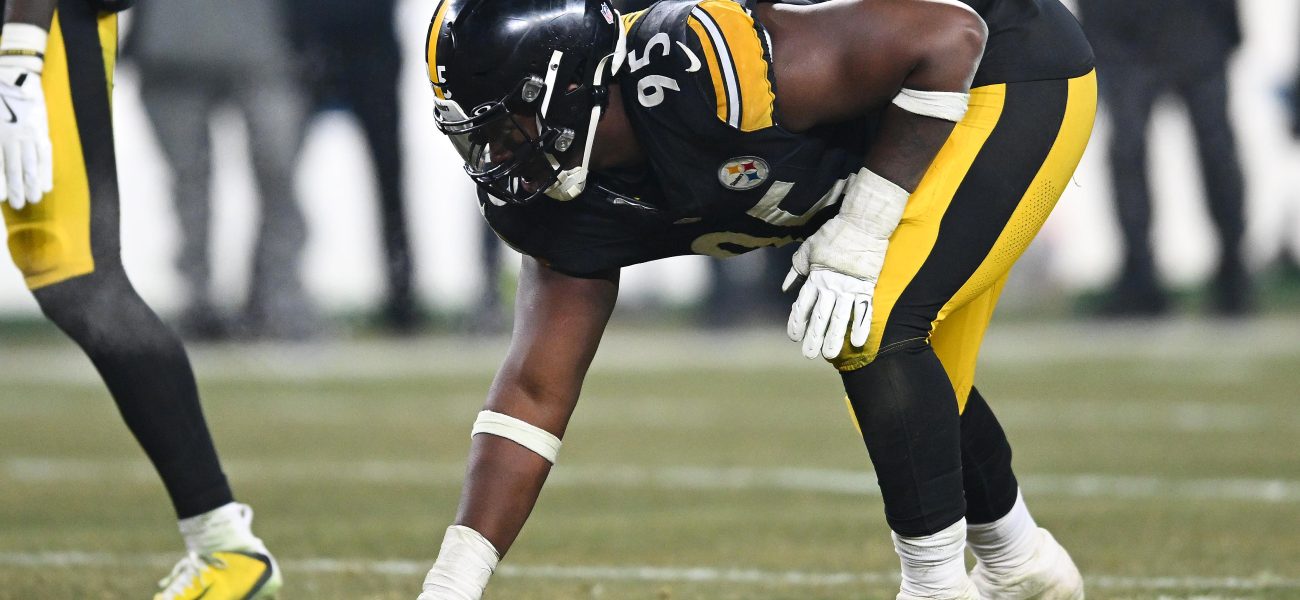
It’s all wrapped up in the unassuming directive of Domata Peko, their new defensive line coach. His arrival — part of a wholesale coaching shake-up for the 2026 season — isn’t just about tweaking schemes; it’s about upending what players are and what they do. Suddenly, entrenched notions of specialized roles, like Keeanu Benton as a perennial nose tackle or Yahya Black strictly at 4i, are giving way to a mantra Peko champions: versatility. Because in today’s NFL, you’re not just a cog; you’re a multi-tool in a highly volatile system.
For Benton, the burly lineman entering the final year of his rookie contract, this means freedom. Under the previous regime, he was anchored squarely on the nose, gobbling up blockers. But now? Peko sees more. “I’m excited for him,” Peko recently told reporters, a pragmatic glint in his eye. “He’s a player that’s been climbing each year — and getting better and better. They played him at a lot of nose last year, but I feel like he can play any position on that defensive front.” That’s a vote of confidence, but also a call to action. His 5.5 sacks last season, according to official NFL statistics, might just be the tip of an iceberg if he truly gets to unleash his athleticism. They’re basically telling him: don’t just occupy space, go wreck things.
Peko elaborated, praising Benton’s often-overlooked quickness. “He’s super stout — and strong at the point of attack. But what really separates him is his quickness, man.” A 309-pound man moving like a — well, not exactly a gazelle, but definitely not a static rock — is an asset any coach would salivate over. His ability to jump gaps, to flow laterally and attack—that’s gold. It makes you wonder how much talent was left on the table previously, boxed into an artificial construct.
Then there’s Yahya Black, a 2025 fifth-rounder, who logged 17 games in his inaugural season. Peko, it seems, has visions of Black transforming into one of the league’s premiere nose tackles. This isn’t just wishful thinking; it’s an empirical assessment. “Black can be one of the best noses in the game if he just keeps on doing what he’s been doing, and us working his butt off,” Peko asserted. It’s a blunt, no-nonsense endorsement, a classic football guy’s way of saying: this kid has the goods. And in the world of professional sport, identifying and nurturing specific talent in a new way can make or break a career—or a whole defensive unit, for that matter.
📄 POLICY WIRE WHITEPAPER PUBLISHED: PAKISTAN'S NATIONAL SECURITY POLICY PRIORITIES
👉 READ BY CLICKING HERENew defensive coordinator Patrick Graham echoed this sentiment, albeit from a more strategic perch. “Modern defenses, they don’t just rely on brute force anymore. We need intelligent athletes who can pivot, diagnose, — and execute in multiple capacities. If you can only do one thing, you’re a liability, not an asset. This isn’t about ego; it’s about winning in a league that’s constantly evolving.” He’s right, of course. The global game, be it cricket in Pakistan or football here, demands continuous adaptation from its players and its strategies.
And it’s a shrewd bit of team-building, actually. By forcing — or enabling — players like Benton and Black to expand their skill sets, the Steelers aren’t just making individual players better; they’re fundamentally shifting their defensive identity. It’s the ultimate hedging of bets on human capital. They’re effectively future-proofing their scheme against inevitable injuries or unforeseen matchup dilemmas. You can’t put a price on that kind of flexibility, not really.
What This Means
The Steelers’ tactical overhaul under Domata Peko isn’t merely an arcane footnote for sports pages. No, it’s a telling symptom of a broader trend: in hyper-competitive fields, be they global markets, geopolitical strategies, or professional sports, the premium is increasingly placed on adaptability. Specialization is good, yes, but often it can become a self-limiting prophecy, leaving talent dormant. Economic models too often preach efficiency through narrow focus, yet sometimes the greatest leverage comes from redeploying existing assets in novel ways. The organizational logic here applies across the board: recognizing an individual’s latent potential, irrespective of their assigned role, yields superior outcomes. For players like Benton — and Black, this isn’t just a position change; it’s a career inflection point. Their value, their marketability, and their longevity in the unforgiving NFL hinges on their capacity to morph, to become more than they were told they were. It reflects the harsh truth that organizations constantly need to recalibrate, to seek out fresh perspectives on established problems. Old ways—and old coaches—simply won’t cut it when everyone else is already pivoting. It’s an exercise in maximizing human capital and asset management on the grandest stage.