


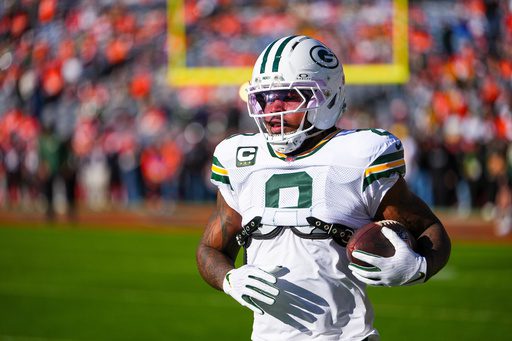
Gridiron Glory to Jail Cell: Josh Jacobs’ Arrest Jolts Packers, Echoes Deeper Woes
POLICY WIRE — Green Bay, WI — Just as the Green Bay Packers hit the field for organized team activities, anticipating another promising season—the quiet hum of a perfectly executed play — something...

POLICY WIRE — Green Bay, WI — Just as the Green Bay Packers hit the field for organized team activities, anticipating another promising season—the quiet hum of a perfectly executed play — something altogether more jarring, and unfortunately familiar, disrupted the rhythm. This week wasn’t about touchdowns or training camp enthusiasm. It was about criminal charges. For Josh Jacobs, the club’s leading returning rusher, it seems the pursuit of athletic glory has collided with stark, ugly reality.
It’s a story we’ve seen play out in various iterations across professional sports: the abrupt descent from public adulation into the harsh glare of a booking photo. Authorities in Hobart/Lawrence, Wisconsin, confirmed the former All-Pro running back’s arrest on Tuesday, culminating in a stint at Brown County Jail. The official accounting doesn’t paint a pretty picture, listing five separate criminal counts, including the unsettling specifics of strangulation and suffocation. And that, dear reader, is a felony, not some petty transgression.
Police Chief Michael Renkas, whose department first responded to a complaint involving Jacobs last Saturday morning, confirmed the charges, adding a clinical, bureaucratic note to an intensely personal scandal: [QUOTE_PLACEHOLDER] Renkas added, in a statement designed to stem further inquiry: “No further information will be released at this time.” A standard line, yes, but it barely conceals the tumult brewing behind the scenes, both for Jacobs personally and for a franchise suddenly grappling with yet another public relations nightmare. The Brown County Jail’s online record confirms one strangulation and suffocation charge is a felony, with the four additional charges, including battery and criminal damage to property – all with domestic abuse qualifiers – listed as misdemeanors. That’s a tough statistic to swallow, certainly. What does it say about the inherent pressures, or perhaps unchecked privilege, that can seemingly follow such high-performing athletes off the field?
Jacobs’ legal team – David Chesnoff, Richard Schonfeld, — and Clarence Duchac – wasn’t slow to mount a defense. They issued a joint statement. And what it said was unambiguous: [QUOTE_PLACEHOLDER] A call for patience followed: “We ask for fairness and restraint while the judicial process takes its course.” That’s a fair enough request, on its face. But the public, including the fans who’ve cheered his fleeting moments of gridiron brilliance, rarely shows such restraint when allegations hit this close to home.
Because the implications here extend far beyond individual reputation. We’re talking about an athlete who logged 929 yards and 13 touchdowns last season, then added 1,329 yards and 15 touchdowns, earning a third Pro Bowl nod the season before that. He’s arguably the backbone of their ground game – the only current Packer who rushed for over 200 yards last season. His career statistics stand at a remarkable 7,803 yards rushing — and 74 touchdowns across seven NFL seasons. Now, that immense talent finds itself shadowed by legal wrangles.
📄 POLICY WIRE WHITEPAPER PUBLISHED: PAKISTAN'S NATIONAL SECURITY POLICY PRIORITIES
👉 READ BY CLICKING HEREThe NFL, a behemoth institution often criticized for its handling of such incidents, reacted with predictable caution. Brian McCarthy, an NFL spokesman, noted that “we are aware of the report and have been in contact with the club.” That’s about as revelatory as a rain check on a sunny day. Meanwhile, a Packers spokesman mirrored the official-speak: [QUOTE_PLACEHOLDER] And then, the expected disclaimer: “As it is an ongoing legal situation, we will withhold further comment.” So, everyone is aware. But no one is saying much beyond that. They can’t, really. Not yet.
What This Means
This incident, though unfolding in the U.S. sporting landscape, isn’t isolated. It represents a recurring theme with economic and societal implications that ripple globally, even impacting discussions in regions as distant as South Asia. The perception of public figures — particularly powerful, financially successful men — facing charges related to domestic abuse ignites debates everywhere about accountability, the legal system’s efficacy, and societal norms. In nations like Pakistan, where conversations around gender-based violence and the privileged treatment of influential individuals are acutely sensitive, a high-profile case like Jacobs’ would be met with similar, if not intensified, scrutiny. It challenges institutions – be it a sports league or a government – to demonstrate an equitable application of justice, reminding us that no amount of professional achievement or financial prowess should act as a shield against the law.
From an economic standpoint, the situation spells immediate financial and brand-image repercussions for the Packers organization. They’ve just started training, a critical phase where focus should be razor-sharp. Instead, they’re navigating legal uncertainty — and PR fallout. The player’s market value, his endorsement potential, and the team’s ability to maintain a clear public image are all at risk. But, more significantly, these cases spotlight broader corporate responsibilities. Leagues, — and the businesses surrounding them, can no longer simply brush these incidents under the rug. They face immense pressure to take decisive action, lest they be perceived as complicit or indifferent to serious allegations. The financial might of professional sports organizations increasingly intersects with their moral obligation to uphold standards of conduct, regardless of an individual’s statistical contribution to the team’s wins or losses.