


Gridiron Gambit: Arizona’s Quarterback, A Fine, And The Harsh Realities Of Modern Football Economics
POLICY WIRE — Tempe, Arizona — The desert heat isn’t the only thing stinging in Arizona this week. Jacoby Brissett, a journeyman quarterback, has—with an air of weary resignation—returned to the fold...

POLICY WIRE — Tempe, Arizona — The desert heat isn’t the only thing stinging in Arizona this week. Jacoby Brissett, a journeyman quarterback, has—with an air of weary resignation—returned to the fold of the Arizona Cardinals. Not exactly a triumphant comeback, this; it’s more akin to a prisoner of circumstance reporting to his assigned post. He wasn’t back because team leadership found a sudden, profound appreciation for his pocket presence or his admittedly sturdy frame. He was back because the alternative meant watching six-figure sums vanish from his bank account. Sometimes, even in the glitzy theatre of professional sports, the stark calculus of cash rules all.
His absence, a rather public display of dissatisfaction over a contract that isn’t quite cutting it, ended not with a flourish of renewed trust, but with a concession to the National Football League’s finely tuned penal system. Brissett, by sitting out mandatory team activities—OTAs, minicamps, the whole song and dance—had accrued, or was about to accrue, a tab of precisely $107,911 in fines, as laid out in the NFL’s collective bargaining agreement. That’s a chunk of change for anyone. It’s a particularly bitter pill when your current contract for the season stands at $4.88 million, with only $1.5 million of it guaranteed. That’s not chump change, no, but it’s not the ‘king’s ransom’ many imagine professional athletes pull down, either. And, he’s 33. Time’s running short for any big paydays.
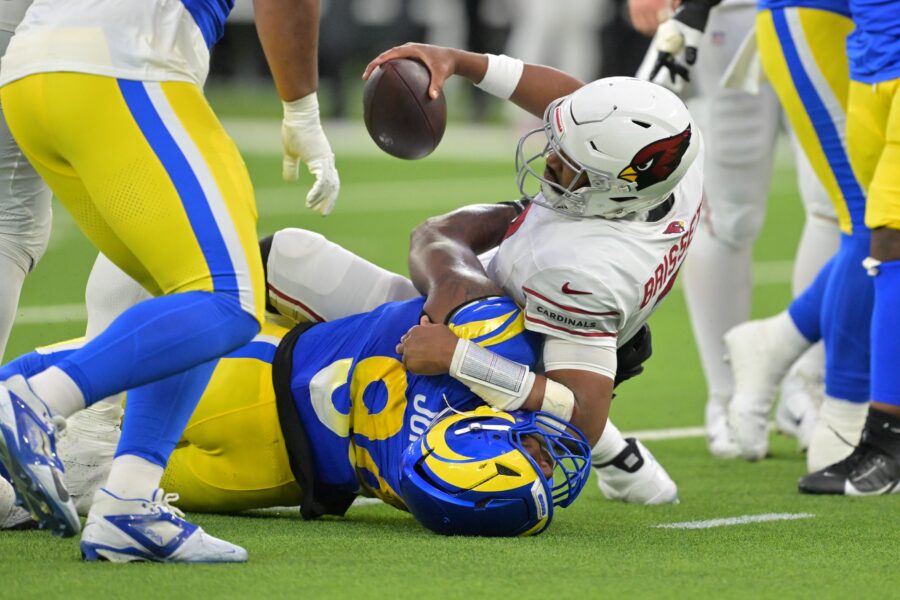
Last season, Brissett played the dutiful understudy thrust into the limelight—a recurring narrative for him, really. Kyler Murray, the supposed franchise cornerstone, was mending, — and Brissett inherited the helm of a sinking ship. He steered it to a rather predictable 3-14 record. An outcome that felt less like a surprise and more like a cruel inevitability for a franchise often synonymous with futility. This isn’t a team on the precipice of greatness. This is a team hoping to land a top draft pick in 2027—perhaps a hotshot young quarterback—to restart a perpetually sputtering engine.
“Look, every player wants to be compensated fairly for their contributions,” remarked NFL Players Association representative, DeMarrio Williams, during a recent media briefing. “But the system, it’s designed with strict protocols. Skipping mandatory activities, that’s a clear violation. We don’t condone it, even if we understand the underlying frustrations. It’s about showing up.” And Brissett, it seems, has now shown up.
But how much ‘showing up’ he’ll actually do on the field this week remains to be seen. Sources indicate he’s present, physically, but his participation might be limited—a silent protest perhaps, or a strategic move to avoid injury while contract negotiations sputter. Rookie Carson Beck — and veteran Gardner Minshew wait in the wings. For a franchise with such a murky outlook, this quarterback carousel is a microcosm of its deeper strategic confusion.
It’s all very messy, very human. Not unlike the complex dance of power and resource allocation seen across the globe, from dusty bazaars to gilded corporate boardrooms. Consider the nascent tech hubs sprouting across Pakistan, for instance; young engineers often find themselves in precarious contract situations, hoping for a breakthrough project, much like Brissett hopes for a renewed valuation in a brutal meritocracy. Their fight for a fair shake echoes in different dialects — and currencies, but the core economic vulnerability? It’s profoundly similar.
General Manager Monti Ossenfort, in a rare moment of candor last week, summed up the team’s posture: “We value Jacoby. He’s a professional. But we also have a budget, — and a long-term vision. We aren’t going to just throw money at problems because someone doesn’t like their current deal. It doesn’t work that way. We adhere to the agreements we’ve made.” Short. Sweet. Unyielding.
What This Means
Brissett’s reluctant return signals less a reconciliation — and more a temporary truce dictated by financial pragmatism. For the Arizona Cardinals, it maintains a modicum of roster stability, albeit grudgingly, while preserving draft capital—the holy grail for struggling NFL franchises. Politically, within the locker room, it sends a clear message: the organization, despite its on-field struggles, won’t be held hostage. But because player empowerment is a real force in today’s sports landscape, this could fester. It could make the team a less attractive destination for free agents, particularly those who observe how veteran players are treated when they don’t quite fit the long-term blueprint. The economics are straightforward: the Cardinals are clearly prioritizing future talent acquisition, likely a blue-chip quarterback in the 2027 draft, over investing significantly in an aging veteran placeholder. It’s a cynical yet calculated move, one that puts the team’s long-term aspirations — or perhaps, desperation — firmly ahead of any short-term contractual harmony. And for Brissett, well, it’s a grim reminder that in the cold business of the NFL, not every hero gets a renegotiated golden parachute; some just get a fine waiver. For a closer look at similar subtle economic plays within the sport, one might find insight in The Subtle Economics of the Gridiron: Seattle’s Bet on Unsung Specialist to Conquer the Margins.