


Green Shoots, Giant Killers: Ireland Eyes Historic Cricket Upset Against India
POLICY WIRE — Dublin, Ireland — The cricket world, always awash in its own brand of predictable narratives, just might be witnessing something genuinely jarring. Ireland, long considered an earnest...

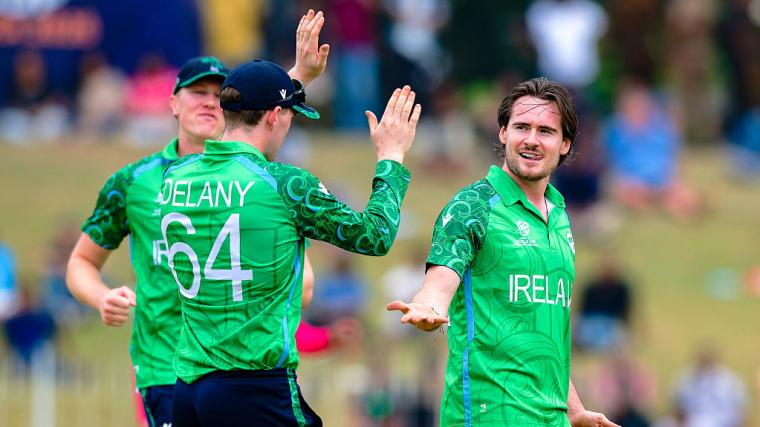
POLICY WIRE — Dublin, Ireland — The cricket world, always awash in its own brand of predictable narratives, just might be witnessing something genuinely jarring. Ireland, long considered an earnest but ultimately peripheral player on the sport’s grandest stage, is on the verge of what would undoubtedly rank among its most seismic triumphs. It isn’t merely about beating a good team; it’s about a potential, resounding upset of a cricketing hegemon, something akin to a minor league baseball team besting the Yankees in a World Series.
For decades, the narrative was fixed. Ireland would show flashes, they’d occasionally punch above their weight, but the bigger prizes, however, have largely eluded them. And that’s putting it mildly. Historically, their trophy cabinet for bilateral T20 International series against fellow full International Cricket Council (ICC) members holds exactly two contenders: Zimbabwe and Afghanistan. The other eight full members—the powerhouses like Australia, England, South Africa, and of course, India—they’ve been impenetrable fortresses. [QUOTE_PLACEHOLDER]
That rigid hierarchy, carved out by generations of investment — and established performance, is currently quivering. Having stunningly claimed a 34-run victory in the series opener, Ireland now finds itself leading India 1-0. A singular moment awaits them: avoid defeat in the next outing, and they will seal a maiden T20I series triumph over a genuine world champion. But don’t think for a second this is just about bragging rights; this is about shattering an old order, for real.
The statistical backdrop couldn’t be starker, nor more indicative of the mountain Ireland has climbed. Looking at the raw data, Ireland has contested three T20I series against Bangladesh, losing all three of them. That’s no small observation—it shows how tough even a middle-tier full member has been. Their ledger against cricketing giants from South Asia tells an even more brutal story. Against Pakistan, for instance, a team whose national identity is deeply intertwined with cricket, Ireland has featured in one bilateral T20I series and has lost it. In fact, Ireland has never drawn a single series against these cricketing titans from the sub-continent, let alone won one. It’s been an uphill grind, year after year, for a side with considerably fewer resources than its more illustrious peers.
Cricket Ireland, for all its strides, isn’t exactly awash in the kind of television revenue or sponsorship deals that global behemoths like the Board of Control for Cricket in India (BCCI) or even the Pakistan Cricket Board (PCB) command. But still, here they’re. It’s easy, perhaps even convenient, to dismiss a sporting upset as a mere fluke, a momentary lapse by the superior side. But after their clinical demolition of a star-studded Indian outfit—albeit one potentially resting some key figures—the Irish challenge seems anything but accidental. This isn’t a warm-up match. It’s for keeps, — and Ireland seems to know it.
📄 POLICY WIRE WHITEPAPER PUBLISHED: PAKISTAN'S NATIONAL SECURITY POLICY PRIORITIES
👉 READ BY CLICKING HEREAnd consider the context. Teams from regions like South Asia – India, Pakistan, Bangladesh – they’ve largely dominated the sport’s conversation, financially and on the field, for a good while. An Irish win, then, isn’t just about upsetting one team; it’s a nudge to the collective global power structure of the game. It’s a compelling argument for wider investment and recognition, especially for teams outside the traditional financial epicentres. Because sports, sometimes, don’t always obey the dictates of the market.
What This Means
Politically, a historic series win over India would be an enormous boost for Ireland’s national sporting identity. It’s not just a cricket triumph; it’s a global statement, particularly potent for a smaller nation that often finds itself dwarfed by larger international players. It reinforces a narrative of national capability — and resilience, far beyond the confines of the sports field. And this sort of narrative can trickle down, giving the island nation more international visibility and, frankly, pride. The Irish know a thing or two about fighting against the odds, you know?
Economically, such an upset could significantly alter the landscape for Cricket Ireland. Success attracts eyeballs, — and eyeballs attract sponsorships. A win of this magnitude could unlock new commercial partnerships, drive increased participation at grassroots levels, and provide a much-needed financial injection into player development and infrastructure. For a board that often operates on a shoestring budget compared to its peers, this could be transformative. It’s not about suddenly matching India’s billions, but about securing a stronger, more sustainable footing in the professional sporting arena. It would be a concrete demonstration that investing in Irish cricket isn’t just about charity, but about backing a competitive, captivating product. It’s simple economics: performance pays.