
Global hypocrisy fuels the suffering of Palestinians
For decades, the Palestinian people have suffered under Israeli occupation, facing systemic oppression, violence, and human rights violations. The situation has escalated significantly in recent...

For decades, the Palestinian people have suffered under Israeli occupation, facing systemic oppression, violence, and human rights violations. The situation has escalated significantly in recent years, with mass killings, forced displacement, and severe humanitarian crises unfolding in Gaza, the West Bank, and East Jerusalem. Despite mounting evidence of war crimes and human rights abuses, the global community has largely remained silent, with only rhetorical condemnations and limited diplomatic efforts to hold Israel accountable. As the world observes Human Rights Violations (HRV) Day, it is crucial to highlight the atrocities being committed against the Palestinian people and the urgent need for international intervention.
The latest escalation in violence, which began on October 7, 2023, has resulted in unprecedented civilian casualties. According to the Gaza Health Ministry, the death toll in Gaza has surpassed 50,000 people as of March 2025, including thousands of women and children. In the first three months of 2024 alone, more than 22,000 Palestinians were killed, with Israeli airstrikes targeting residential areas, hospitals, and refugee camps. The devastation has been described by humanitarian organizations as one of the worst humanitarian crises in modern history.
The United Nations (UN) Office for the Coordination of Humanitarian Affairs (OCHA) has reported that more than 1,227 incidents of settler violence against Palestinians were recorded in 2023, marking the highest levels of violence in the West Bank since 2006. Israeli occupation forces and extremist settlers have been accused of carrying out summary executions and indiscriminate shootings, particularly in Jenin, Nablus, and Hebron, where entire families have been wiped out. Reports from Human Rights Watch (HRW) and Amnesty International indicate that many of these killings amount to war crimes, with victims including journalists, medical workers, and children.
Beyond the mass killings, the Israeli occupation forces have systematically destroyed civilian infrastructure in Gaza. Entire neighborhoods have been reduced to rubble, with over 70% of all buildings in northern Gaza either damaged or completely destroyed. Schools, hospitals, water facilities, and power stations have been deliberately targeted, exacerbating an already dire humanitarian crisis.
The blockade imposed on Gaza since 2007 has further crippled the region’s ability to recover. Humanitarian organizations estimate that only 20% of medical supplies, including prosthetic limbs and essential medicines, are available in Gaza’s hospitals. The ongoing blockade, combined with relentless bombardments, has led to severe shortages of food, clean water, and electricity, making daily survival a challenge for millions of Palestinians. According to the World Food Programme (WFP), nearly 80% of Gaza’s population is facing acute food insecurity, with children dying from malnutrition due to restrictions on humanitarian aid.
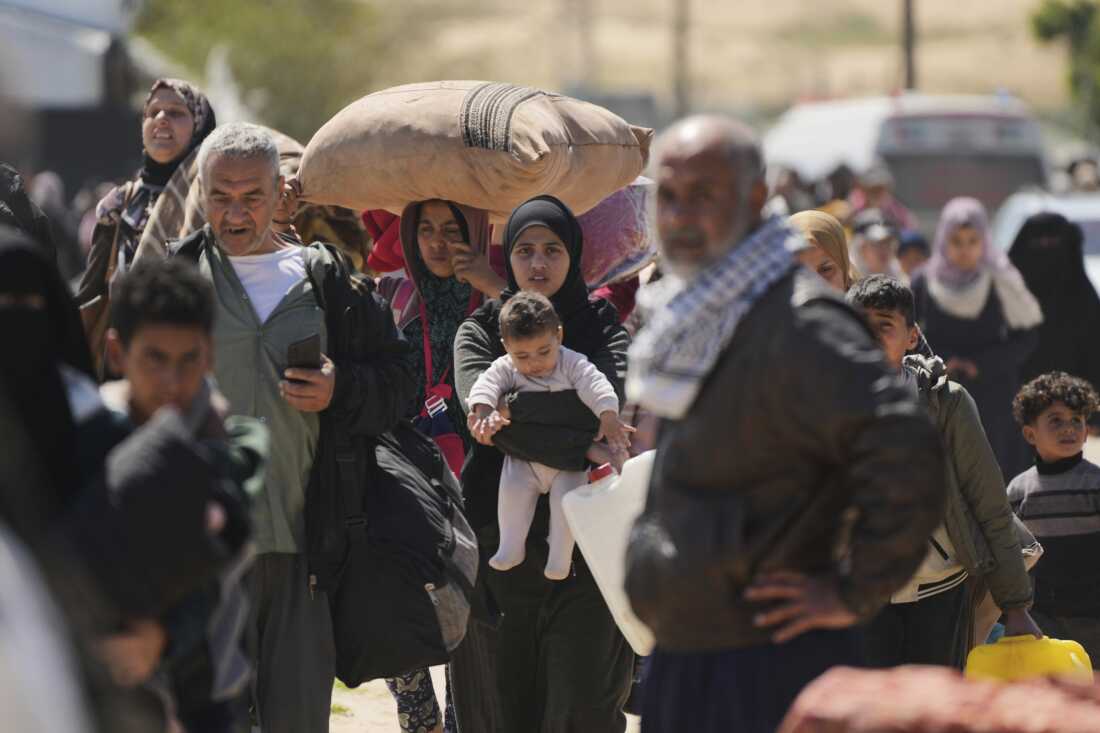
The Israeli government has continued its policy of forced displacement, particularly in the West Bank and East Jerusalem. The demolition of Palestinian homes, schools, and agricultural lands has been used as a tool to push Palestinians out of their land and expand illegal Israeli settlements. According to B’Tselem, an Israeli human rights organization, over 50,000 Palestinian homes and structures have been demolished since 1967, leaving thousands of families homeless.
One of the most infamous cases of forced displacement is the planned demolition of Khan al-Ahmar, a Bedouin village located east of Jerusalem. Despite international condemnation, Israeli authorities continue to push for its destruction, which would result in the displacement of over 180 residents, mostly children. The expansion of illegal settlements in Hebron, East Jerusalem, and the Jordan Valley has further marginalized Palestinian communities, violating international law, including the Fourth Geneva Convention, which prohibits the transfer of an occupying power’s civilian population into occupied territory.
Israeli forces have intensified their use of arbitrary arrests and administrative detention, where Palestinians are held without charge or trial for months or even years. According to Addameer, a Palestinian prisoner rights group, over 9,000 Palestinians are currently detained in Israeli prisons, including hundreds of children. The United Nations Human Rights Office has reported a record 3,291 administrative detainees, the highest number in over three decades.
Detainees, including women and minors, are subjected to torture, solitary confinement, and physical abuse during interrogations. Former prisoners have described beatings, sleep deprivation, and psychological torment as standard practices in Israeli detention centers. Reports from HRW and Amnesty International have documented cases where detainees were denied medical care, leading to deaths in custody. Moreover, extrajudicial killings have become increasingly common, with Israeli forces executing unarmed Palestinians in the streets under the pretext of “security threats.”
Despite the mounting evidence of war crimes, the response from the international community has been largely inadequate. While organizations like the United Nations, the European Union, and the International Criminal Court (ICC) have issued statements condemning Israeli actions, concrete measures to hold the Israeli government accountable remain absent. The United States and several European countries continue to provide military aid and diplomatic support to Israel, shielding it from consequences at the UN Security Council.
In March 2024, over 30 UN human rights experts called for an immediate halt to arms sales to Israel, warning that these weapons were being used to commit war crimes against Palestinian civilians. However, Western nations, particularly the United States, Germany, and the United Kingdom, have ignored these warnings and continue to supply Israel with advanced weaponry. The double standards of the global community, where sanctions and military actions are taken against other countries for similar human rights violations, expose the deep-rooted bias in international politics.
The ongoing International Criminal Court (ICC) investigation into Israeli war crimes has faced repeated obstacles, with Israel refusing to cooperate and Western allies blocking legal proceedings. Meanwhile, Palestinian leaders and activists face constant persecution, with Israel and its allies branding any form of resistance as “terrorism.” The lack of political will to impose sanctions or hold Israeli leaders accountable for their actions has emboldened the occupation forces to continue their brutal policies with impunity.
The scale of human rights violations in Palestine is a clear violation of international law, yet the global response remains weak. The mass killings, forced displacements, destruction of infrastructure, and arbitrary detentions amount to crimes against humanity. The silence of world leaders and international organizations in the face of these atrocities has emboldened Israel to continue its oppressive policies without fear of repercussions.
If the world truly values human rights, then immediate action must be taken to stop the bloodshed in Palestine. The international community must impose sanctions, halt arms sales, and demand accountability through the ICC. The oppression of the Palestinian people is not just a regional issue but a moral crisis that challenges the credibility of international law. Until decisive action is taken, the suffering of Palestinians will continue, and the principles of human rights will remain empty words on a piece of paper.
Author