


Ghost Fleets and Grand Claims: Beijing’s Subtle Squeeze in the South China Sea
POLICY WIRE — Taipei, Taiwan — The sea, they say, remembers nothing. But for nations entangled in its contentious embrace, every ripple, every passing shadow, tells a story. And lately, those stories...

POLICY WIRE — Taipei, Taiwan — The sea, they say, remembers nothing. But for nations entangled in its contentious embrace, every ripple, every passing shadow, tells a story. And lately, those stories around the South China Sea are getting less subtle. It’s not always the grand naval exercises or chest-thumping declarations that redefine geopolitical boundaries; often, it’s the quiet, persistent creep of gray hulls—coast guard vessels, even civilian-marked research ships—that truly shifts the tide.
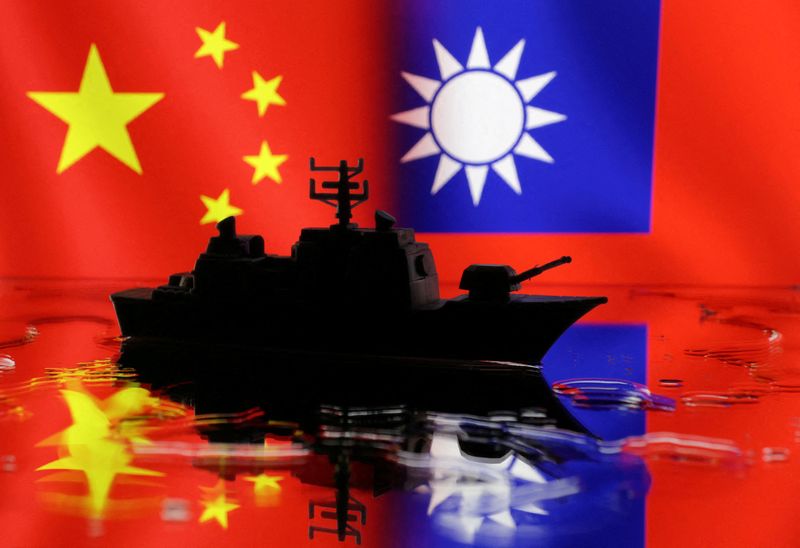
This week, Taiwan’s Ministry of National Defense observed what it called a ‘heightened presence’ of Chinese Coast Guard and scientific research vessels nosing around the Pratas Islands. Now, these aren’t just pretty rocks; they’re strategically placed land features in the northern reaches of the contested waters, about 170 nautical miles southeast of Hong Kong. For Beijing, it’s just another Wednesday. For Taipei, — and indeed for every other claimant nation, it’s a stark reminder of an ever-tightening squeeze.
Taipei isn’t exactly prone to hysteria, but its pronouncements carry weight in these matters. They’ve been watching this chess game for decades. “We routinely monitor activities in our contiguous zone and will take all necessary measures to safeguard our sovereign territory,” stated Rear Admiral Chen Yen-chao, a spokesperson for Taiwan’s Ministry of National Defense, his voice firm during an unscheduled briefing. “Beijing’s pattern of increasing ‘gray zone’ tactics is both clear and provocative.” It’s a worn phrase, “gray zone,” but it accurately captures the strategic ambiguity China employs—asserting presence without necessarily triggering overt military conflict.
The incident itself? A handful of vessels — routine patrols, China will undoubtedly say. But every such patrol, every seemingly benign research mission, reinforces Beijing’s expansive nine-dash line claims, which cover roughly 90% of the South China Sea. That’s an area through which approximately one-third of global maritime trade passes annually, accounting for some $5.3 trillion in goods, according to estimates from the U.S. Energy Information Administration. It’s a staggering sum, — and control over these lanes is quite literally priceless.
But the South China Sea isn’t just about Taiwan, or even just Southeast Asian claimants. Nations like Pakistan — and others in South Asia watch these developments with a specific brand of apprehension. Because disruptions here don’t just affect global shipping rates; they ripple back, hitting their own supply chains, impacting their energy security, and raising concerns about regional stability. Imagine if Pakistan’s lifeline trade routes through the Arabian Sea faced similar, creeping assertiveness. That’s why leaders across the broader Asian continent don’t just shrug off these “small” incidents.
And China’s official line? Always consistent, always resolute. “Our maritime patrols and scientific endeavors within waters that have historically belonged to China are entirely legitimate and peaceful,” stated Dr. Lei Zhang, a senior researcher at the Chinese Academy of Social Sciences, a voice often echoing Beijing’s official position. “Any suggestion otherwise is merely a pretext for external interference.” It’s a familiar refrain, one designed to normalize Beijing’s ever-expanding footprint.
What This Means
This isn’t merely about who owns a few rocks; it’s a slow-motion geopolitical struggle for regional dominance. Beijing’s strategy is clear: assert sovereignty through persistent presence, then legitimize that presence. By deploying non-military vessels — coast guard ships and research vessels — China keeps tensions just below the threshold of armed conflict, complicating responses from Taipei and its partners like Washington. It’s psychological warfare on a grand scale, testing the resolve — and unity of smaller states.
Economically, this “gray zone” assertiveness raises real concerns for all trade-dependent nations. If freedom of navigation, a concept enshrined in international law, becomes a constant point of contention, then global shipping insurance premiums will spike, trade routes could become less predictable, and nations might start looking for more costly, longer alternatives. Think about it: a seemingly minor dispute around the Pratas Islands has direct implications for whether your next container of goods arrives on time, or at what cost. This maritime maneuvering isn’t just about territorial integrity; it’s a grand gambit for control over resources — fish, oil, natural gas — and, more abstractly, for unchallenged influence across an entire geopolitical sphere. Every such sighting reinforces the feeling that Beijing views international law not as a set of rules, but as a suggestion, malleable to its national interests. It’s an unnerving thought, especially for neighbors who simply want to sail these waters in peace. It’s a high-stakes poker game, — and the stakes just got a little bit higher. Nations aren’t just observing these events; they’re calculating the long-term impact on their own security and economic well-being, just as they might analyze a shifting alliance on the Korean Peninsula. Everything’s connected, isn’t it?