


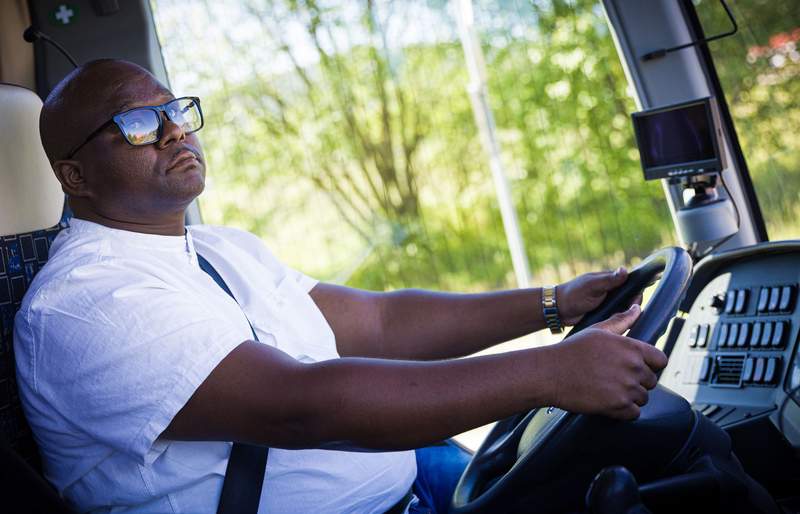
Germany’s Great Transit Paradox: European Streets, South African Wheels
POLICY WIRE — Berlin, Germany — It isn’t a headline you’d expect from the economic engine of Europe. Not really. When a nation like Germany—that land of precise engineering and efficient public...

POLICY WIRE — Berlin, Germany — It isn’t a headline you’d expect from the economic engine of Europe. Not really. When a nation like Germany—that land of precise engineering and efficient public services—starts recruiting bus drivers nearly ten thousand kilometers away in South Africa, you’ve got to ask, what exactly gives? It’s not just a labor shortage; it’s a neon sign, blinking furiously, advertising a quiet, systemic tremor beneath the polished surface of a continent.
Forget the sleek autobahns for a moment. This isn’t about the cars you drive; it’s about the buses you don’t. Or, more accurately, the buses that aren’t being driven by German citizens. The German Public Transport Association, VDV, estimates a yawning deficit of over 80,000 bus and truck drivers across the nation—a figure projected to surge significantly by 2030, according to their 2022 report. You’d think, given the unemployment rates in some EU periphery states, there’d be easier fixes. But demographics, they’re a cruel mistress, aren’t they?
It’s an irony, this reversal of fortunes. For generations, migration flowed the other way, from Europe to, well, pretty much everywhere. Now, Germany finds itself — a poster child for post-industrial strength — looking southward for the basic workforce required to keep its cities moving. It’s a pragmatic scramble, really, to plug holes in an aging population’s employment fabric.
“We can’t just stand by — and watch our transport networks seize up because there’s no one to grip the wheel,” stated Dr. Annelise Weber, Federal Minister for Labour and Social Affairs, during a recent, candid interview with Süddeutsche Zeitung. “This isn’t about preference; it’s about absolute necessity. We’ve exhausted domestic avenues — and traditional European talent pools are themselves under pressure. South Africa offers a pool of skilled, English-speaking professionals with the driving experience we need, and it’s a mutual opportunity for many of them seeking a fresh start.”
Because, let’s be honest, there’s no immediate local solution. Germany’s population, despite immigration, is graying fast. Young people, when they consider careers, aren’t exactly queuing up to navigate crowded urban routes for what’s often perceived as a thankless grind. And South Africa, battling its own economic woes, including high youth unemployment rates, presents an eager, if geographically distant, talent reserve.
This isn’t an isolated phenomenon, either. We’ve seen Canada, Australia, and the UK casting similar nets across the globe for everyone from doctors to skilled tradespeople. The competition for human capital is quietly heating up, shaping new geopolitical realities. It impacts countries like Pakistan, for instance, a significant source of migrant labor for Gulf states and, increasingly, Europe’s service sectors. They face a similar tension: managing the brain drain while capitalizing on remittances—a complex balancing act for any developing economy.
Minister Thandiwe Nkosi, South Africa’s Minister of Employment and Labour, captured the sentiment back home, saying, “Our people are talented, and they’re mobile. While we’d prefer them to contribute here, where opportunities exist to uplift their families elsewhere, we support them. It’s a testament to the quality of our training — and resilience that nations like Germany are seeking them out.”
But this international talent hunt isn’t without its potholes (no pun intended). There are significant hurdles: language acquisition, cultural assimilation—these aren’t small feats. Then there’s the often-clumsy process of credential recognition, visa bureaucracy that can make grown men weep, and the emotional toll of moving across continents. German employers, it turns out, aren’t just recruiting drivers; they’re signing up for an intricate cross-cultural integration project, too.
What This Means
Germany’s foray into the South African labor market for essential services like bus drivers isn’t just about keeping public transport running; it’s a stark reflection of global economic recalibration. It means Europe—and by extension, the West—is increasingly reliant on developing nations to fill the gaps created by its own demographic shifts and shifting career aspirations. This strategy has economic ramifications, of course: it potentially stabilizes German labor costs but at the same time can exacerbate brain drain issues in the source countries, intensifying domestic challenges in places like South Africa.
Politically, it highlights an uncomfortable truth for nationalist movements across Europe. The notion of a self-sufficient nation, untroubled by globalized labor flows, is, for now, fiction. German society, historically, hasn’t always handled large-scale immigration seamlessly (remember the integration debates that follow every new wave). These new arrivals, often with different cultural backgrounds, will need robust support structures, or you’ll find friction. And because this is happening quietly, out of direct political view for now, the eventual societal impact will likely catch some politicians flat-footed down the line. It’s a classic case of short-term fixes creating long-term structural adjustments—and potential headaches. This silent global worker churn, a symptom of aging populations in one hemisphere and bulging youth populations in another, will inevitably redefine urban landscapes and national identities alike. And it won’t stop with bus drivers; mark my words. Consider this a preview for the many service sectors to come that are already eyeballing similar solutions for labor shortages. We’re watching new pipelines emerge.