


Germany’s Eastern Gamble: Merz Calls for ‘Strong Presence’ Amidst Whispers of Old Wars
POLICY WIRE — Berlin, Germany — The air over central Europe, it’s thick these days. Not because of a smog inversion, mind you, but with a creeping sense of strategic claustrophobia. A phantom...

POLICY WIRE — Berlin, Germany — The air over central Europe, it’s thick these days. Not because of a smog inversion, mind you, but with a creeping sense of strategic claustrophobia. A phantom limb of the Cold War seems to be twitching, vigorously, in Brussels, Berlin, — and Warsaw. Forget abstract geopolitical theories—this is about boots on the ground, hard cash, and the uneasy realization that some chapters, it seems, never truly close. What seemed unthinkable just a few years ago now feels less like a prophecy — and more like Tuesday’s grim headlines.
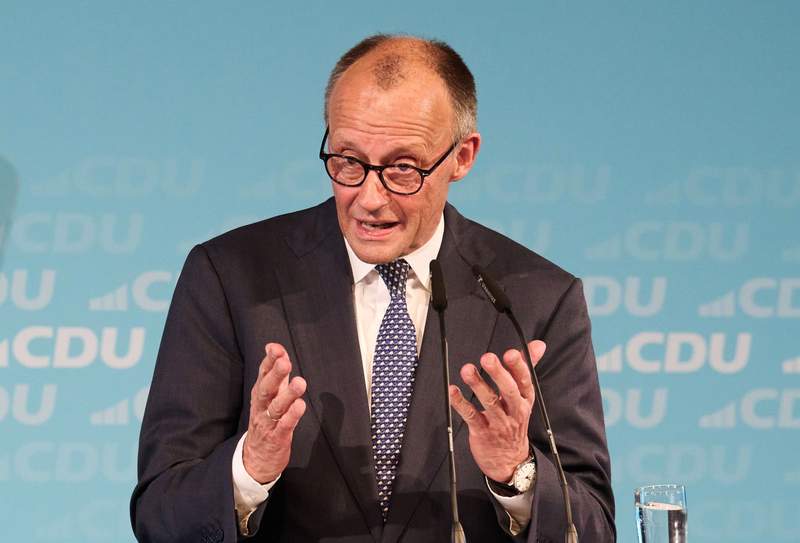
And so, we arrive at Friedrich Merz. The man, a German opposition leader and an old-guard Christian Democrat, isn’t usually one for nuanced subtleties when it comes to national security. He speaks in absolutes, which is sometimes refreshingly direct, sometimes alarming in its bluntness. His recent pronouncement? A call for a ‘strong presence’ on NATO’s eastern flank. It’s a statement that, in its clipped efficiency, manages to invoke decades of strategic anxieties. For some, it’s just plain common sense; for others, it’s the rattling of old sabers, barely sheathed after a brief respite.
Merz isn’t wrong, not entirely, when he suggests the stakes are higher than they’ve been in a generation. He sees a Europe needing to relearn a grim arithmetic: defense isn’t a cost center to be minimized but an existential necessity. His party, the CDU, has long advocated for a robust military—a stance that often grated against the pacifist leanings of certain German coalition partners. But recent events, well, they’ve rather quieted those voices, haven’t they? It’s like everyone suddenly remembered history isn’t just about parades — and statues. “We cannot afford the illusion of eternal peace when a brutal conflict rages on our doorstep,” Merz reportedly stated during a recent security conference, his jaw tight. “A credible deterrence isn’t built on wishful thinking, but on undeniable strength.”
But what does ‘strong presence’ really mean? It’s not just about more tanks or fighter jets. It’s about a fundamental reorientation, a psychological recalibration for nations accustomed to drawing down their defense budgets after the Cold War’s apparent end. Think about it: Germany, for years, struggled to meet NATO’s 2% of GDP defense spending target, often citing economic priorities. Now, with a looming recession and an aging population, the funds have to materialize somewhere. According to recent reports from the Stockholm International Peace Research Institute (SIPRI), European NATO members’ defense spending saw an unprecedented 13% real-term increase in 2023, the highest annual rise in over three decades. That’s a lot of euros for hardware. That’s a lot of shift.
This re-militarization, particularly in Eastern Europe, creates a ripple effect far beyond the Continent’s borders. For countries like Pakistan, for instance, which routinely juggles complex regional security dynamics and strategic alliances—sometimes with an eye on both Washington and Beijing—this European pivot becomes yet another data point in a rapidly shifting global security architecture. Are global resources and attention so finite that increased focus on Europe means less bandwidth for issues in South Asia or the Middle East? It’s a legitimate question. And many nations are watching this carefully.
It raises fundamental questions about NATO’s evolving identity. Is it a shield, a sword, or simply a particularly expensive—and politically inconvenient—historical artifact finally being dusted off? Poland, long at the forefront of warning about eastern aggression, finds Merz’s words resonate. “For too long, some in Western Europe viewed our concerns as overly alarmist,” quipped Andrzej Kaczynski, a Polish security analyst, likely echoing sentiments from Warsaw. “Now, the reality bites. It’s not about bellicosity; it’s about survival.” Kaczynski implies a ‘we told you so’ undercurrent, subtle yet undeniable, in the Baltic capitals and beyond.
But the dry bureaucratic language of ‘presence’ belies a messy truth: this isn’t just about deterring an external threat. It’s about navigating internal disunity, budgetary pressures, and a generation of strategic complacency that made politicians rather uncomfortable having serious talks about actual war. Merz’s declaration, then, is less an innovation — and more a forced capitulation to a grim new reality. It’s tough medicine, — and it tastes precisely as bitter as it should. Because the consequences of ignoring it, well, they’re worse. They always are.
What This Means
Friedrich Merz’s firm stance isn’t just bluster; it’s a bellwether for European politics — and economics. Politically, it signals an unequivocal shift in German defense policy, long characterized by cautious reticence. This aligns Germany more overtly with hawkish Eastern European allies and solidifies a confrontational stance towards Russia, narrowing avenues for diplomatic detente in the immediate future. It could also strengthen Merz’s position domestically, presenting him as a decisive leader in a time of uncertainty, though it risks alienating the German left, which still harbors pacifist sentiments.
Economically, the push for a ‘strong presence’ guarantees sustained, if not increased, defense spending. This injects capital into the arms industry, potentially boosting specific sectors but also diverting funds from other critical areas like social welfare, infrastructure, or climate initiatives. Germany’s fiscal discipline will be tested, especially given inflationary pressures — and energy crises. The shift implies a more profound impact on global resource allocation, possibly making European defense priorities compete with development aid or investments in other regions. In terms of perception, countries in the Muslim world and South Asia might view this intensified European military focus as a self-interested consolidation, potentially impacting broader multilateral efforts where European resources or attention might be perceived as divided. This could subtly re-shape global alliances, strengthening existing partnerships in areas of mutual security concern, but possibly creating distance with nations feeling their security concerns are relegated to a lower tier.