


Germany: Far-Right AfD Re-elects Leaders, Protests Rage
Germany's far-right AfD re-elects leaders, igniting massive protests. Unions and civil society unite against the party's growing influence. Get the full story.

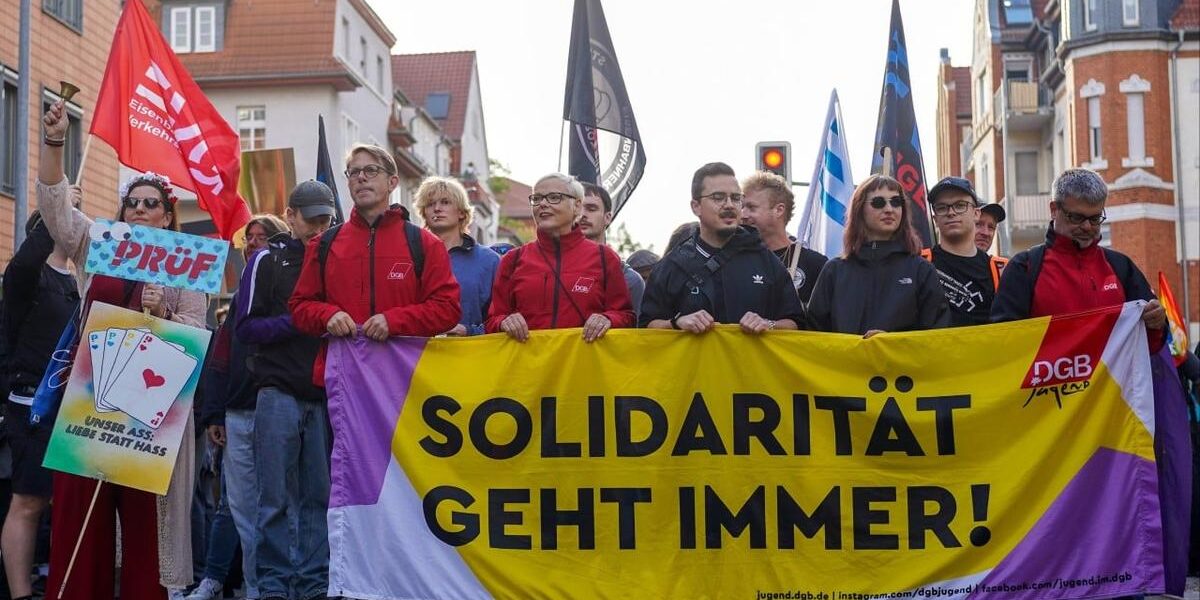
POLICY WIRE — Erfurt, Germany — Thousands of determined protestors took to the streets of Erfurt, Germany, this past Saturday, making their discontent with the far-right Alternative for Germany (AfD) party abundantly clear. They not only voiced their opposition but physically blocked roads leading to the party’s annual conference, where the AfD’s two current leaders, credited with steering its recent rise as a significant national political force, were successfully re-elected. (Reporting based on wire reports)
The scene in Erfurt was one of considerable tension, as diverse groups — including labor unions, various civil society organizations, and prominent left-wing parties — converged to make their presence felt. The scale of the demonstration necessitated a substantial police deployment. Officers, many reportedly reinforcements from across Germany, were mobilized ahead of the AfD’s two-day gathering. Eyewitnesses noted police personnel equipped in riot gear, underscoring the anticipation of potential confrontations.
The Alternative for Germany (AfD), a party that has steadily gained traction within the country’s political landscape, was holding a pivotal conference. The re-election of its leadership comes at a time when the party has witnessed an undeniable surge in its support base. Founded in 2013, the AfD initially gained prominence on an anti-euro platform but has since shifted its focus to issues surrounding immigration, national sovereignty, and skepticism of European integration, resonating with a growing segment of the German electorate. This strategic shift and the efforts of its co-leaders have solidified its position as a major contender, particularly in federal and state elections across Germany.
These widespread protests reflect a deep-seated apprehension among many Germans regarding the AfD’s increasing influence and its policy stances. Historically, large-scale demonstrations against far-right movements are not uncommon in Germany, a nation acutely aware of its 20th-century history. Such public expressions of dissent aim to both mobilize counter-movements and send a clear message to political leadership about the boundaries of acceptable discourse and policy direction within a democratic framework.
The mobilization in Erfurt—blocking critical routes and drawing a wide coalition of opponents—highlights the vigorous public debate surrounding the future trajectory of German politics. While the AfD asserts its right to assembly and political action, the opposing factions emphasize their commitment to defending democratic values and combating what they perceive as nationalist or extremist ideologies. The standoff in Erfurt, with protestors physically obstructing access and the robust police presence, was a stark illustration of these clashing visions for Germany’s direction.
📄 POLICY WIRE WHITEPAPER PUBLISHED: PAKISTAN'S NATIONAL SECURITY POLICY PRIORITIES
👉 READ BY CLICKING HEREWhat This Means
The convergence of large-scale protests and a pivotal party conference in Erfurt underscores the intensifying political polarization in Germany. For the AfD, the re-election of its leadership signals continuity and an endorsement of its current strategy, which has proven effective in broadening its appeal. This might embolden the party to further press its agenda in regional and national politics, likely solidifying its base and continuing its challenge to established parties.
Conversely, the robust turnout by protest groups demonstrates a formidable civic response to the AfD’s rise. These demonstrations serve not only as an expression of opposition but also as a warning shot, indicating that any further mainstreaming of the far-right will be met with organized resistance. The active participation of unions, civil society, and left-wing parties suggests a broadening of the anti-AfD coalition, which could lead to more coordinated efforts in future electoral campaigns and public discourse.
The immediate implication for German politics is a continued, perhaps intensified, period of social and political contention. The AfD’s sustained growth forces traditional parties to adapt their strategies, potentially by attempting to address the grievances that feed support for the far-right, or by reinforcing efforts to isolate it politically. The situation poses critical questions about the resilience of Germany’s democratic institutions in managing extremist political forces and maintaining national cohesion.