


Fungi’s Forgotten Promise: Can ‘Magic’ Mend Minds, Reshaping Global Policy?
POLICY WIRE — London, UK — Conventional wisdom, bless its pragmatic heart, often dictates the pace of progress. It tells us what works, what doesnt, — and what heresies we simply mustn’t...

POLICY WIRE — London, UK — Conventional wisdom, bless its pragmatic heart, often dictates the pace of progress. It tells us what works, what doesnt, — and what heresies we simply mustn’t entertain. But every so often, a whisper emerges from the fringes—a narrative so far outside the accepted playbook it threatens to upend decades of carefully constructed dogma. That whisper, lately, involves a substance historically more associated with counter-cultural festivals than with the hallowed halls of neurocognitive research.
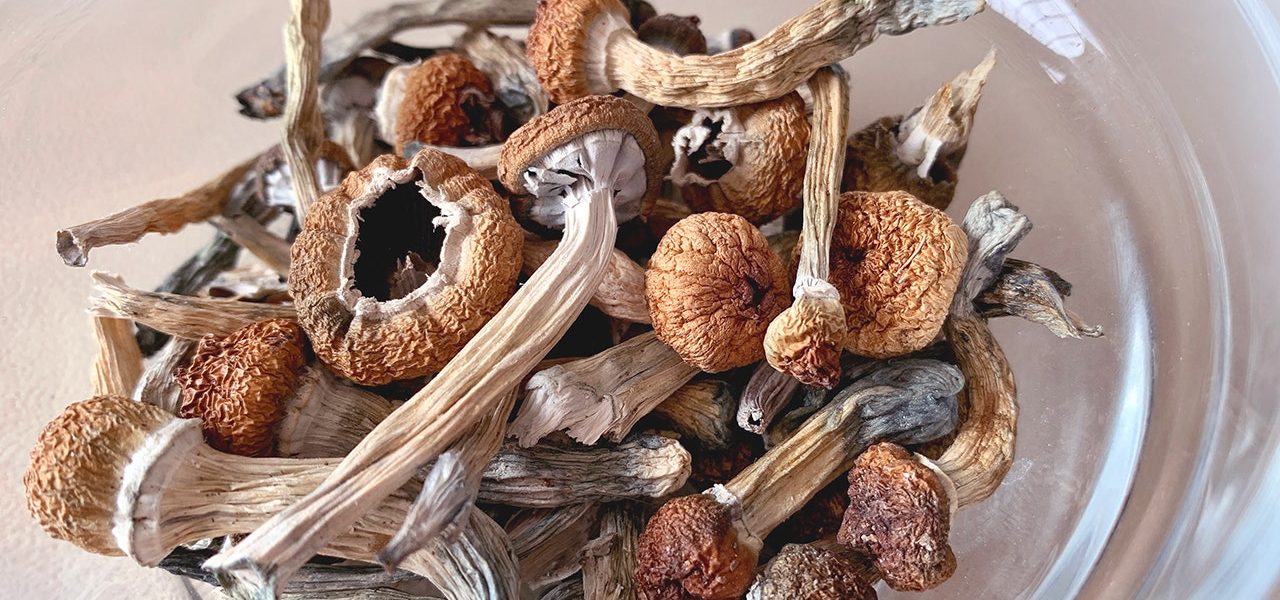
Were talking about psilocybin, the active compound in what many still dismiss as magic mushrooms. And a recent anecdotal account—[QUOTE_PLACEHOLDER]—suggests its impact on one of medicine’s most stubborn puzzles, advanced Alzheimer’s. Let’s be real: for decades, our collective approach to conditions like this has been one of gradual, often despairing, decline management. The breakthroughs have been incremental, the promises largely unfulfilled. Billions, mind you, have been poured into conventional pharmacology with often limited return.
But the human brain, thats a funny thing. It holds secrets we dont even know how to ask about yet. When faced with its most devastating degenerations, society typically reaches for synthetic compounds, painstakingly engineered in labs. And we’ve got mountains of data to show those usually just slow the inevitable roll, don’t they? So, what happens when a tale surfaces where an illicit psychedelic seems to achieve what established medicine can only dream of: a return of speech, a flash of memory, a flicker of self?
This isn’t just about a plant—or a fungus, in this case—versus a pill. It’s about perception. It’s about regulation. It’s about a deep-seated cultural fear of certain substances, deeply embedded since the drug wars of the last century. Just look at the legal and social hurdles still confronting cannabis, a relatively mild intoxicant, even in an era of growing legalization. Imagine the political football psilocybin becomes. Lawmakers, particularly those eyeing their next election cycle, don’t typically race to embrace compounds colloquially known as [QUOTE_PLACEHOLDER] for their potential medical applications.
The regulatory quagmire for such compounds, historically designated Schedule I in the United States—meaning no accepted medical use and high potential for abuse—is, well, quite the marvel of bureaucratic inertia. Reclassifying something takes an act of God or, more likely, an overwhelming, undeniable wave of scientific evidence and public pressure. Yet, research is quietly pushing forward, chipping away at these classifications. Studies, like those detailed by Johns Hopkins, for instance, have increasingly highlighted psilocybin’s potential in treating depression, anxiety, and PTSD, with promising safety profiles under controlled conditions. This isnt fringe science anymore; its mainstream academia cautiously, incrementally, wading into formerly forbidden waters.
And then there’s the broader context, particularly in parts of the world where traditional healing practices often incorporate nature’s pharmacy, sometimes without the rigorous double-blind trials demanded by Western science. Consider nations across South Asia, including Pakistan, where herbal remedies and spiritual practices are often the first, not the last, recourse for ailments physical and mental. While psilocybin might not be a staple in Sufi shrines or Unani clinics, the cultural precedent for seeking profound answers from nature’s bounty exists. It challenges a monolithic Western pharmaceutical model, inviting contemplation on whether we’ve discarded wisdom in our rush for patented solutions. It makes you wonder how much historical, local knowledge we’ve suppressed because it didn’t fit our neat little categories. This shift could open up serious dialogue not just on treatment, but on the intellectual property of natural compounds, an issue that often sparks contention between global North and South.
📄 POLICY WIRE WHITEPAPER PUBLISHED: PAKISTAN'S NATIONAL SECURITY POLICY PRIORITIES
👉 READ BY CLICKING HEREIndeed, the potential economic ramifications of a widely accessible, naturally derived cognitive restorative are enormous. Think about the existing market for Alzheimer’s treatments. Global revenues for Alzheimer’s disease therapeutics are projected to reach approximately 18 billion US dollars by 2030, according to Statista data from February 2024. If something radically simpler and perhaps more effective emerges, that entire financial ecosystem faces a seismic shift. Big Pharma won’t cede that ground easily. And if it’s something that can’t be neatly packaged into a synthetic, patentable pill, you can bet there’ll be pushback. But then, can we truly afford not to explore avenues that might alleviate such profound human suffering?
The tale of restored memory, even if purely anecdotal now, compels us to re-evaluate. It suggests theres a vast, uncharted territory of neural potential—and biochemical interaction—that our current models are ill-equipped to comprehend. It isn’t just about finding new drugs; it’s about fundamentally rethinking the brain, consciousness, and the narrow strictures of what we define as medicine. And what happens when a society starts rethinking something so foundational? Everything changes. Sometimes that shift is slow, other times it’s abrupt, a jolt to the system. But it’s always disruptive.
What This Means
Politically, the prospect of effective psilocybin treatment for conditions like Alzheimer’s could trigger a genuine regulatory upheaval. We’d see fierce lobbying from both pro-medical-psychedelic advocates and traditional pharmaceutical interests, vying for legislative control. States will likely continue to lead the way, similar to cannabis legalization, creating a patchwork of access and legality that federal policy will eventually have to confront. Economically, this could mean massive disruption to established drug markets, potentially fostering new cottage industries for ethically sourced, medically supervised psychedelic therapies. It also introduces an intriguing dynamic in global health: if a ‘natural’ remedy gains widespread acceptance in the West for a complex neurodegenerative disorder, it could legitimize traditional practices from regions like South Asia that often get dismissed as unscientific. This isn’t just about drug policy; it’s about shifting paradigms of healthcare, research funding, and challenging the very notion of what constitutes ‘reputable’ medicine in an increasingly globalized, yet fragmented, world. And, its bound to get messy before it gets clear.