


From Silk Road to Strategy: EU and Central Asia Begin a New Journey in Samarkand
Once known for its colorful bazaars, shining blue domes, and its place on the ancient Silk Road, the city of Samarkand in Uzbekistan has always been a symbol of trade, culture, and connection between...

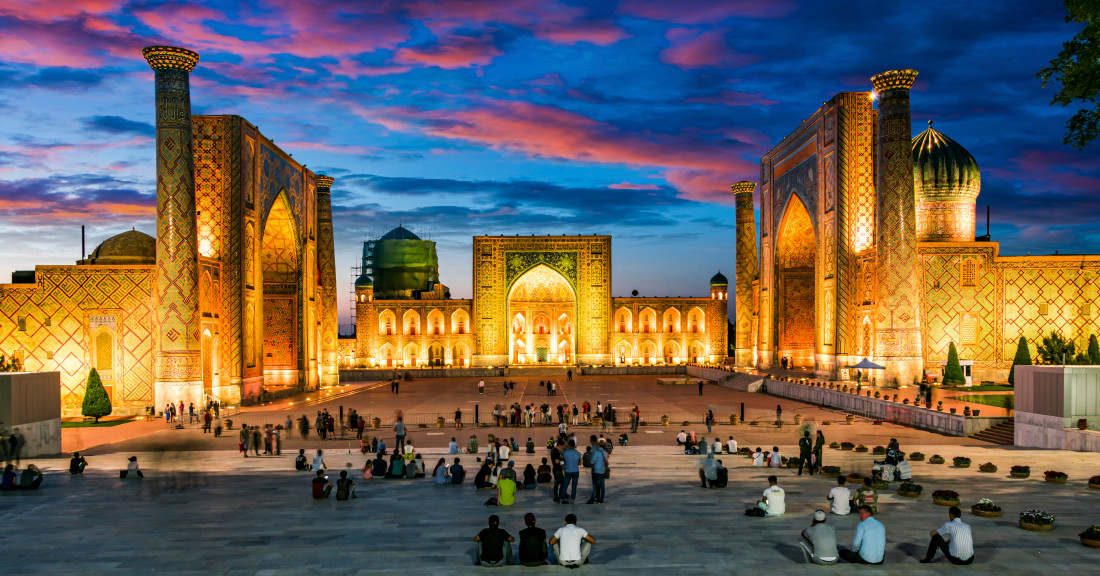
Once known for its colorful bazaars, shining blue domes, and its place on the ancient Silk Road, the city of Samarkand in Uzbekistan has always been a symbol of trade, culture, and connection between worlds. On April 4, 2025, this historic city welcomed leaders from across Europe and Central Asia, not to trade silk and spices this time, but to share ideas, build partnerships, and plan a future of cooperation.
For the first time, the European Union (EU) and the five Central Asian countries, Uzbekistan, Kazakhstan, Kyrgyzstan, Tajikistan, and Turkmenistan, sat down together at one summit. The meeting was held to strengthen ties in trade, energy, transport, and security. But more than that, it was about forming a relationship built on trust, respect, and shared goals.
The gathering came at a time when the world was changing fast. With the war in Ukraine and growing tensions between global powers, the EU is looking for new friends and new routes. Central Asia, rich in natural resources and located between Europe and Asia, is becoming more important than ever.
European Commission President Ursula von der Leyen talked about how the EU wants to increase trade, build better roads and railways, improve digital systems, and work together on clean energy. For the EU, this region offers alternatives to Russian gas and Chinese minerals, things they are now trying to reduce their dependence on.
For Central Asian countries like Kazakhstan and Uzbekistan, which have growing economies and ambitious leaders, the EU is not just a trade partner. It is also a symbol of stability, investment, and international recognition. Uzbekistan’s President Shavkat Mirziyoyev noted that trade with the EU has reached €54 billion in recent years. For countries without direct access to oceans, these relationships open new doors.
But not everything was smooth. While there was clear enthusiasm for economic cooperation, some voices reminded the EU not to forget its values, especially human rights and democracy.
Organizations like Human Rights Watch and Amnesty International warned that doing business with authoritarian governments could send the wrong message. They urged the EU to raise issues like freedom of speech, fair treatment of civil society, and the rule of law.
Iskra Kirova from Human Rights Watch said, “It is good news that the EU is engaging at a high level with Central Asia, but to be effective, the talks need to address the very serious human rights concerns across the region.” Her point was clear, trade and investment should not come at the cost of silence on justice and human dignity.
There were specific concerns too. In Kyrgyzstan, a proposed “foreign agents” law, similar to one used in Russia, could limit the work of independent organizations. In Uzbekistan, although reforms have been made, there are still reports of forced evictions and land grabs. Amnesty International called on the EU to make sure its infrastructure projects follow human rights standards, including environmental safety and public consultation.
The EU faces a delicate challenge, how to build strong relationships without ignoring its core principles. European Council President António Costa said, “This partnership must be based on trust and shared interests.” But the real test is whether those shared interests include freedom and fairness, not just business.
📄 POLICY WIRE WHITEPAPER PUBLISHED: PAKISTAN'S NATIONAL SECURITY POLICY PRIORITIES
👉 READ BY CLICKING HEREThis summit also shows how the global map is shifting. As Russia faces isolation due to war, and China continues to expand its influence through its Belt and Road projects, the EU sees a chance to play a bigger role in the region. Central Asia, meanwhile, is looking for more balanced relationships. These countries don’t want to depend on just one power, they want options. That’s why the EU’s softer, more respectful approach is attractive.
Still, this new relationship won’t grow overnight. It will need time, patience, and small steps built on understanding. For the EU, this is a chance to show that it can work with other countries without giving up on its values. For Central Asia, it’s an opportunity to grow while protecting independence and national interest.
As the summit ended and leaders smiled for photos under Samarkand’s famous blue sky, there was a sense of hope. But the real work begins now. Agreements made in grand halls must turn into action on the ground, an action that benefits ordinary people, respects their rights and brings stability to the region.
Samarkand has always been a place where cultures meet. In 2025, it became a place where futures were planned. Now it’s up to the EU and Central Asia to keep walking that path, together, with honesty and vision.
Author