


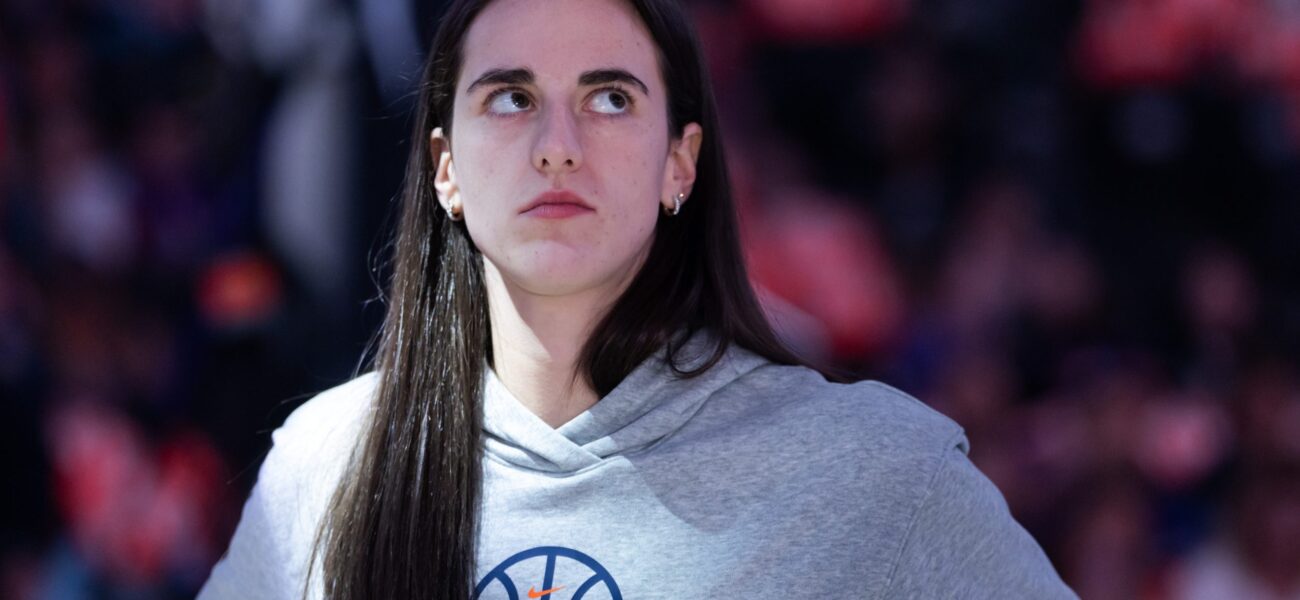
From Hardwood to Capitol Hill: Caitlin Clark Collisions Ignite Culture Wars on a National Stage
POLICY WIRE — Washington, D.C. — It’s rare, to say the least, when the machinations of professional women’s basketball — specifically, the jostling on a court in Phoenix...

POLICY WIRE — Washington, D.C. — It’s rare, to say the least, when the machinations of professional women’s basketball — specifically, the jostling on a court in Phoenix — suddenly catch the urgent attention of Congress. But this, apparently, is where we find ourselves. Forget inflation, forget global instability, or the next pressing policy quagmire; a significant faction of House Republicans has pivoted, with unexpected zeal, to the matter of how rookie sensation Caitlin Clark is being treated in the WNBA. The sport, long considered niche, now occupies a peculiar spotlight, entangled in a mesh of celebrity, partisan rhetoric, and a dash of perceived victimhood.
No fewer than eleven Republican representatives recently put pen to paper, dispatching a formal letter to WNBA Commissioner Cathy Engelbert. Their demand? To address “repeated acts of physical hostility and violence” allegedly directed at Clark, the Indiana Fever’s nascent superstar. One can almost picture the hushed, earnest debate — “Is her screen percentage down? Is the defensive scheme truly targeting her off-ball movement?” — preceding this stern congressional admonition. It’s a curious deployment of political capital, considering the vast array of issues typically inhabiting the legislative agenda. It speaks to a broadening trend, where sports and celebrity often intersect with politics, creating flashpoints far beyond their traditional boundaries. Sometimes, these spectacles play out on global stages; think of how easily controversies around national sports teams can escalate into diplomatic incidents, mirroring a common pattern even in countries like Pakistan, where public outrage over cricket controversies can swiftly become national debates, pulling in a multitude of political voices and societal factions.
But the reaction to this congressional intervention? It wasn’t universally met with solemn agreement. Far from it. On a recent Saturday gabfest, CNN anchor Abby Phillip — rather audaciously, some thought — appeared to chortle at the very notion of lawmakers delving into Clark’s on-court tribulations. And sports journalist Cari Champion, never one to mince words, shot down any suggestions that Clark’s physical challenges were rooted in racial animus. “To suggest that it’s intentional or that people are being racist towards her,” Champion stated emphatically, “leaves out a long history of women who’ve supported this league, who were Black. It’s very disrespectful to them, the women who are the foundation of the league.” Her point, raw and direct, cut straight through the emerging narrative. And fans, naturally, wasted no time firing off angry tweets and posts at both Phillip and Champion, creating an online firestorm.
It’s true, Clark has seen plenty of bumps and bruises throughout her WNBA run — she’s a physical player, that much is certain. But the spotlight intensified dramatically after a mid-June matchup where Phoenix Mercury’s Alyssa Thomas appeared to make contact with Clark’s throat. That was it; the dam broke. Since then, it seems everyone with a microphone or a platform — from her coach to the current occupant of the White House (and a former one, too, no less!) — has weighed in. The discourse ballooned, dragging basketball into the maw of broader cultural arguments.
This level of outside scrutiny, and frankly, outright political intervention, isn’t typical for professional sports, particularly women’s basketball. Yet, it highlights how quickly a popular figure, especially one as transcendent as Clark, can become a proxy for wider societal anxieties or grievances. “Frankly, this isn’t just about basketball,” asserted Representative Marjorie Taylor Greene (R-GA), a vocal proponent of the letter, “it’s about basic decency and protecting a rising star from what looks a lot like targeted aggression. We’re simply asking for the league to uphold fair play, not ignore clear patterns of behavior.” A bold claim, considering most league officiating relies on officials, not legislators.
But not everyone views the league’s physical style as problematic, or requiring a federal overseer. “The WNBA celebrates intense competition and athleticism,” offered Cathy Engelbert, the league’s Commissioner, in a prepared statement — carefully skirting direct engagement with the congressional broadside. “Our officials are trained to maintain a high standard of play, and we continually review game incidents to ensure player safety within the competitive framework of professional sports.” The statement was dry, precise; essentially a diplomatic shrug. After all, professional sports, by their very nature, involve physical contact, occasionally bruising. Just last year, one league was debating the merits of ‘ghosting’ an opposing player on the court. It’s just part of the game.
📄 POLICY WIRE WHITEPAPER PUBLISHED: PAKISTAN'S NATIONAL SECURITY POLICY PRIORITIES
👉 READ BY CLICKING HEREMeanwhile, the debate bled into actual basketball analysis, because apparently nothing is safe from the swirling current of hot takes. Even women’s basketball legends Sue Bird and Cheryl Miller found themselves picking differing All-Star rosters, with Bird choosing Clark for her long-range prowess, while Miller opted for another standout, Kelsey Mitchell. It’s a sport, remember, that has seen an explosion in interest; for example, the 2024 WNBA Draft, heavily influenced by Clark’s presence, snagged a whopping 2.45 million viewers, a massive 307% jump from the previous year, as reported by ESPN. Numbers like that — that’s serious cultural impact. And for Clark, that kind of popularity has apparently come with a rather hefty, and at times peculiar, political baggage train. That train just might take the whole league — or, at least, the discussion around it — on an unforeseen, quite lengthy, and probably very bumpy ride.
What This Means
The bizarre spectacle of Congress weighing in on WNBA physicality transcends mere sports. Politically, it signals a deeper trend of culture war “battles” being fought on increasingly trivial — or at least unexpected — fronts. For some conservatives, defending Clark, a prominent white female athlete, against perceived aggression (and implicitly, against some of the league’s established, often Black, stars) fits neatly into a broader narrative of grievance and perceived “wokeness” in cultural institutions. This politicization of a popular athlete can mobilize certain voter bases, offering an accessible, easily digestible proxy for larger societal tensions.
Economically, this manufactured controversy, while divisive, inadvertently boosts the WNBA’s profile. More debate means more eyeballs, and as the surge in draft viewership demonstrates, any attention can translate into increased engagement, sponsorships, and media rights — even if the initial spark is deeply contentious. The league, initially hesitant to lean into the “Clark vs. the world” narrative, now finds itself the unwitting center of a political debate, drawing scrutiny (and potential viewers) from demographics that might never have tuned in otherwise. It’s a double-edged sword: a national debate on a basketball court isn’t the growth strategy anyone asked for, but it sure isn’t being ignored.