


From Cooperation to Catastrophe: The Human Cost of India’s Indus Waters Treaty Suspension
The catastrophic flooding that has recently devastated Pakistan’s Punjab province starkly highlights the perilous imbalance in Pakistan’s water relationship with India. For decades, the Indus Waters...

The catastrophic flooding that has recently devastated Pakistan’s Punjab province starkly highlights the perilous imbalance in Pakistan’s water relationship with India. For decades, the Indus Waters Treaty (IWT) served as a framework for cooperation, compelling India to share critical hydrological data and provide advance warnings of dam releases that could inundate downstream Pakistan. However, in April 2025, India audaciously suspended the treaty, effectively stripping away these essential safeguards. What Pakistan faces now is not simply a natural disaster; it is the direct consequence of India’s reckless decision to abandon its obligations, further exacerbating an already dire situation.
Under the IWT, India was required to provide continuous daily data during the monsoon season, including river discharge levels, dam storage capacities, and planned releases, via the Permanent Indus Commission. This allowed Pakistan to forecast flood intensity, mobilize evacuations, and shore up embankments with precious hours or even days of advance notice. In 2019, India gave Pakistan 48 hours’ warning before releasing water from the Bhakra Dam. In 2023, it alerted Pakistan 24–48 hours in advance of major Ravi flooding. Even in emergencies, a 12–24 hour window of warning through the PIC was part of treaty practice. That mechanism no longer exists.
Instead, this year Pakistan received only a single “humanitarian” flood warning from India on August 24, 2025, two to three days before the Sutlej and Ravi swelled to their highest levels in decades. This warning, delivered via diplomatic channels in Islamabad, was not a substitute for the detailed, continuous data the IWT once guaranteed. It did not include gauge readings, dam release schedules, or inflow projections, leaving Pakistan’s authorities to rely on their own limited monitoring. As a result, we underestimated the intensity of the floods. The Ravi surged past 202,000 cusecs at Jassar on August 27 and is expected to reach 250,000 cusecs, while the Sutlej crossed 287,000 cusecs at Ganda Singh Wala on August 26, the highest in 35 years. By the time these flows materialized, villages, crops, and bridges had already been swallowed.
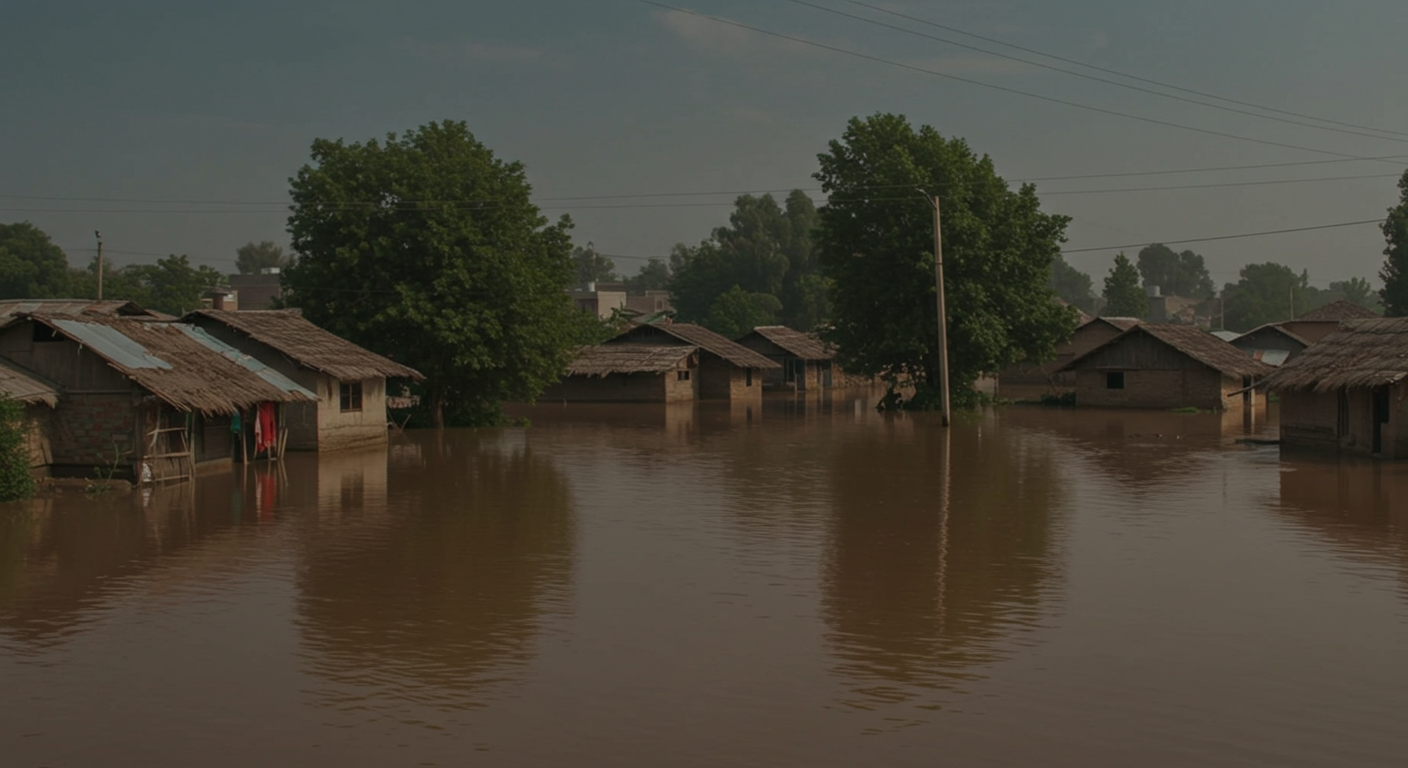
The consequences for Pakistan have been devastating. Over 174,000 people have been forced to evacuate across Bahawalnagar, Kasur, Pakpattan, and Okara. Protective dykes collapsed in Okara and Burewala. Breaches at Kotli Marla and Badoke Cheema cut off vital roads, stranding entire communities. The Hanjli Bridge in Zafarwal has collapsed, while Khairpur Daha Bridge has sustained severe damage. Over 50 villages lie submerged, with thousands of acres of cotton, paddy, maize, and vegetables destroyed across Narowal, Sialkot, Bahawalnagar, and beyond. These are not just statistics; they represent shattered livelihoods and families who had little time to save their homes or harvests.
India claims its releases are dictated solely by operational necessity, that the Bhakra Dam, Ranjit Sagar Dam, and others could not contain the massive monsoon inflows without risking structural failure. There is truth in this. Yet what Pakistan objects to is the manner in which those releases are managed. With the IWT suspended, India now makes unilateral decisions without consulting or coordinating with Pakistan, and without providing the granular data that could save lives downstream. A two-day humanitarian alert does not compensate for the absence of real-time monitoring and continuous coordination. This information gap is what allowed floodwaters to overwhelm embankments, catch farmers unprepared, and force frantic last-minute evacuations.
Some in Pakistan have labelled this “water terrorism”, an intentional attempt by India to weaponize rivers against us. Whether deliberate or not, the technical reality is the same: by cutting off the IWT’s notification mechanisms, India has made floods in Pakistan more destructive than they might otherwise have been. Unfortunately, all across the world, upstream nations prioritize domestic needs and release water on their own terms. Downstream nations, left without information or input, pay the price.
For Pakistan, the lesson is bitter but clear. We can no longer entrust our national security to the goodwill of India or the letter of a treaty that can be suspended at will. We must urgently invest in flood-resilient infrastructure, predictive modelling, and local early warning systems capable of compensating for India’s vulnerability. Diplomatic channels should be utilised to demand the restoration of flood coordination, but we must also prepare for a future in which those demands fall on deaf ears.
The farmers of Kasur, the families in Bahawalnagar, and the communities cut off in Narowal are living proof that the absence of treaty-bound coordination can mean the difference between controlled risk and uncontrolled disaster. Unless Pakistan acts decisively to reduce its dependency on upstream notifications, every monsoon will continue to bring not just rain, but renewed tragedy.
Author