


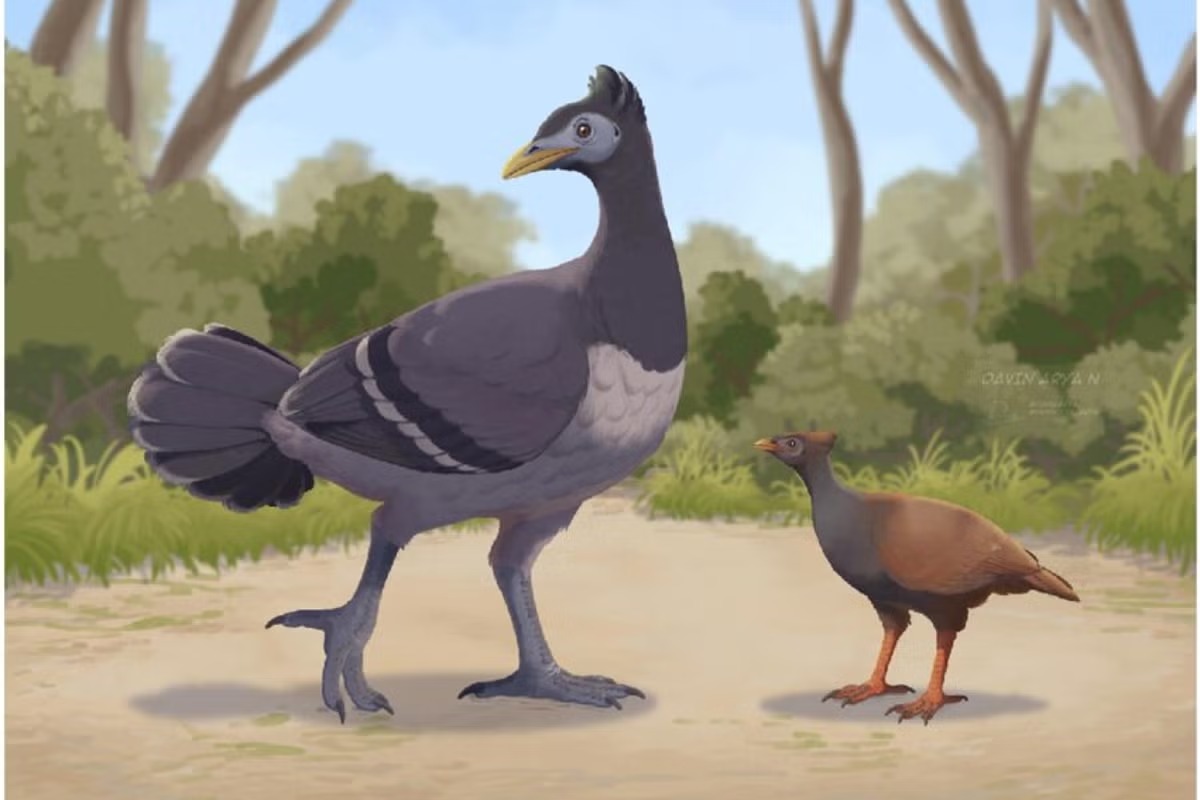
Fossil of Giant Chicken Bird Discovered in Cave Home to Ancient ‘Hobbit’ Humans
Scientists identify a new species of giant bird found on Flores, Indonesia, which once lived alongside miniature 'Hobbit' humans during the Pleistocene.

POLICY WIRE — Flores, Indonesia — A fossilized leg bone recovered from an Indonesian cave has revealed the existence of a previously unknown species of bird resembling a giant chicken.
The specimen was unearthed back in 2009 at the Liang Bua cave, located approximately 7 meters beneath the surface of the floor.
Liang Bua is famous for providing the remains of Homo floresiensis, an ancient human lineage often referred to as “Hobbits” because of their diminutive size.
This extinct avian once shared the island of Flores with those small humans, who stood only about 3 feet and 6 inches tall.
The prehistoric ecosystem also hosted other unusual fauna, including dwarf elephants and massive storks.
The fossil remained unidentified for 17 years before researchers recognized it as a distinct species, which they named Megapodius rokusi.
Experts believe this bird represents the largest member ever recorded within its genus.
While Indonesian zooarchaeologist Rokus Due Awe was the first to determine the bone was avian, its true scientific importance was not immediately apparent.
Analysis indicates the fossil dates back to the Pleistocene epoch, specifically the period between 120,000 and 120,000 years ago.
Hanneke Meijer of the University Museum of Bergen and her research team conducted a detailed examination of the specimen, identifying several unique characteristics.
The fragment consists of the lower portion of a right tarsometatarsus, the leg bone that connects to the toes.
The shape of the toe joints differed significantly from any other known megapodes, with one joint angled sharply outward and another featuring a specific groove and rounded depression.
The bird belonged to the megapode group, ground-dwelling birds known for burying their eggs in burrows or mounds to utilize geothermal heat for incubation.
By comparing the bone to both living and extinct species, the team found no matching combination of features, leading to their conclusion of a new species.
The size of the bird was also notable; using statistical models based on bone dimensions, the team estimated the bird weighed roughly 3.9kg (8.6lb).
While this weight is modest compared to modern domestic chickens bred for meat, the bird was significantly larger than any megapodes found on Flores today.
The discovery of this new species offers further insight into the unique wildlife that once inhabited the island, and scientists hope future finds will clarify the bird’s evolution and eventual extinction.
Reporting by Policy-Wire (PW)