

Footfall and Folly: The Peculiar Resilience of the Camino’s Spiritual Economy
POLICY WIRE — Santiago de Compostela, Spain — It isn’t the blisters, nor the communal bunk beds, nor even the often-questionable hostel food that truly defines the contemporary Camino de...

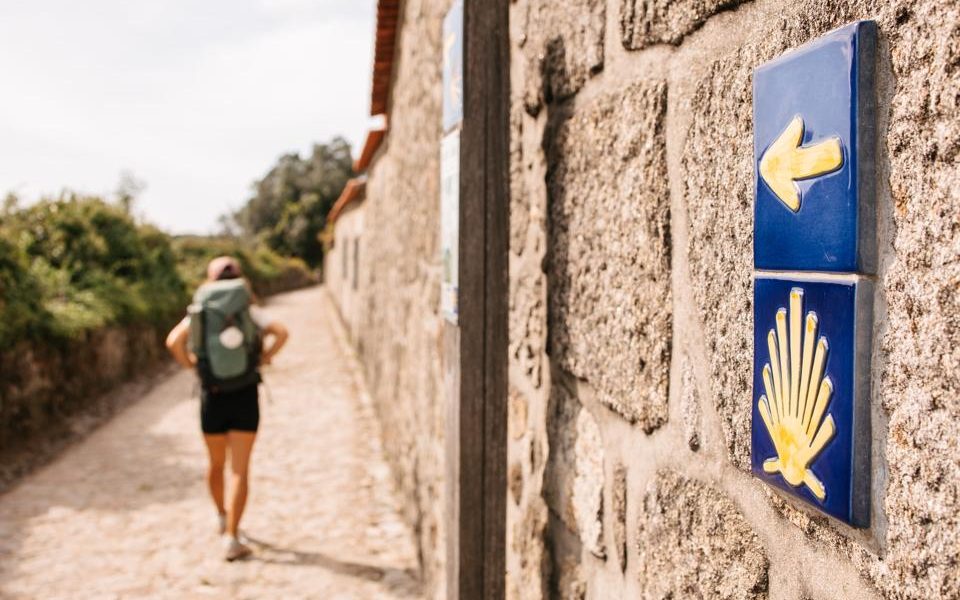
POLICY WIRE — Santiago de Compostela, Spain — It isn’t the blisters, nor the communal bunk beds, nor even the often-questionable hostel food that truly defines the contemporary Camino de Santiago experience. What’s often missed, what’s actually quite striking, is the underlying existential craving that fuels an entire economy built on spiritual aspiration. Folks don’t just walk these days; they’re often running from something—or perhaps more accurately, toward some ill-defined sense of ‘self’ they believe is waiting at the end of a very long gravel path.
For centuries, the route was straightforward, defined by religious devotion, its purpose rarely questioned. Now, it’s a mélange. Backpackers seeking Instagram-worthy sunsets jostle alongside those genuinely grappling with life’s weightier questions, sometimes unknowingly. There’s a particular kind of irony in watching someone lamenting the loss of their designer hiking socks while simultaneously trying to ‘find themselves’ between a twelfth-century chapel and a modern vending machine.
The whole thing’s a grand exercise in introspection, packaged — and sold. But for all its commercial sheen—the myriad guidebooks, the specialized gear, the surprisingly diverse hostel offerings—the Camino still manages to deliver. People drop careers, mourn losses, question relationships, and seek clarity, often by simply putting one foot in front of the other. It’s an antidote, of sorts, to our perpetually plugged-in lives. But, you’ve got to wonder, how much transformation can one purchase alongside a pilgrim’s passport?
And the numbers? They speak volumes. According to the Pilgrim’s Office in Santiago de Compostela, over 446,000 pilgrims registered their completion in 2023. That’s a staggering amount of individual journeys converging on a single point—each one supposedly a path to personal growth. Think about it: that’s more than the entire population of some capital cities, all searching for a similar, if undefined, spiritual elusive. But it’s not just about introspection; there’s a serious financial current beneath all that meditative walking. From tiny rural cafes to larger souvenir shops in Santiago, every step represents an economic transaction, sustaining communities along the ancient ways.
But how unique is this phenomenon? Not as much as one might think. While the Camino carries a distinct European Christian heritage, the hunger for journeys of spiritual self-discovery isn’t geographically bound. In South Asia, Sufi shrines—from Pakistan’s Lal Shahbaz Qalandar to India’s Ajmer Sharif Dargah—draw millions annually. Devotees undertake arduous, sometimes months-long, foot pilgrimages called ziyarat, seeking blessings, solace, and spiritual purification. Their reasons are just as personal, just as intense, and their journey just as physically demanding as those trekking through Galicia. The underlying human impulse to seek answers or absolution through physical exertion and disconnection from daily life—that transcends creed and continent.
It’s about shedding the excess, be it literally from your backpack or metaphorically from your mental clutter. A pilgrim from Karachi, navigating the busy streets toward a saint’s tomb, is not so different in purpose from a stockbroker from London, traversing the French countryside toward Compostela. Both are engaged in a dialogue with themselves, spurred by a tradition—religious or otherwise—that promises renewal. And both contribute to local economies, often in forgotten rural pockets, in ways that policymakers rarely count as ‘soft power’ but perhaps ought to. Because even a pilgrim buys a loaf of bread, you know?
📄 POLICY WIRE WHITEPAPER PUBLISHED: PAKISTAN'S NATIONAL SECURITY POLICY PRIORITIES
👉 READ BY CLICKING HEREOne hears endless stories of profound shifts. But doesn’t the very act of undertaking such an intentional disengagement from everyday stressors naturally lead to altered perspectives? We’ve seen countless memoirs detail life-changing epiphanies discovered between one medieval village — and the next. But for every profound revelation, there’s likely an equally common observation about just how difficult it’s to get good coffee in rural Spain at 6 AM.
And when they say [QUOTE_PLACEHOLDER], they really mean it. It’s hard to ignore the pull. But it’s also worth acknowledging the practicalities that facilitate this ‘transformation’. You don’t have to quit your job to gain perspective, but it helps. A lot. Most can’t afford such luxury—or the privilege of time. So, the Camino, while open to all, still inadvertently serves a particular demographic ready for such an intense, often solo, voyage. It’s a journey, then, of personal rediscovery wrapped in layers of history, belief, and, dare I say, savvy marketing.
What This Means
The enduring popularity of the Camino de Santiago points to a broader socio-economic and psychological trend: a burgeoning global market for ‘spiritual tourism’ and personal development packaged as arduous physical journeys. On one hand, it’s a remarkably sustainable economic engine for some of Europe’s less industrialized regions. Consider the millions of euros injected into local communities along its various routes, from Galicia to Navarre, through direct spending on accommodation, food, and local services. It’s a genuine, albeit somewhat quaint, economic counterpoint to the rapid urbanization seen elsewhere. These small economies depend on feet hitting the path, not just once but year after year.
On the other hand, its success signals a deeper societal disconnect, a pervasive yearning for meaning beyond material accumulation that capitalism itself often fosters. People are explicitly paying for—and taking time off—to essentially ‘unplug and think’. This isn’t just a Christian phenomenon; it mirrors similar surges in Sufi pilgrimages, yoga retreats, and other spiritual tourism activities across the South Asian landscape and beyond. Governments might consider such low-impact, high-engagement cultural experiences as undervalued assets, providing a unique blend of heritage preservation and community-level economic uplift. It shows us that for all our digital advancements, the human brain still processes trauma, ambition, and identity best when given plenty of time and space, preferably outdoors. And, yes, maybe with a nice cold cerveza at the end of the day.