


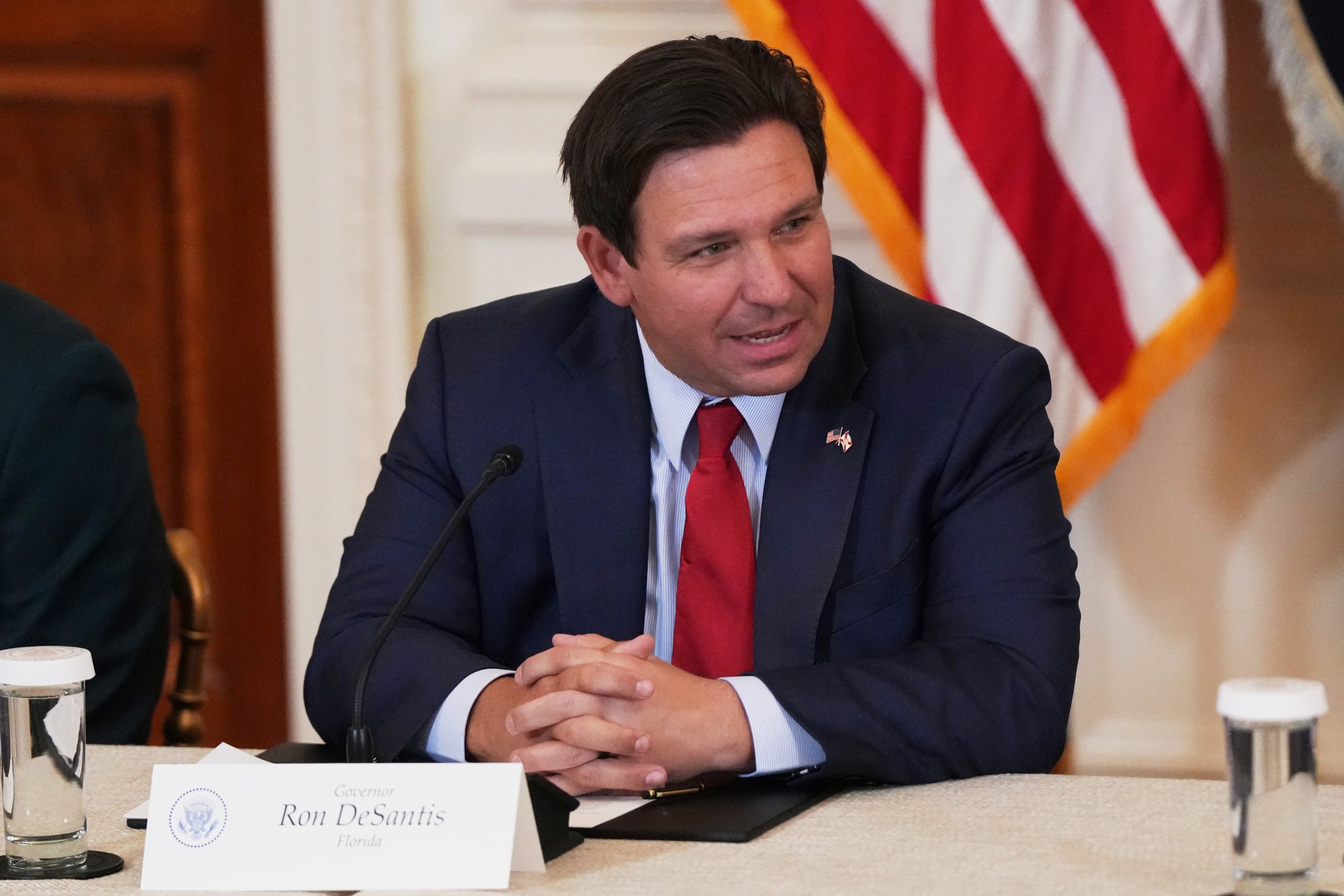
Florida’s High Court Gambit Crumbles, Exposing Inter-State Fissures on Migration Policy
POLICY WIRE — Washington, D.C. — Turns out not every grandstand play, even when carefully plotted, pans out in the nation’s highest court. The US Supreme Court, after some quiet...

POLICY WIRE — Washington, D.C. — Turns out not every grandstand play, even when carefully plotted, pans out in the nation’s highest court. The US Supreme Court, after some quiet deliberation—you know, the kind that can reshape legal landscapes without much fanfare—put the kibosh on Florida’s rather aggressive bid to challenge the trucking license policies of several Western states. It wasn’t exactly a roar heard ’round the legal world; more like a sigh of resignation from Tallahassee. But, don’t kid yourself, the implications are bigger than a trucker’s logbook.
Florida, under its current leadership, has been—let’s be honest—nothing if not zealous in its approach to immigration. They’ve gone all-in, crafting policies meant to throw a wrench into, or at least slow down, what they consider lax federal border enforcement and state-level leniency. The latest maneuver, now a non-starter, sought to haul California and a few other Western stalwarts before the nine justices. The claim? These states, by allowing immigrants, especially undocumented ones, to obtain commercial driver’s licenses (CDLs), were effectively enabling an immigration crisis. They were, in Florida’s estimation, doing a solid for what Tallahassee views as unlawful migration, and creating a kind of pull factor, never mind the interstate commerce angle that keeps this whole nation’s goods moving.
The core of Florida’s legal tantrum was simple enough, at least on the surface: those licenses from California — and co. were causing an uptick in illegal immigration, hurting Florida’s own carefully constructed and stringent policies, and — get this — creating financial burdens. The Court, without offering much explanation that day, chose to [QUOTE_PLACEHOLDER] Florida’s request to file the case directly with them. This procedural slap-down—it wasn’t a ruling on the merits, mind you—means Florida can’t just skip the lower courts and bring its interstate grievance straight to the top. This happens. A lot. The Supreme Court isn’t just a place to air every state’s beef with its neighbors, despite what some governors might wish.
And what’s at stake here? It’s not just a few trucking jobs or regulatory minutiae. We’re talking about fundamental questions of state sovereignty versus federal immigration authority, and, crucially, how states interact when their policies directly clash on matters of national consequence. Florida essentially tried to use the judicial system to dictate how other states manage their economies and immigrant populations. They suggested these Western policies amounted to [QUOTE_PLACEHOLDER] encouraging [QUOTE_PLACEHOLDER] undocumented workers. It’s a broad claim, built on a specific and politically charged interpretation of migration patterns and economic drivers.
The ramifications stretch beyond US borders. Consider how crucial remittances are to many global economies, especially in places like Pakistan. Migrant workers, often engaged in sectors like trucking — and logistics, send billions of dollars back home annually. According to the World Bank, remittances to Pakistan alone soared by over 26% in 2021, reaching an estimated $31.3 billion, a lifeline for countless families. These are real people, doing real jobs, often in conditions that host countries debate vigorously. Whether it’s someone sending money from California back to Karachi, or from the Gulf states, where policies on migrant labor are often much more restrictive and precarious—just check out Quiet Purge Echoes: Pakistani Lives Upended in Gulf’s Shadow Play for some truly unsettling stories—the global impact of such localized policy battles is plain to see.
But back to American legal terrain: the rejection itself shows a certain reluctance from the Supreme Court to become an arbiter of every policy difference between states, especially when it touches upon something as thorny and politically freighted as immigration. They’re telling states, loud and clear, that you can’t just use them as a forum for political arguments masquerading as original jurisdiction cases.
The decision—or lack thereof—is, in many ways, a tactical victory for states like California, whose economies rely on a diverse labor pool, including many immigrants. It gives them more breathing room to enact their own policies without constant federal or interstate judicial threats. For Florida, it means back to the drawing board for their anti-immigration strategies. Maybe more state-level legislation. Or, perhaps, a shift in rhetoric, though that seems less likely from a state that’s made immigration enforcement a cornerstone of its executive agenda.
What This Means
This judicial brush-off is less about the merits of Florida’s claims and more about the boundaries of the Supreme Court’s original jurisdiction—their power to hear cases first, not on appeal. For Florida Governor Ron DeSantis and his political ambitions, it’s a minor setback, denying him a direct, high-profile legal win. It does, however, reinforce a long-standing tension between states with varying immigration policies, highlighting how fragmented US immigration governance truly is. Don’t expect this to calm the waters; it just redirects the political energy. States will keep testing limits. Businesses in the trucking industry, already facing chronic labor shortages, particularly with long-haul drivers, are likely watching closely. Policies that allow more people into the formal economy—whether native-born or immigrant—often address these shortages. And, this won’t be the last time states like Florida try to bend the federal judicial system to their will in this fight.