

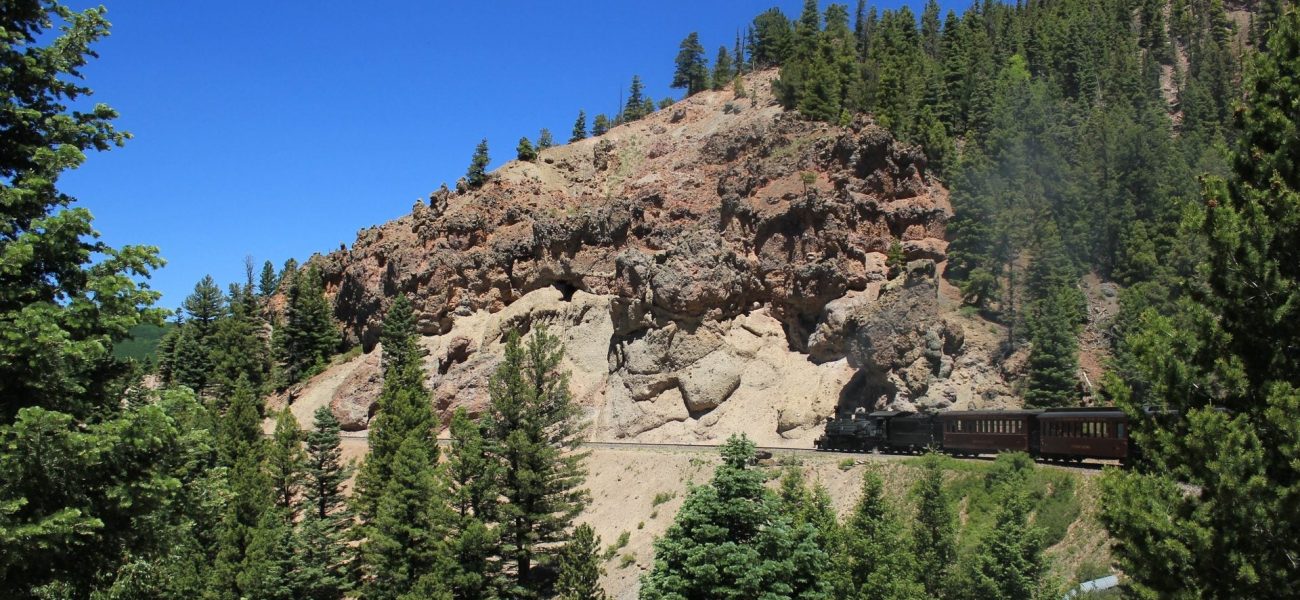
Drought-Stricken West Ponders Future as Tourist Lifelines Resume
POLICY WIRE — Chama, N.M. — It isn’t just the huffing steam engine and the clatter of railcars that are making noise again in this small New Mexico town. There’s a sigh of collective...

POLICY WIRE — Chama, N.M. — It isn’t just the huffing steam engine and the clatter of railcars that are making noise again in this small New Mexico town. There’s a sigh of collective relief, too, a soft hiss of exasperation dissipating after weeks of dry-mouthed suspense. For communities tethered to seasonal tourism, a delay isn’t just inconvenient; it’s an economic gut-punch, a disruption that rattles far beyond the immediate booking cancellations.
The Cumbres & Toltec Scenic Railroad, a venerable, narrow-gauge line cutting through breathtaking Rocky Mountain terrain, was supposed to open its summer season weeks ago. May 23, to be exact. But then came the drought—an invisible adversary far more potent than any scheduled maintenance issue—and the accompanying, terrifying spectre of wildfire danger. The tracks went silent. Businesses held their breath. For weeks, the familiar choo-choo of an economic engine simply wasn’t there. It leaves you wondering, doesn’t it, about the fragility of local economies built on natural wonders?
This isn’t an isolated incident, either. The arid American West, a landscape already familiar with cycles of lean rainfall and scorching summers, finds itself on the sharper end of environmental shifts. Water levels recede, foliage dries, — and the threat of catastrophic fires becomes an annual ritual, not an anomaly. Think about it: a region defined by its rugged beauty finds that very beauty increasingly imperiled, often by conditions policymakers in faraway capitals only occasionally grasp with adequate urgency.
Finally, a reprieve, of sorts. After considerable trepidation and an intense review on June 2 by the Cumbres & Toltec Scenic Railroad Commission, the verdict arrived: the tracks are open for business. Tuesday, June 9, marks the belated, though still deeply welcome, start of operations. [QUOTE_PLACEHOLDER]A sincere thank you to all our passengers and the communities in Chama and Antonito who have been so patient as we waited for conditions to improve, said Eric Mason, CEO of the Cumbres & Toltec Scenic Railroad. We’re excited to welcome guests back aboard — and hear the opening whistle signal the start of another memorable season.
This re-opening, frankly, is a microcosm. It reflects the constant, sometimes quiet, battle many communities face balancing economic necessities with environmental realities. The season has to happen. Locals depend on it—the B&Bs, the diner proprietors, the gift shop owners whose livelihood hinges on those tourist dollars. And who can blame them for wanting it to work? They’ve watched this railroad become an institution, recently snagging USA TODAY’S poll for the best scenic train ride in the country.
In a bit of timely good news—and smart marketing, let’s be honest—the railroad’s celebrating that victory with a 25% discount on coach tickets for trips through August, provided you book by June 7. Customers have to use a promo code, USATODAY#1, — and call them directly to grab the deal. Small gestures like this matter. They tell people, ‘We’re back, — and we appreciate you.’
But the story doesn’t end there. Beyond the daylight runs, the railroad’s also launching its first Dark Sky Train departures, starting June 12 from Chama and June 13 from Antonito. These aren’t just joyrides; they’re evening excursions guided by international dark sky specialists, ferrying passengers to pristine, light-pollution-free spots. It’s a neat fusion of tourism and environmental stewardship, capitalizing on a natural asset (our stunning night skies) that ironically, light pollution is also slowly eroding globally. We forget, sometimes, what we’re losing. Even up here in New Mexico.
📄 POLICY WIRE WHITEPAPER PUBLISHED: PAKISTAN'S NATIONAL SECURITY POLICY PRIORITIES
👉 READ BY CLICKING HEREAnd, if we’re being honest, this year’s late start serves as a stark reminder of the escalating climatic challenges facing infrastructure and economies everywhere. This particular delay was specific to New Mexico’s particular dry spell. But similar anxieties plague regions across the globe, from arid parts of Pakistan where prolonged heatwaves jeopardize crop yields and energy grids, to other tourism-reliant locales confronting erratic weather patterns. In fact, NOAA data indicates that approximately 15% of the contiguous United States remained in some stage of drought as of May 2023, reflecting a persistent strain on water resources.
But hope, however fragile, springs eternal. The Grand Opening Celebration slated for Saturday, June 13, in Chama isn’t just about a train. It coincides with Chama Western Heritage Days, a town-wide festival packed with live music, vendors, and rodeo competitions. It’s a full-throttle celebration of resilience—a community saying, [QUOTE_PLACEHOLDER] They’re tough out here, you’ve gotta give them that.
What This Means
This train’s belated launch isn’t just a feel-good story; it’s a stark indicator of mounting economic volatility driven by climate factors. For a community like Chama, a railroad is more than nostalgia; it’s a significant portion of its annual revenue. The weeks of delay represent lost income for dozens, if not hundreds, of small businesses and local workers, forcing difficult choices and likely tightening belts.
Politically, incidents like this highlight the increasing strain on local and state governments to develop adaptive strategies for environmental shifts. What happens when such delays become commonplace, or when the threats to natural assets grow too large to mitigate? Policy makers—from Santa Fe to Washington—must consider dedicated climate resiliency funding and diversified economic development for such vulnerable, often remote, communities. They simply can’t always absorb these shocks.
From a global perspective, the drought conditions plaguing New Mexico echo a pervasive challenge. Across the Muslim world, from Pakistan’s Indus Basin to North Africa’s Atlas Mountains, water scarcity, intensified heatwaves, and agricultural stress are accelerating. Governments grapple with ensuring food security — and managing mass migrations spurred by climate change. For countries like Pakistan, already battling complex socioeconomic and geopolitical hurdles, prolonged droughts aren’t merely inconveniences—they’re existential threats that can destabilize entire regions. The economic fragility we see playing out here, over a train ticket, feels familiar and disquieting against that larger, global backdrop. These communities, be they in the American Southwest or the Punjab, aren’t asking for handouts; they’re demanding a recognition of new realities and the political will to address them.