


Fired Admiral, Local Attorney Battle for Mace’s Seat: A SC Primary with National Echoes
POLICY WIRE — Charleston, USA — It wasn’t the predictable fanfare or the expected establishment endorsement that grabbed attention this week, but rather a quietly seismic shift in a Democratic...

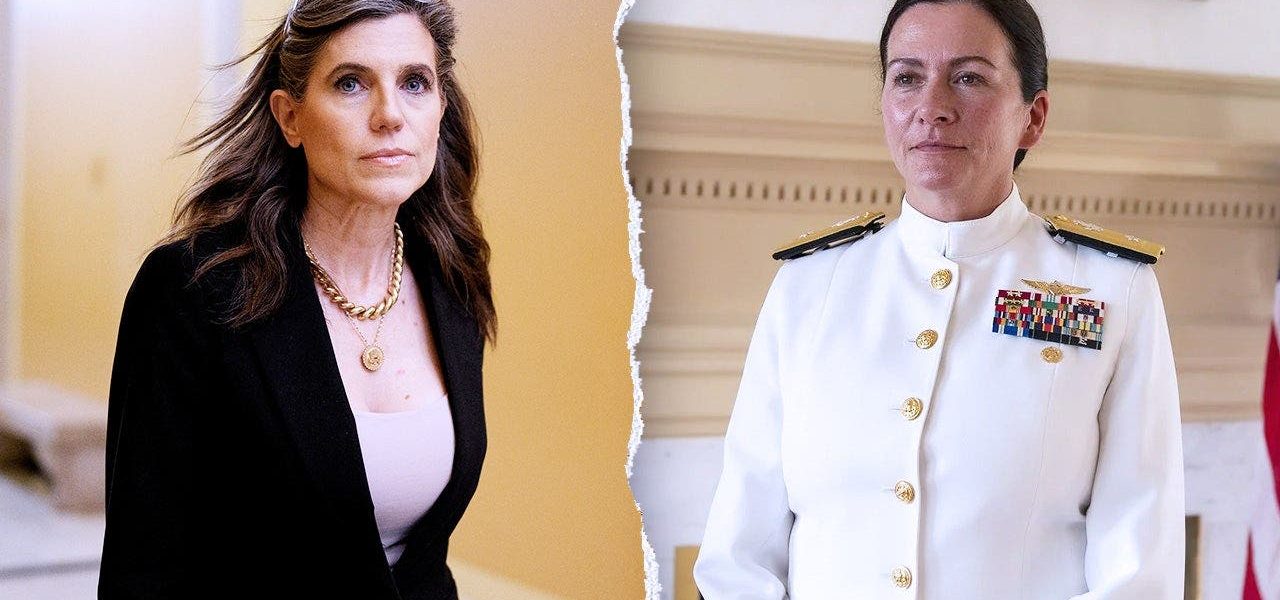
POLICY WIRE — Charleston, USA — It wasn’t the predictable fanfare or the expected establishment endorsement that grabbed attention this week, but rather a quietly seismic shift in a Democratic primary, now destined for a runoff. An admiral, once apparently jettisoned from service by a personality as boisterous as Pete Hegseth, now finds himself just one step away from vying for a congressional seat. Alongside him, a local attorney — grounded in community, if perhaps less flashy — will contend for the same shot, painting a vivid picture of American political appetites. They’re both angling for the chance to replace Congresswoman Nancy Mace, setting up a fight that’s anything but straightforward.
The tale’s particularly American flavour comes partly from its main characters. On one side, we’ve got the admiral, a military career spanning years, presumably ending with a highly publicized ousting. (Yes, the very detail of being ‘fired by Hegseth’ adds a particular spice to his origin story, doesn’t it? It implies a certain kind of political theatre, a high-octane dismissal that now somehow becomes a campaign talking point rather than a disqualifier.) This isn’t just any military man; it’s one with a public, dramatic end to his naval career that seems to have only fuelled his political ambitions. And then, there’s the local attorney. A grounded figure, perhaps emblematic of the party’s desire for grassroots authenticity, or maybe just someone who understands the nuances of local zoning laws better than international maritime boundaries. [QUOTE_PLACEHOLDER]
It’s fascinating, really, how a single phrase can encapsulate an entire campaign narrative. ‘Fired by Hegseth.’ One can practically see the attack ads writing themselves, irrespective of whether Hegseth himself was pulling levers or just commenting loudly from the sidelines. What matters is the perception, the immediate, gut-level read of that phrase. And perception, we know, often trumps reality in the rough-and-tumble of American primaries. This district, the First Congressional District of South Carolina, it’s accustomed to headlines. It’s got a strategic port, significant military installations, and a diverse population—a true microcosm of American complexity.
But the road to November’s general election runs squarely through a Democratic primary runoff, where turnout often becomes the deciding factor, a brutal exercise in mobilization. Winning it isn’t about grand national narratives alone. It’s about knocking on doors. It’s about precinct captains and phone banks and getting people back to the polls for a second time, when political exhaustion has often set in. Only an average of 10.3% of registered voters participate in primary runoff elections across US states, according to a 2022 analysis by the Pew Research Center, a grim reminder of the challenge at hand for these two hopefuls.
The runoff isn’t just a local skirmish, either. It’s a bellwether for the broader currents shaping the Democratic Party. Do they favour a figure with a ‘maverick’ military background, despite its potentially controversial elements? Or do they opt for the steadier, perhaps more predictable path offered by a local legal professional? These choices reflect larger debates within the party about electability, identity, and the optimal strategy to reclaim seats currently held by Republicans—like the one Nancy Mace has occupied.
📄 POLICY WIRE WHITEPAPER PUBLISHED: PAKISTAN'S NATIONAL SECURITY POLICY PRIORITIES
👉 READ BY CLICKING HEREYou can’t help but wonder about the echoes. Think of General Pervez Musharraf’s political journey, for instance, from military chief to president in Pakistan. While entirely different contexts, the allure of a military figure — particularly one perceived to have been wronged or made to sacrifice — in a civilian political arena isn’t solely an American phenomenon. It speaks to a certain longing for decisive leadership, an idealized past of discipline and order, which often resonates globally, from South Asia’s vibrant, if volatile, democracies to the American South. This political instinct—to seek a ‘strong’ leader, often one with a martial background—crosses continents and cultures, offering voters an illusion of unwavering conviction in an uncertain world. It’s an impulse politicians — and strategists on both sides of the aisle, everywhere, learn to exploit or counter.
The incumbent, Congresswoman Mace, she isn’t exactly a quiet presence. She’s carved out her own reputation, unafraid to challenge orthodoxy—sometimes even within her own party. And now, she watches two Democrats—one with a dramatic exit from military service, the other with a record forged in town halls and courtrooms—prepare to square off, each hoping to be the one who gets to take her on. It’s shaping up to be quite a spectacle.
What This Means
This runoff isn’t just a trivial blip on the electoral radar; it’s got layers of political implications, both locally and further afield. Economically, a Democratic challenger, particularly one seen as more progressive, could alter the local policy landscape, impacting everything from infrastructure spending to environmental regulations vital for the region’s coastal economy. A strong Democratic showing in this primary signals potential trouble for Republicans in swing districts—it might be that voters are feeling a new appetite for change. The fact that an admiral with a high-profile firing, rather than a more conventional candidate, has advanced speaks volumes about the current political climate: voters are drawn to narratives, even contentious ones, that defy the expected. It indicates a craving for something distinct, possibly anti-establishment, within both parties. Such electoral volatility can create ripples of uncertainty, causing economic sectors reliant on stable policy environments to pause and reassess. should the admiral win the nomination and then the general election, his background, especially the Hegseth detail, could draw national security and foreign policy discussions into a seat not typically at the epicenter of such debates. It’s not just about who wins; it’s about the kind of victory, and what it signals about the temperament of the American electorate, a temperament that frankly, sometimes seems more interested in drama than policy papers. This runoff, then, becomes a sort of political Rorschach test for both the party — and the nation.