


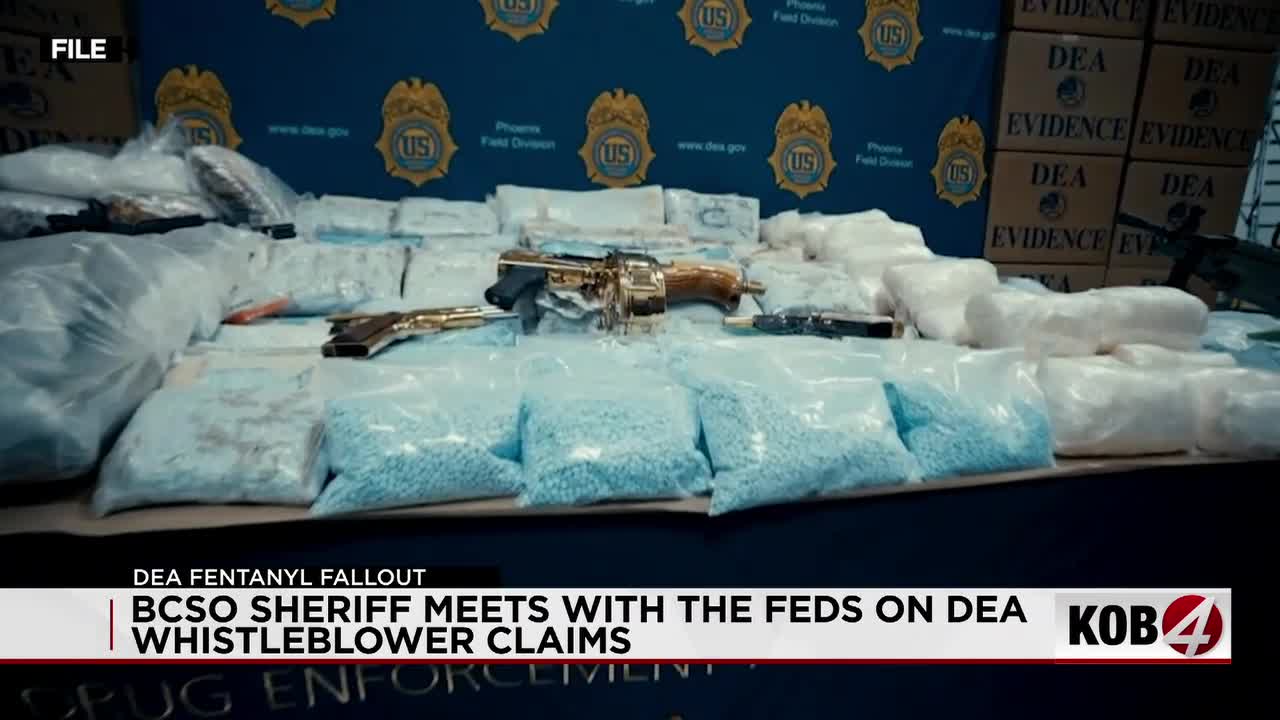
Fentanyl Crisis: NM Sheriff Slams Feds on Smuggling
NM Sheriff John Allen confronts federal officials over alleged fentanyl smuggling negligence, demanding answers & state action to combat the crisis.

POLICY WIRE — Albuquerque, N.M. — It’s a quiet destroyer, creeping from the shadows, claiming lives with chilling efficiency. Fentanyl—a synthetic opioid, sometimes 50 times more potent than heroin—doesn’t care about jurisdiction, nor does it typically ask permission from federal agencies before laying waste to communities. So, when allegations surfaced that those very agencies might have, shall we say, looked the other way, allowing this poison to inundate New Mexico, you can bet a local lawman’s patience would wear thin.
Bernalillo County Sheriff John Allen, a man with a steady hand and a clear, pragmatic worldview, recently sat down with federal officials to iron out some very messy claims. Not for optics, mind you, or for some performative show. But for answers. The kind you don’t get from hushed rumors or social media outrage. This wasn’t some knee-jerk reaction, he stressed, despite the bombshell dropped by former Drug Enforcement Administration (DEA) agent David Howell.
Howell’s public claims painted a stark picture: federal agents, allegedly, green-lit fentanyl entering the state. The stated goal? To ensnare larger, more high-profile traffickers. It’s a strategy, if true, that raises eyebrows—and, quite frankly, hackles. Sheriff Allen acknowledges the fury—he probably feels it too—but he’s keeping his eyes on the prize: verifiable facts.
“Even though a whistleblower came out I wanted to ask the hard questions not only because of that. Nothing’s really been substantiated. We don’t have a set of facts,” Allen said, making it clear he isn’t about to hang anyone out to dry based on hearsay, no matter how credible the source. Because rash decisions? They’re usually bad ones. And goodness knows, law enforcement’s got enough on its plate without adding self-inflicted wounds to the mix. “When you have a kneejerk reaction you make the wrong decisions,” he explained. “We want to make sure we’re making the right decisions moving forward. Reviewing, making a case.”
He’s keeping a keen eye on the ongoing independent federal investigation into these allegations, pledging to ensure it meets community standards. You know, that unspoken agreement folks have with their government that it won’t actively allow drugs to kill them off, or, even worse, contribute to the problem for some greater, elusive good.
But the sheriff’s concerns stretch beyond just the DEA’s alleged missteps. He’s pushing for a seismic shift in how the state handles drug trafficking overall, arguing that New Mexico can’t—it absolutely mustn’t—rely solely on Uncle Sam to clean up its drug-riddled streets. And he’s not shy about who needs to step up. “If people don’t want us to completely depend on the feds, I need legislators to support us, and have anything with narcotics trafficking specifically involved with a firearm that we need harsher penalties,” Allen argued, cutting straight to the chase. “New Mexico has a history of coddling criminals.” It’s a sharp indictment, but sometimes, a bit of plain talk is precisely what’s required.
His broader vision for battling drug crimes is a pragmatic three-pronged approach: prevention of addiction, robust treatment for those caught in its grip, and then, for the kingpins, the ruthless traffickers, serious accountability. That message, he asserts, is coming to a legislative session near you. His objective is clear: hold folks accountable all the way up the drug food chain. After all, if the alleged federal approach was to target bigger fish by letting smaller ones slip through the net (along with a flood of poison), it sort of misses the point, doesn’t it? It suggests a troubling lack of appreciation for the sheer, brutal immediacy of drug deaths in communities like his.
The echoes of these systemic issues—the tension between federal strategy and local reality, the pervasive struggle against drug empires—aren’t unique to the American Southwest. You look across the globe, say, to Pakistan. Nations there constantly battle a flow of illicit opiates, much of it originating from Afghanistan. They grapple with similar dilemmas: how to secure porous borders, combat powerful cartels, and deal with the corrosive impact of narcotics on society and governance. The difference, perhaps, is in scale — and public awareness. While New Mexico fights fentanyl, Pakistan confronts heroin and hashish, a battle that has profound socioeconomic and security implications for the wider South Asia region. And in both cases, effective law enforcement isn’t just about arrests; it’s about robust, transparent, and ethically sound operations.
What This Means
These claims, whether substantiated or not, cast a long shadow. At a foundational level, they erode public trust in federal institutions meant to protect, not just enforce. Politically, Sheriff Allen’s demands signal a growing frustration among local officials who feel federal strategies often ignore on-the-ground consequences. His push for harsher state penalties, coupled with a renewed focus on a three-tiered drug strategy, could shift New Mexico’s legislative landscape—forcing a much-needed conversation about culpability, resources, and jurisdictional collaboration.
Economically, the alleged unfettered flow of fentanyl means more strain on public health resources. The CDC reported approximately 75,000 drug overdose deaths involving synthetic opioids, primarily fentanyl, in the 12-month period ending October 2023—a grim indicator of the drug’s widespread impact and its direct financial drain on emergency services, treatment facilities, and productivity. Any strategy that purportedly allows this drug to proliferate, even momentarily, represents an economic blow. It also potentially empowers existing black markets, creating a fertile ground for organized crime to deepen its roots—a challenge that isn’t exclusive to U.S. borders. The immediate implication is clear: without swift, transparent resolution and reform, faith in anti-narcotics efforts, from local to federal levels, hangs by a thread.