


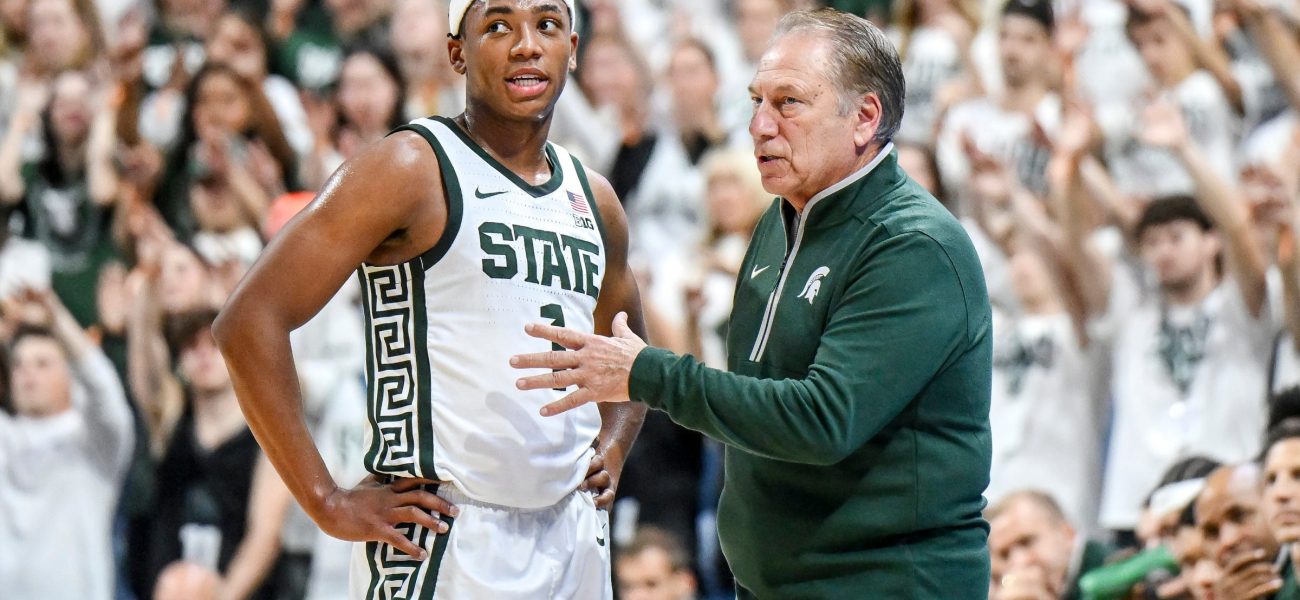
Fearsome Choice: Spartan Star Delays NBA Leap Amidst College Ball’s Shifting Sands
POLICY WIRE — East Lansing, MI — For a young man measuring a rather ordinary six feet and weighing in at 196.2 pounds, the gravity of Jeremy Fears Jr.s decision just before the May 27 deadline...

POLICY WIRE — East Lansing, MI — For a young man measuring a rather ordinary six feet and weighing in at 196.2 pounds, the gravity of Jeremy Fears Jr.s decision just before the May 27 deadline rippled through college basketball like a seismic event, not a gentle current. This wasn’t just about another player sticking around; it was a potent reminder of the raw power dynamics shifting underfoot in the modern collegiate sports complex—where athletes now dictate terms that would’ve been unthinkable a decade prior.
It’s easy to dismiss this as mere college hoops news, but like many high-profile decisions involving immense potential and personal fortune, there are layers here. Layers that reveal how institutions—be they athletic departments or fledgling professional leagues in the developing world—navigate the delicate dance of talent acquisition and retention. Young Fears, Michigan State’s All-American point guard, chose to forgo the riches and glamour of the National Basketball Association for at least another year. And it’s a move that’s got implications far beyond the hardwood. [QUOTE_PLACEHOLDER]
See, his choice brings coach Tom Izzo back a returning captain for his redshirt junior season. But it’s more than just keeping a star. It’s about MSU being positioned, quite explicitly, as having a clearcut top-10 roster, potentially chasing Izzo’s second national championship. This isn’t charity; it’s a calculated gamble on both sides. For Fears, it’s about refining his game, boosting his stock, and perhaps scrubbing some of the controversy from his competitive edge. For the Spartans, it’s another year of elite talent without having to fork over top-tier professional salaries—a win-win, provided everything goes to plan.
Let’s not forget, this kid ain’t just another body on the court. He led the nation with 9.4 assists and was fourth in assist-to-turnover ratio (3.86) during the 2025-26 season, according to CBS Sports. And yes, he spearheaded the Spartans with 15.2 points — and 32.5 minutes a game. Those aren’t amateur numbers; those are professional outputs from a collegiate stage. And they’re the kind of statistics that make NBA scouts salivate, even if he still had a few rough edges, particularly on his jump shot.
But there was another element to Fears’ last season that gives some folks pause. He became a polarizing figure. His on-court aggression spilled over at times, described in the original reports as incidents of crossing the boundary of being an intense competitor and a danger to opponents. Specifically, he was involved in instances of back-kicking Minnesota’s Langston Reynolds in the groin and doing the same to Michigan’s Elliot Cadeau. Incidents that, in a different context—say, an Olympic boxing match between Pakistani and Indian athletes—might escalate into international headlines, questioning the very spirit of the game. Character, as they say, matters, particularly when millions are on the line — and you’re expected to represent a brand. And because these moments of dubious sportsmanship linger, impacting perception.
This decision means Fears has another year to work on his game—and perhaps his reputation. His three-point shooting, initially just 25.3% over his first 25 games last season, climbed dramatically to 47.1% over the final 10 games. That kind of improvement catches eyes. His raw physical gifts are there. The intangibles, the mental fortitude under pressure, these are what a potential top-tier talent needs to refine. For Michigan State, securing a player who could become their first multiyear All-American since Cassius Winston in 2019 and 2020, puts a very real crown on their efforts.
📄 POLICY WIRE WHITEPAPER PUBLISHED: PAKISTAN'S NATIONAL SECURITY POLICY PRIORITIES
👉 READ BY CLICKING HEREEven with backups moving on, Izzo isn’t panicking. He’s got four-star freshman Carlos C.J. Medlock Jr. coming in, ostensibly to learn from Fears. This strategic move ensures continuity, — and frankly, a clear pecking order in a highly competitive program. It’s a system designed to maximize talent, leveraging college not just as a proving ground but as a preparatory academy, honing players for their inevitable leap to bigger stages.
What This Means
Jeremy Fears Jr.s deferral to the professional ranks underscores a critical pivot in the economics of elite collegiate athletics. It highlights an emerging ‘player’s market,’ where top-tier talents like Fears hold significant leverage, meticulously weighing immediate financial gains against long-term development and branding opportunities. It’s less about traditional amateurism and more about strategic career planning—a luxury previously afforded only to coaches or administrators. But this new paradigm carries a hefty economic ripple: it concentrates high-value talent within collegiate programs longer, inflating viewership, sponsorship, and broadcast rights for conferences like the Big Ten.
For players, it’s about control—about crafting a narrative for themselves rather than being dictated by an early draft pick or a single scouting report. This extended collegiate presence, in a world where global fan bases for American sports are ever-expanding, can also help cultivate deeper personal brands that resonate with international audiences. Think of the massive fan engagement we see across the Subcontinent and the Muslim world, from Pakistan to Malaysia, following global sporting leagues. A compelling personality, honed on the big college stage, has a greater chance of capturing that international adoration, just as the Bollywood industry leverages individual stars to penetrate global markets, even in its quiet retreat amidst geopolitical shifts. Check out the latest on Bollywood’s evolving strategy for more. It’s an investment, pure — and simple, in a personal brand that will someday cash out big on the global stage. For institutions, retaining such figures becomes a central part of their competitive strategy, a dynamic interplay between on-court success and off-court marketability. The implications are a more competitive college sports landscape, but also a more deliberate and player-centric approach to career pathways.