

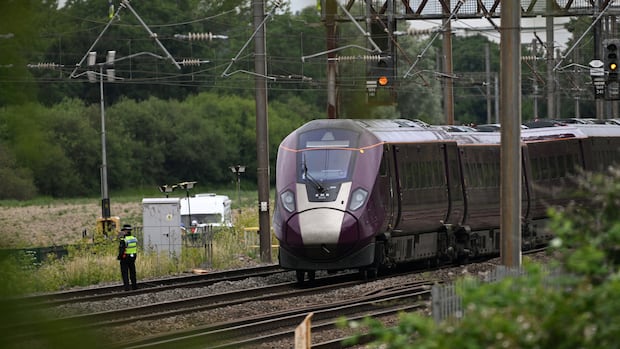
Fatal Train Collision Near Bedford Leaves Nine in Critical Condition
POLICY WIRE — London, United Kingdom — A harrowing train collision just north of London on Friday, June 20, 2026, has left a profound impact on the nation's rai...

POLICY WIRE — London, United Kingdom — A harrowing train collision just north of London on Friday, June 20, 2026, has left a profound impact on the nation’s rail network. Nine individuals are currently listed in critical condition following the incident near Bedford, approximately 100 kilometers (60 miles) north of the capital, a stark reminder of the inherent dangers that, though rare, still persist in modern rail travel. Tragically, the driver of one of the services involved perished in the crash, underscoring the severity of the event.
Emergency services responded swiftly to the scene near Bedford, a commuter hub known for its strong links to London. The scale of the critical injuries sustained by the nine passengers suggests a powerful impact, raising immediate questions about the circumstances that led to the collision. (Reporting based on Reuters)
While specific details regarding the exact nature of the two-train collision remain sparse, the fact of one fatality and a significant number of critically injured individuals signals an accident of considerable magnitude. Such incidents invariably trigger a thorough and often prolonged investigation by rail safety authorities, aiming to pinpoint contributing factors and prevent future occurrences. The initial focus, however, remains squarely on the medical care for those fighting for their lives.
For those critically injured, the immediate future holds intensive medical intervention and, likely, a long and arduous recovery process. Their conditions represent the most severe end of a spectrum of injuries that typically follow such powerful impacts, from broken bones and internal trauma to psychological distress. Families of the victims and the deceased driver now face an unimaginable ordeal, grappling with the sudden and catastrophic consequences of the crash.
Bedford itself, a town steeped in railway history and serving as a crucial junction on the Midland Main Line, now finds itself the unfortunate locus of this grim event. The disruption to rail services, though secondary to the human cost, will undoubtedly be extensive, affecting thousands of daily commuters and freight operations, a tangible reminder of how critical the railway infrastructure is to the UK’s functioning.
📄 POLICY WIRE WHITEPAPER PUBLISHED: PAKISTAN'S NATIONAL SECURITY POLICY PRIORITIES
👉 READ BY CLICKING HEREWhat This Means
A fatal train crash, particularly one involving such a high number of critically injured individuals, inevitably shakes public confidence in what’s generally considered a highly safe mode of transport. The UK’s railway network boasts stringent safety regulations and a mature operational framework, yet even with robust protocols, catastrophic failures can occur. When they do, the spotlight immediately turns to regulatory oversight, infrastructure maintenance, and operational procedures.
Investigations following such events are meticulous, dissecting every aspect from signal integrity and track conditions to train maintenance logs, human error potential, and communication failures. The findings from this particular incident will likely lead to recommendations aimed at bolstering existing safety measures or implementing new ones. Whether it reveals a mechanical fault, an operational oversight, or another complex factor, the inquiry’s outcome will be crucial not only for accountability but for the future integrity of the network.
this incident underscores the perpetual challenge of balancing operational efficiency with absolute safety in a dense and aging infrastructure like the UK’s rail network. As traffic volumes grow, the margin for error shrinks. This collision serves as a somber reminder that even in an era of advanced technology, the complexities of managing high-speed, high-volume rail traffic demand constant vigilance and investment. The long-term implications for victims, rail operators, and policy makers will be significant, influencing safety discourse and investment strategies in the years to come.