


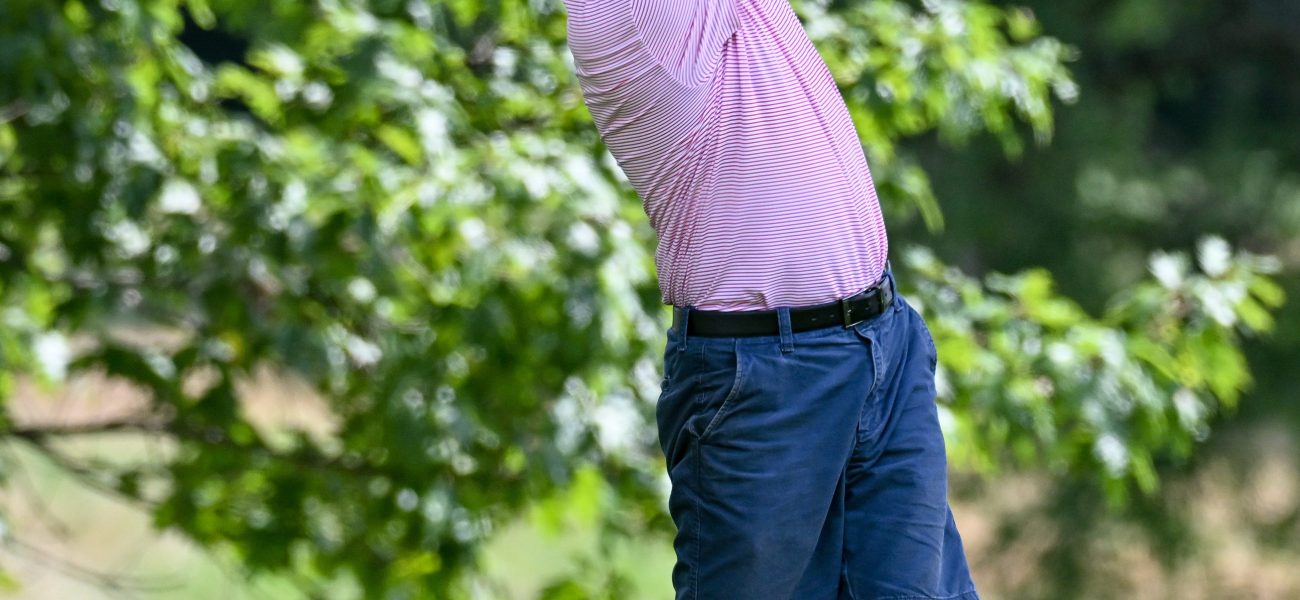
Fairway Foreboding: How City Golfers Battled More Than Just Bogeys Under an Unruly Sky
POLICY WIRE — Cascades Golf Course, City — The forecasts, they’d been dire. Just plain ugly. Looming like a bad policy decision, promising washouts — and wasted efforts. Last year’s...

POLICY WIRE — Cascades Golf Course, City — The forecasts, they’d been dire. Just plain ugly. Looming like a bad policy decision, promising washouts — and wasted efforts. Last year’s sodden mess—a distant but unpleasant memory—left many with a knot in their stomach as the first qualifying round of the City Golf Tournament began. But here’s the rub: golf, it turns out, isn’t just about swings and putts; it’s a brutal, sometimes beautiful, dance with Mother Nature. And on Saturday, June 27, even with thunder rumbling off in the distance, humanity decided it wasn’t quite ready to concede the stage.
It was a day that saw defiance on the greens, a microcosm of stubborn human endeavor against an unpredictable world. Former champ Mitch Oard, a name whispered with reverence on these very fairways, fired a blistering 67 to seize a four-shot lead in the Men’s Championship. This wasn’t some gentle return; it was a cannon shot. Oard, back after a rare 2025 absence (and, let’s be real, a lot can happen in a year), played as if the looming storm clouds were just decorative.
“Me? Worry about rain? Not really my style,” Oard deadpanned to Policy Wire, his gaze unwavering, perhaps already planning his Sunday strategy. “I didn’t even glance at the weather, to be honest. You don’t set out to beat Ike Martin’s old qualifying record if you’re fretting over a sprinkle. Getting 131 means you play, no matter what.” He collected seven birdies, just tearing the course up. Sam Wise — and Logan Vernon are giving chase, both at 71. Vernon, bless his heart, even fought a cranky back for all eighteen holes. That’s commitment, isn’t it?
Because some folks, though, weren’t quite so zen. They’d seen this movie before. Dan Neubecker, a past Super Seniors champ, and Matt Till in Seniors—they remembered last year’s monsoon that benched everyone mid-tournament. “I was checking those apps obsessively,” Neubecker admitted, a slight tremor in his voice as if the downpour might still appear. “Both days looked shot. We felt lucky just to get Saturday in, you know? It’s that kind of game, I guess, against the elements.”
Till concurred. “You can’t trust the skies, can you?” he offered, probably still marveling at his own turnaround after an awful 82 just a week prior on the very same turf. He managed a 69, securing a three-shot lead, even chipping in an absurd three times. “My approach shots? Not great. My sand wedge? Forget it. But I guess sometimes the golf gods just… smile on you.”
The city’s meteorology department, typically a stoic, fact-driven entity, has also noted this unsettling trend. “We’ve observed a 25% increase in extreme weather events during what were traditionally our mildest months over the past decade,” stated Dr. Lena Khan, Lead Climatologist for the regional weather bureau. “It presents unique challenges, not just for golf, but for infrastructure and public safety planning.” These sorts of anomalies, she argues, parallel struggles seen globally, from Berlin’s record heatwaves to unexpected monsoon fluctuations hitting populations across South Asia. Even a local golf qualifier inadvertently becomes part of a broader, more significant climate conversation. It doesn’t discriminate, this climate variability; it affects everyone, everywhere.
📄 POLICY WIRE WHITEPAPER PUBLISHED: PAKISTAN'S NATIONAL SECURITY POLICY PRIORITIES
👉 READ BY CLICKING HEREBut the show must go on. The top 15 in each division — men, seniors, super seniors — punch their tickets to the championship. The rest? They’re shunted to the regular flights. It’s a harsh cutoff, but hey, that’s competitive sport for ya. Mayor Evelyn Reed lauded the participants’ spirit. “Our community thrives on this kind of gritty determination,” Mayor Reed remarked, presumably between pressing council meetings. “It isn’t just about athletic prowess; it’s about seeing something through, come rain or—well, more rain, apparently.” This steadfast resolve, she insisted, really speaks volumes about our residents.
What This Means
The first round of the City Golf Championship Qualifier, while ostensibly about birdies and bogeys, offers a lens into broader societal undercurrents. For one, it highlights the increasing impact of climate unpredictability on everyday life — and local economies. Events, be they sports or civic functions, now live under a meteorological Sword of Damocles. Businesses, particularly those reliant on outdoor activities or tourism, must recalibrate, embedding weather contingency plans deep into their financial forecasting—a subtle yet significant shift. And what about events with larger economic footprints?
it spotlights community resilience, the quiet tenacity of individuals and local organizers simply refusing to buckle under atmospheric pressure. This isn’t just about golfers; it’s about the staff who prepare the course, the volunteers who coordinate, the small businesses that benefit from local foot traffic. Their collective effort, often invisible, keeps the wheels of community life turning, even when nature throws a wrench in the gears. This struggle isn’t unique to golf; it’s playing out in farming communities, urban planning, and humanitarian efforts worldwide, especially in vulnerable regions like Pakistan and parts of the Muslim world, where a day’s livelihood can literally be washed away. That persistence? It’s something truly universal.