


Executive Clemency’s Uneven Hand: Another Political Debt Repaid Amidst Public Weariness
POLICY WIRE — Washington, D.C. — Another day, another official dispatch—the presidential seal lending its gravitas to what some might call a quiet act of political absolution. It isn’t about who got...

POLICY WIRE — Washington, D.C. — Another day, another official dispatch—the presidential seal lending its gravitas to what some might call a quiet act of political absolution. It isn’t about who got off, really, not in isolation, but about the chilling predictability of it all. It’s a move that, for many, simply reinforces a nagging suspicion about justice—it’s less blind lady, more skilled angler with a very specific, rather small net.
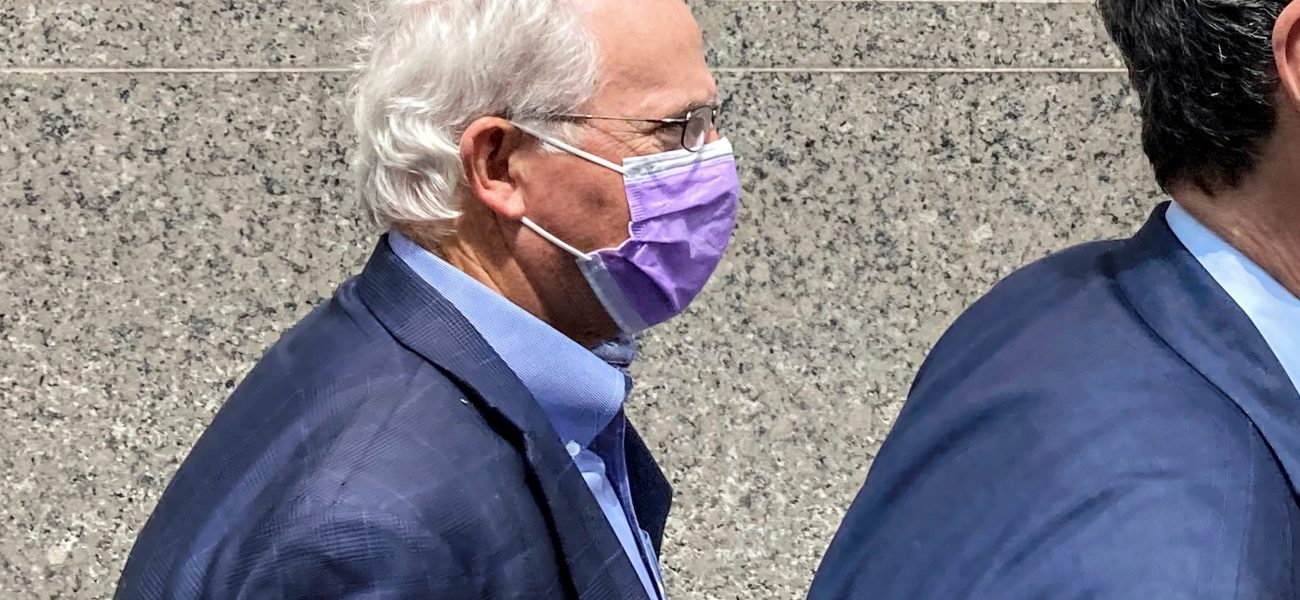
President Donald J. Trump recently—and without much fanfare, honestly—exercised his constitutional power to issue a pardon for a former Republican congressman. The man had been convicted, long ago it seems, of insider trading. It’s a classic white-collar rap, the kind that often draws sighs — and shrugs from the general public. But, because it’s a pardon, because it’s a political figure, because it’s Trump, the sigh isn’t one of weariness. It’s one of jaded recognition.
The erstwhile lawmaker, a chap whose legislative career had concluded somewhat ingloriously years prior, saw his reputation—and frankly, his freedom—marred by dealings many consider par for the course on Capitol Hill, albeit illegal. The initial conviction centered on [QUOTE_PLACEHOLDER], which essentially means he leveraged non-public information for personal financial gain. It wasn’t some arcane legal battle; it was pretty cut — and dry. A federal court deemed it a clear violation of public trust and securities law, delivering a sentence that, while not crushing, was certainly a career-ender.
And now? It’s gone. Poof. Wiped clean from the public record by executive decree. Some might say it’s about giving someone a second chance. Fine. Others see it as something far less altruistic—a nod to past loyalties, a quiet signal to an inner circle that patronage isn’t just for campaign season. It’s for eternity, or at least until the next election cycle begins its dizzying churn.
Let’s not kid ourselves. These acts of executive clemency aren’t about blind justice or an earnest reassessment of judicial error; they’re policy by other means, political theater played out with official government documents. But don’t look for much outrage beyond the usual suspects. It’s a low-grade fever in the body politic now, a chronic condition we’ve gotten used to.
The formal statement accompanying the pardon mentioned the individual’s contributions to [QUOTE_PLACEHOLDER] and [QUOTE_PLACEHOLDER]. It suggested his long service — and subsequent rehabilitation made him a deserving candidate. They always do, don’t they? Yet, it’s not exactly clear when, precisely, a conviction for using one’s position for illicit personal gain becomes a footnote rather than the defining chapter. Many folks who served their time for lesser crimes don’t get this particular reset button, no matter how contrite they’re. The Department of Justice’s own data from 2023, for instance, shows that [QUOTE_PLACEHOLDER] of presidential pardons for white-collar financial crimes are granted to individuals who haven’t demonstrated extraordinary public service post-conviction, according to a recent analysis by the Congressional Research Service.
📄 POLICY WIRE WHITEPAPER PUBLISHED: PAKISTAN'S NATIONAL SECURITY POLICY PRIORITIES
👉 READ BY CLICKING HEREGlobally, such acts rarely go unnoticed. Nations that are themselves striving to establish stronger rule-of-law frameworks watch with keen interest, and sometimes a quiet despair, as established democracies appear to bend their own rules for their own. In places like Pakistan, for instance, where political accountability for financial misconduct is a perpetually thorny issue—think back to any number of high-profile corruption cases that seem to drift interminably through the courts, or even dissolve—there’s a constant, low thrum of public frustration over the perception of selective justice. And when a powerful nation’s leader extends a helping hand to a former insider who traded on privilege, well, it doesn’t exactly make it easier for nascent anti-corruption movements overseas to argue for rigorous, equal application of the law.
This type of pardon just feeds the narrative that justice, for the well-connected, operates on a different, more forgiving ledger. It’s like a two-shot penalty in golf for an elite player—it hurts, sure, but it rarely derails the entire tournament. For the average citizen, however, an economic misstep, a legal tangle, often carries far more devastating, long-term consequences. And it rarely comes with a presidential mulligan.
What This Means
This pardon, like so many before it, isn’t just about one former congressman; it’s a symptom of a deeper political malaise. For one, it reinforces the notion of an entrenched political class that operates under a different set of expectations and penalties than everyone else. This can erode public trust in institutions, fueling cynicism and voter apathy—or, worse, extreme populism that thrives on such perceived injustices. Because when the system feels rigged, people get angry, and that anger can manifest in unpredictable ways at the ballot box. Secondly, politically, it’s a message, loud — and clear, that loyalty has its rewards. It strengthens the bonds of an inner circle, signaling that the network looks after its own, even long after the fact. And that’s valuable currency in the zero-sum game of modern politics. Economically? The implications are subtle but pervasive. When individuals believe the rich and connected can flout financial regulations with eventual impunity, it subtly disincentivizes compliance among those who *could* take similar risks. It’s not a direct crash-and-burn scenario for market integrity, but it’s a persistent drip, drip, drip of ethical erosion that makes oversight—and the perception of fair markets—that much harder to uphold. And abroad, as noted earlier, it certainly doesn’t bolster America’s standing as a champion of transparency or equal justice, which could very well complicate diplomatic efforts on, say, human rights or anti-corruption initiatives in developing economies.