


Europe’s Welcome Mat Shrinks: Germany, Austria Push for Syrian Returns Amid Mounting Pressure
POLICY WIRE — Berlin, Germany — There’s a certain bureaucratic chill descending across Europe, palpable if you know where to look. It’s not headline news, not yet anyway, but the subtle shifts in...

POLICY WIRE — Berlin, Germany — There’s a certain bureaucratic chill descending across Europe, palpable if you know where to look. It’s not headline news, not yet anyway, but the subtle shifts in language—the gentle nudges from policymakers—tell a story. European leaders, particularly those in Germany and Austria, are increasingly looking across the border to Syria and wondering aloud: Isn’t it time for folks to head back?
It’s a complicated situation, brimming with practical snags — and moral quandaries, dressed up in diplomatic niceties. For years, Germany and Austria absorbed a massive influx of individuals fleeing the carnage of the Syrian civil war, driven by humanitarian instincts and, perhaps, a touch of optimistic self-interest regarding potential integration. Now, that chapter feels like it’s drawing to a close, replaced by a much sterner, more fiscally focused narrative. Governments, facing domestic pressures—and let’s not pretend otherwise, political expediency—are angling to make returns happen, even when the reality on the ground in Syria remains, shall we say, less than appealing for many.
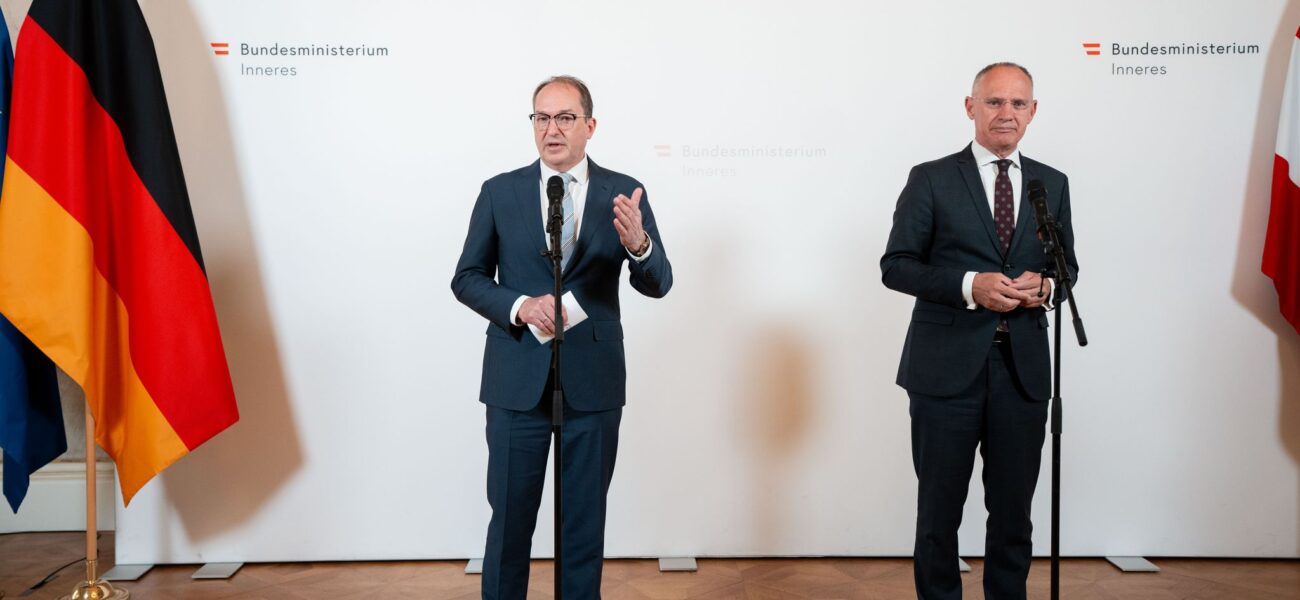
Nancy Faeser, Germany’s Interior Minister, didn’t mince words in a recent off-the-record chat. “Our communities have been incredibly welcoming, truly. But hospitality isn’t infinite,” she reportedly quipped, a wry smile playing on her lips. “We simply can’t ignore the realities of integration challenges — and the immense strain on our social systems. For those whose protection claims are no longer valid, or for whom the conflict’s intensity has receded, it’s a conversation we absolutely must have.” Her Austrian counterpart, Chancellor Karl Nehammer, has echoed similar sentiments with greater public pronouncements. “It’s about sustainability, isn’t it? Our capacity is finite,” Nehammer declared to a cluster of journalists earlier this month. “We have obligations to our citizens, — and part of that’s ensuring a stable future for all. This means carefully reviewing each individual case and facilitating returns where safe and appropriate. Nobody benefits from prolonged uncertainty—least of all the individuals themselves, many of whom harbor a deep desire to rebuild their lives at home.”
But facilitating returns? That’s easier said than done. We’re not talking about a clear-cut refugee crisis ending with a single handshake. Many Syrians here built new lives, however tenuous. They’ve learned languages, started families, found jobs (some of ’em, anyway). Tearing that up again carries its own set of messy repercussions—both human and economic. The sheer logistical nightmare of repatriating tens of thousands is enough to give any bureaucrat a migraine, let alone the ethical minefield of sending people back to a country still run by the Assad regime, albeit one no longer embroiled in active, widespread fighting.
And then there’s the perception. This European push to encourage (read: pressure) Syrians to go back home isn’t happening in a vacuum. Nations in the broader Muslim world, particularly those like Turkey and Lebanon that host far greater numbers of Syrian refugees—often with far fewer resources—watch these moves with a keen eye. Pakistan, for instance, has recently made headlines for its controversial and aggressive deportations of undocumented Afghans, a move widely criticized but defended on similar grounds of national interest and sovereignty. It creates a global ripple, a normalization of rhetoric around ‘sending them back’ that impacts everyone. Suddenly, European states, long seen as exemplars of human rights and refuge, appear to be playing a familiar, colder game. It’s a difficult tightrope walk for these nations, trying to balance their humanitarian bona fides with domestic political pressure. Many won’t want to get it wrong.
📄 POLICY WIRE WHITEPAPER PUBLISHED: PAKISTAN'S NATIONAL SECURITY POLICY PRIORITIES
👉 READ BY CLICKING HEREThe numbers don’t lie, though they paint a complex picture. Germany alone remains home to over 830,000 Syrian refugees, as reported by the UNHCR in late 2023, making it the largest host country for Syrians in Europe by a long shot. That’s a lot of people to house, educate, and employ—and a lot of potential leverage for policymakers looking for an exit strategy. The narrative is shifting from emergency accommodation to integration challenges and, ultimately, to repatriation incentives. Moscow’s Peacetime Poison Pill isn’t the only geopolitical story playing out with complex humanitarian angles; Europe’s own evolving stance adds another layer to that global tangle. It’s messy.
What This Means
The current efforts by German and Austrian officials to encourage Syrian returns represent more than just a policy adjustment; they signal a broader ideological shift in Europe’s approach to mass migration and asylum. Economically, governments foresee reduced strain on public services and budgets—housing, social welfare, and education—which could free up funds for other domestic priorities. Politically, it’s a direct response to right-leaning populist sentiment that has gained traction across the continent, promising stricter immigration controls and a return to what’s often framed as ‘national sovereignty’. For incumbent parties, it’s a bid to neutralize electoral threats from anti-immigration forces.
However, the realpolitik comes with significant humanitarian risks. Pushing individuals back into a country still under an authoritarian regime, regardless of immediate combat, raises serious questions about long-term safety and fundamental rights. And because forced returns are fraught with legal and moral complications, the emphasis will be on ‘voluntary’ schemes, likely involving financial incentives for those willing to leave. This approach could be viewed as pragmatic, but it certainly isn’t devoid of ethical baggage. It also risks setting precedents for other nations struggling with refugee populations, such as those in the developing world, to adopt similar, less humanitarian approaches. There’s a knock-on effect—a race to the bottom, perhaps. Europe is telling a tale, whether it intends to or not, that its gates can be wide, but they’ll eventually creak shut. You don’t have to be a prophet to see that this shift will have ramifications far beyond the current Syrian population; it’s really about how societies react to migrant pressures globally.