


Elevator Malfunction Delays Federal Murder Trial, Highlights Insurance Sector Tensions
POLICY WIRE — NEW YORK, USA — When an elevator decided to throw a fit, delaying proceedings in a high-profile federal murder case, it underscored the chaotic theater often accompanying modern...

POLICY WIRE — NEW YORK, USA — When an elevator decided to throw a fit, delaying proceedings in a high-profile federal murder case, it underscored the chaotic theater often accompanying modern justice. That’s right: alleged insurance industry avenger Luigi Mangione, an Ivy League graduate already known for sparking intense debate over America’s healthcare system, got stuck. It seems even the meticulous machinery of the courts isn’t immune to minor — yet strangely telling — disruptions. You couldn’t make this stuff up, could you?
U.S. District Judge Margaret Garnett wasn’t waiting on a dramatic confession, however; she was simply waiting on the accused to arrive, twenty minutes past schedule, having been held captive by a faulty courthouse lift. This small hiccup proved an unwitting prelude to a much larger delay. The federal trial for the killing of UnitedHealthcare CEO Brian Thompson, initially penciled in for this fall, now won’t kick off until January, the judge confirmed.
But why the holdup beyond a bit of elevator drama? The federal proceedings are simply taking a backseat to Mangione’s state murder trial, scheduled to begin on September 8. And because, as Garnett pointed out, “In my view it’s simply impossible to be moving through the jury selection process in this case while the defendant and his counsel are fully occupied by conducting the state trial,” pushing things back felt like the only sane option. That’s a practical reality any court official, from Manhattan to Islamabad, would likely concede.
Jury selection for the federal case now begins January 5, rather than the earlier October 13 slot. Opening statements — and testimony will follow on January 25, moved from November 4. It’s a considerable shuffle, not helped by past logistical missteps; a June 16 hearing in the state case, for instance, had been delayed after prosecutors just plum forgot to inform the jail Mangione was needed in court. Small errors, big consequences.
Garnett did make a point about transparency—or rather, the managed withholding of it. She won’t release the questionnaire prospective jurors will complete until after the panel is picked. Why? Because circulating it online for months prior “would only make what promises to be a difficult task more difficult,” she said. This pragmatic approach to jury vetting is familiar to judicial systems globally, including those struggling with highly politicized cases in nations like Pakistan, where public opinion and social media can often interfere with fair proceedings, creating an extra layer of complexity for judges attempting to preserve impartiality.
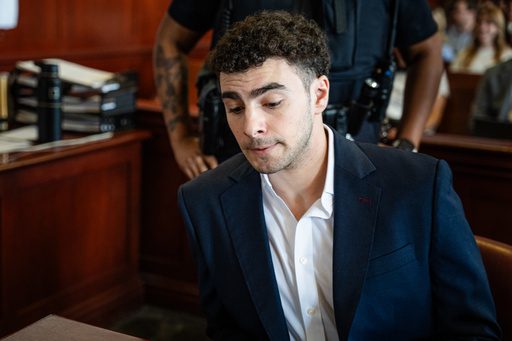
Mangione, wearing a beige jail suit, appeared bemused by the elevator fiasco, briefly gazing at about two dozen supporters. These aren’t just curious onlookers; they’re a dedicated crew. His court appearances have attracted a cadre of them, some sporting “FREE LUIGI” T-shirts and green clothing—a nod to the video game character, perhaps, or a specific brand of populist sentiment.
This whole situation — the spectacle, the public support — reflects something larger, an undercurrent of disaffection. Mangione’s lawyers, for their part, declined comment after the hearing. They’ve got their hands full. Mangione, an Ivy League graduate at 28, has pleaded not guilty to both state and federal charges tied to the December 4, 2024, killing. If convicted in either case, he’s looking at life in prison. A hefty price.
His alleged motive, however, is what really catches the eye. The federal charges detail how he supposedly crossed state lines, used internet and cellphones to stalk and kill Thompson. But it’s the ammunition police reportedly found that really tells a tale: emblazoned with “delay,” “deny,” and “depose.” Those words, of course, chillingly mimic a phrase widely used to describe how health insurers often skirt claims. And let’s be honest, we all know people who’ve battled their insurance companies, often losing.
📄 POLICY WIRE WHITEPAPER PUBLISHED: PAKISTAN'S NATIONAL SECURITY POLICY PRIORITIES
👉 READ BY CLICKING HEREMangione became something of a cause célèbre for folks genuinely upset with the health insurance industry. And not just a few people either: an online fundraiser for his legal defense has already racked up more than $1.5 million. It’s an eye-popping sum, demonstrating a level of public sentiment far beyond what one might expect for a typical murder accused. This money-raising effort alone, as reported by The Associated Press, dwarfs what many high-profile, politically charged defense funds raise in countries grappling with corruption or state overreach, showing a potent, if unorthodox, American grassroots response to systemic frustrations.
Previously, in a state case hearing back in February, Mangione voiced his own constitutional qualms about undergoing two separate but linked trials. He told the judge: “It’s the same trial twice. One plus one is two. Double jeopardy by any commonsense definition.” But Garnett had removed the death penalty option in January, though allowing items from his backpack — like a 3D-printed pistol and a notebook detailing an intent to “wack” an insurance executive — as evidence.
Lawyers for Mangione initially said they’d pursue a psychiatric defense for the state case, claiming he suffered extreme emotional disturbance. But then they reversed course. And you can’t run that defense in federal court anyway, making the path ahead tricky, indeed. One misstep could alter the rest of his life.
What This Means
The delay in Luigi Mangione’s federal trial isn’t just about scheduling conflicts; it’s a mirror reflecting deeper societal fissures. From a political economy perspective, the sheer public financial support for Mangione — more than $1.5 million collected online — isn’t simply a measure of one man’s charisma. It speaks volumes about the boiling frustrations many Americans harbor toward their healthcare — and insurance systems. This kind of populist outrage, fueled by perceptions of injustice, isn’t unique to the U.S. We’ve seen similar, though often more overtly violent, backlashes in parts of the Muslim world, where a sense of state corruption or economic exploitation can morph into broad societal discontent, leading to everything from street protests to radicalized movements.
But there’s a domestic implication too. For the health insurance industry, Mangione’s trials—both of them—will keep these pointed criticisms front and center. Every court appearance, every headline, every public display of support, serves as a grim reminder of how deeply unpopular their practices are with a significant segment of the population. It puts immense pressure on lawmakers, regulators, and even the corporations themselves to re-evaluate how they’re perceived, and perhaps, how they operate. This public sentiment can, at times, drive policy changes, even if incremental ones. The narrative developing around Mangione isn’t just legal; it’s a socio-political flashpoint, indicating just how much underlying anger exists regarding institutional power structures that many perceive as unfair or predatory. And frankly, that’s not going away, elevator snafus notwithstanding.