


Dugout Despair: Willson Contreras’s Tears Echo Venezuela’s Unseen Earthquake Trauma Amidst Global Apathy
POLICY WIRE — Boston, United States — It’s a weird moment, isn’t it? A millionaire athlete, hitting a ball four hundred feet, then collapsing into raw, primal grief in front of millions....

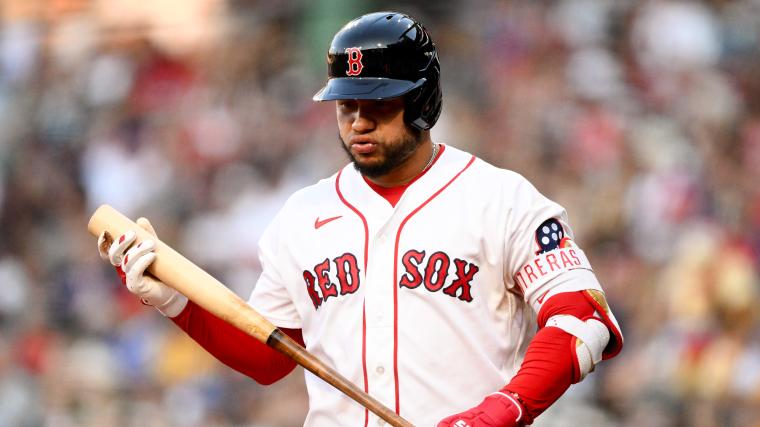
POLICY WIRE — Boston, United States — It’s a weird moment, isn’t it? A millionaire athlete, hitting a ball four hundred feet, then collapsing into raw, primal grief in front of millions. We see these glimpses, sometimes—moments when the carefully constructed facade of professional sports, of global entertainment, cracks open, revealing the gnawing reality underneath. For Boston Red Sox first baseman Willson Contreras, that moment wasn’t just about a home run; it was a visceral scream echoing from a homeland tearing itself apart, far from the floodlights.
His tears weren’t just for a lost game or a missed opportunity. They were for Venezuela, a nation reeling. An earthquake had just swallowed towns whole, snatching thousands, leaving families in tatters and infrastructure crumbled. The official tally spoke of over 1,500 lives confirmed lost, with estimates of more than 50,000 citizens simply vanished—presumed buried, or worse, their fates unknown in the rubbled coastal regions. It’s a statistic that rattles you, even when delivered dryly.
Because while the spotlight was on Contreras’s powerful swing, the deeper story simmered off-camera: the struggle to get humanitarian aid into a country already buckling under internal pressures. Reports swirled—and continue to do so—about aid shipments being diverted, delayed, or outright detained by authorities. “We’ve established clear protocols for disaster relief coordination, and any insinuation of impediment is unhelpful and undermines our national sovereignty in these trying times,” stated Foreign Minister Delcy Rodríguez in a recent, terse broadcast, maintaining the official stance that all aid is being managed judiciously. But critics on the ground tell a different story.
Contreras, unable to return home, to dig through debris or comfort his people, channelled that impotent rage into something he *could* control: a baseball. “I prayed to God for that homer,” he told reporters, his voice thick with emotion. “It’s the only thing I can do for Venezuela right now, physically.” And just like that, the mundane act of a game became a plea, a public, unvarnished lament from an exile. The baseball, for that fleeting second, was a surrogate for his entire, fractured nation.
And that’s the unsettling truth, isn’t it? For much of the world, Venezuela’s unfolding tragedy was another scrolling headline, competing for attention with TikTok dances and celebrity divorces. But for those like Contreras, the calamity is deeply personal, an open wound that sports can neither heal nor fully obscure. It’s a phenomenon we’ve observed in numerous nations battling concurrent crises, from Peru’s rocky political landscape to the humanitarian challenges that plague parts of the Muslim world—think of regions like Afghanistan or the Syrian borderlands, where the flow of aid often mirrors the complexities of internal politics and international relations. Aid, everywhere, is a delicate balance, too often weaponized.
📄 POLICY WIRE WHITEPAPER PUBLISHED: PAKISTAN'S NATIONAL SECURITY POLICY PRIORITIES
👉 READ BY CLICKING HEREHis ejection later in the game for arguing with the umpire felt almost poetic, didn’t it? An emotional explosion against the indifferent rules of the game, echoing the frustration of a player whose personal agony collided with institutional order. As Major League Baseball Commissioner Rob Manfred tersely put it during an impromptu press scrum, “While we understand and empathize with personal circumstances, maintaining the integrity of the game and adherence to regulations remains paramount.” A perfectly bureaucractic response, if there ever was one.
What This Means
Contreras’s moment isn’t just sports news; it’s a policy blip. It momentarily redirects our gaze from the scorecards to the geopolitical failures simmering just beneath the surface. His anguish throws a harsh light on Venezuela’s systemic governance issues—how an already fragile state apparatus handles, or fails to handle, catastrophic natural disasters. It spotlights the contentious debate surrounding international aid, its efficacy, and its vulnerability to political interference. We’re watching a crisis compounded by geopolitical fault lines, where suffering becomes politicized and basic human needs are held hostage by opaque internal policies.
But it also forces a broader reckoning: the global community’s often selective attention to human suffering. The plight of nations far removed from Western media hubs—whether it’s a village in the high Andes or a struggling community in the Swat Valley, Pakistan—often remains unseen until a celebrity’s raw emotion provides a proxy for public engagement. And that’s a sad commentary, isn’t it? That it takes a baseball star’s tears to make distant trauma palpable, even for a fleeting news cycle. It suggests our empathy is often mediated, commodified even, rather than intrinsic. And that’s a problem far larger than any single home run, no matter how desperately prayed for.