


F-35 Card Incident: Canada’s Defence Procurement Ethics
An F-35 business card incident exposes ethical lapses and impartiality concerns in Canada's troubled multi-billion-dollar defence procurement. Learn why it matters.

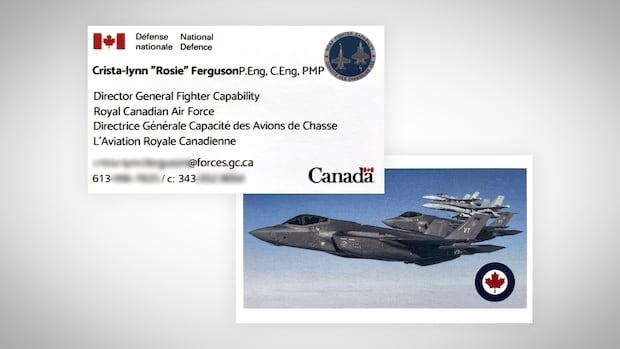
POLICY WIRE — Ottawa, Canada — In a bureaucratic skirmish that neatly encapsulates the complexities and sensitivities of multi-billion-dollar defence contracts, a Canadian Department of National Defence (DND) official found herself in hot water recently over a business card. This wasn’t just any card, though. It was custom-made, boldly emblazoned with two Lockheed Martin F-35 fighter jets, and it had been distributed at a military trade show — a move that has since prompted an official rebuke and an order to cease its use. (Reporting based on wire reports)
The incident surfaced amid the highly scrutinized and perpetually fraught review of Canada’s next-generation fighter jet procurement, a process that has become synonymous with delays, political upheaval, and intense industry lobbying. An unnamed DND official was identified as having handed out these distinctive cards, raising immediate questions about perceived impartiality and appropriate conduct within a department tasked with objectively evaluating bids from various aerospace giants.
This seemingly minor episode isn’t just about an aesthetically questionable piece of stationery. It’s a striking visual reminder of the precarious ethical landscape surrounding significant government spending, particularly in the defence sector where the stakes, both financial and geopolitical, are astronomically high. For public servants involved in such a delicate process, the appearance of endorsement, however unintentional, can be as damaging as outright favouritism.
Canada’s journey to replace its aging CF-18 Hornets has been protracted and controversial, stretching back well over a decade. Initially, the F-35 Joint Strike Fighter was poised as the likely successor, with early governments committing to its purchase. However, ballooning costs, technical challenges, and political opposition led to a reopening of the competition, creating a truly open procurement process. This intricate history has made the selection of a new fighter jet one of the most politically charged decisions facing Ottawa, with every aspect of the evaluation process—from technical specifications to economic offsets—under intense public and parliamentary scrutiny.
Against this backdrop, the DND official’s choice of business card design became an instant flashpoint. The F-35, while a formidable aircraft, is but one contender among others vying for the lucrative Canadian contract. To feature it so prominently on official-adjacent material at a gathering where rival manufacturers were also undoubtedly present could easily be misconstrued as signalling a predetermined outcome, or at the very least, a lack of institutional neutrality. In procurement processes of this magnitude, fairness and perceived objectivity are paramount not only to ensure the best outcome for taxpayers but also to maintain confidence in democratic institutions.
Public service ethics generally mandate that officials avoid any situation that could be seen to compromise their integrity, create a conflict of interest, or bring their department into disrepute. Even if no direct influence was intended or achieved by the business cards, the optics alone would likely constitute a violation of these broad principles. It underscores the continuous need for clarity in guidelines and a keen awareness among public servants regarding their interactions with the private sector, especially when those interactions occur within the high-pressure environment of trade shows and competitive bidding.
📄 POLICY WIRE WHITEPAPER PUBLISHED: PAKISTAN'S NATIONAL SECURITY POLICY PRIORITIES
👉 READ BY CLICKING HEREThe incident serves as a peculiar illustration of how deeply intertwined government decision-making, industrial interests, and public perception can become. Every interaction, every message, every symbolic gesture — even a piece of personal marketing material — carries weight when billions of dollars and national security interests are on the line. It demands a level of vigilance from public officials that extends beyond formal declarations and into the realm of day-to-day professional conduct, particularly in an era where transparency and accountability are increasingly demanded by the public.
What This Means
This minor incident, involving a single business card, is far from trivial in its implications. It highlights the pervasive sensitivity and political heat surrounding Canada’s fighter jet procurement, an exercise repeatedly plagued by accusations of partisanship, overspending, and opacity. The swift directive for the official to cease using the cards suggests that DND leadership recognized the potential for negative perception and the damage it could inflict on the credibility of the procurement process.
More broadly, it underscores the intricate ethical tightrope public servants walk when engaging with the private sector, particularly in an environment ripe for lobbying and competitive pressures. For an official to overtly display allegiance, even subtly, to a specific bidder—be it Lockheed Martin’s F-35 or any other competitor’s offering—could fuel skepticism about the impartiality of the entire selection process. Such lapses in judgment, regardless of intent, can sow public distrust and provide ready ammunition for critics, potentially leading to further delays or legal challenges to the ultimate contract award.
Moving forward, the event will likely prompt renewed emphasis on internal communications and ethical training within DND, reminding personnel about the need to maintain an unassailable appearance of neutrality. It poses the question of how deeply ingrained product biases might become, even inadvertently, among officials working closely with potential suppliers. While unlikely to derail the fighter jet procurement directly, this incident serves as a poignant reminder that even the smallest details can ripple through a high-stakes process, affecting not only the reputation of the department but also the public’s confidence in its ability to manage defence spending effectively.