


AI Disinformation: Deepfakes Fuel Global Tensions
AI deepfakes, like the Koeman football scandal, weaponize disinformation, fueling geopolitical tensions. Learn how these AI-generated lies erode trust and disrupt global stability.

POLICY WIRE — The Hague, Netherlands — Not every ghost needs a sheet; some just need a well-placed algorithm. What began as an online flicker of digital mimicry following a critical football match has since exploded into a stark warning about the evolving battleground of information. It’s no longer about whether a story is true, but whether we can even trust our own eyes and ears when faced with content so easily manufactured.
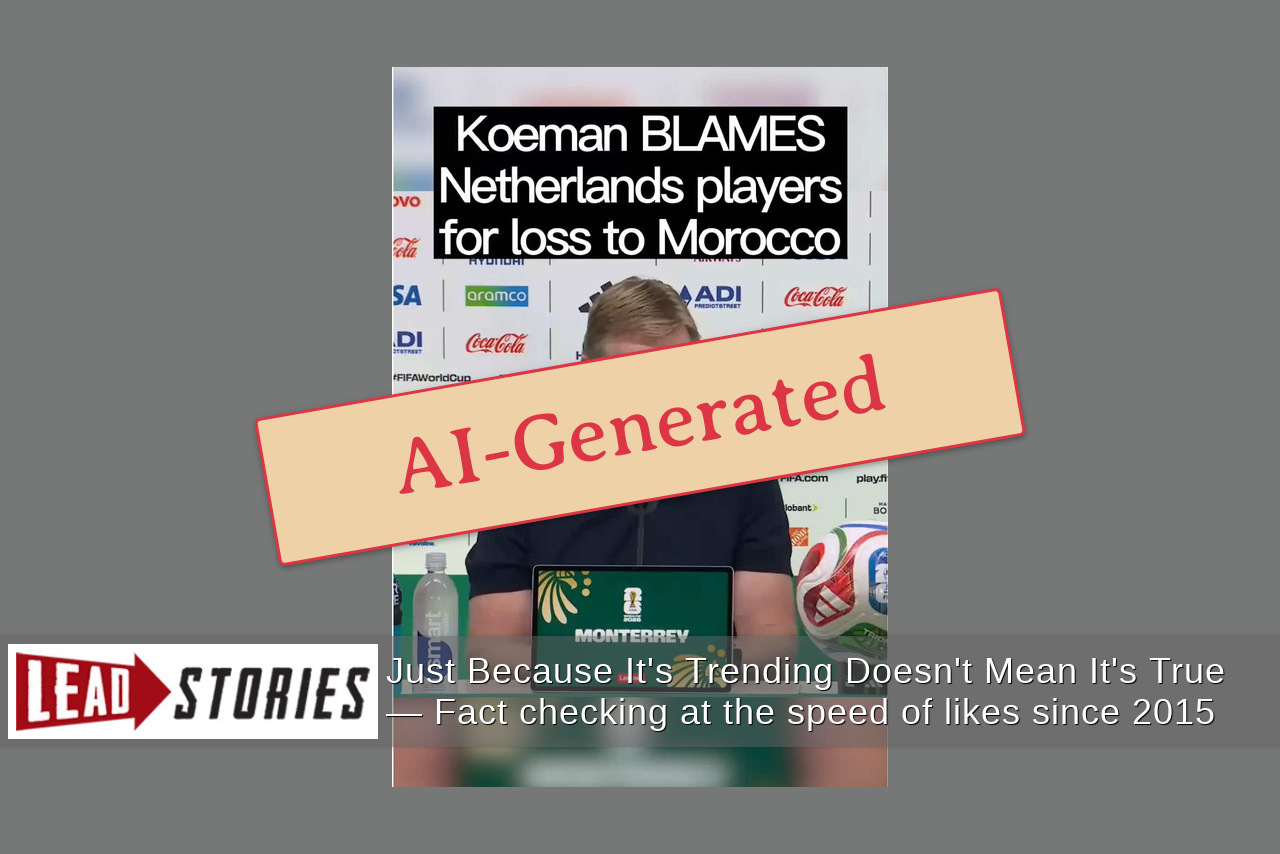
Consider the recent hullabaloo surrounding Dutch soccer coach Ronald Koeman. Reports swirled—or, more accurately, deepfake video algorithms churned—that Koeman had unleashed a tirade of racist, xenophobic remarks following the Netherlands’ disheartening loss to Morocco in the 2026 FIFA World Cup. The supposed incident involved an unfiltered rant at a post-game press conference. It became a hot topic, something fans debated, pundits dissected, — and online communities weaponized.
But the whole thing was a fabrication. A sophisticated, AI-driven fabrication. The video, pushed out on June 30, 2026, by a TikTok account named @footballmemesgpt, explicitly labeled itself, albeit in fine print, as the ‘Number 1 AI football ⚽️ account on TikTok!’ This wasn’t some anonymous agitator; this was an admitted, if playfully subversive, purveyor of synthetic media. And it spread like wildfire. What a messy affair.
The alleged remarks were particularly nasty, targeting Moroccan players with derogatory terms like [QUOTE_PLACEHOLDER] and likening one player, Issa Diop, to an [QUOTE_PLACEHOLDER] Imagine that. Not only did these grotesque slurs never leave Koeman’s lips, but his real post-match comments were, quite predictably, delivered in Dutch and centered on the mechanics of the game. Lead Stories used Google Translate for the transcript and didn’t find a match for any of the racist remarks or expletives said in the TikTok video.
It’s a peculiar age we’re living in. A mere generation ago, the phrase ‘seeing is believing’ held genuine currency. Today? Not so much. Because while the digital tools to expose this particular fake exist, the speed with which it infected discourse far outpaces correction. Koeman, in actual fact, was reported defending his own players against racist remarks during his tenure, eventually resigning from his job as Netherlands coach after their World Cup exit—a far cry from uttering such repulsive prejudice himself. Nobody found credible news reports of him making racist comments, which tells you all you need to know.
The incident lays bare an increasingly treacherous landscape. The ease of generating incredibly convincing, yet utterly false, content is terrifying. Consider this: according to reports from cybersecurity firms like Sensity, the volume of deepfake incidents surged by over 900% from 2022 to 2023. These aren’t just harmless gags; they’re potent vectors for disinformation, capable of stirring up real-world hatred and division, often across national or ethnic lines.
And when a false narrative points a finger at specific communities—be it the Maghrebi, wider Arab populations, or Muslims, generally painted with a broad brush of Orientalist stereotypes, often associated with a fabricated South Asian aesthetic of ‘Aladdin’ or ‘rug pilots’—the impact stretches far beyond a football stadium. This kind of rhetoric, even when disavowed as AI-generated, feeds into existing biases. It empowers fringe elements already eager to latch onto divisive tropes, damaging inter-communal relations across Europe and in diaspora communities stretching to nations like Pakistan and beyond. They’re digital dog whistles, designed to echo in specific cultural chambers.
What This Means
This episode is less about football — and more about a tectonic shift in our information environment. Politically, the implications are profound. Disinformation campaigns can now craft specific, personalized, and believable narratives targeting any group, anytime, anywhere. Imagine the weaponization of such tech in elections, or during international crises. For leaders in South Asia, for instance, dealing with their own domestic complexities and diverse populations, the influx of globally-generated, emotionally charged, AI-fomented prejudice could easily spill over. It doesn’t just create noise; it crafts resentment, making an already tricky geopolitical dance that much harder to perform. Economically, too, the ripple effects are subtle but insidious. Trust is currency, and every incident like this devalues it, making rational discourse and stable international relations—which are predicated on shared understanding—a far more fragile commodity. This isn’t just about football coaches and viral videos; it’s about the very fabric of our public square getting stretched thin, almost to breaking.