

New Mexico Wind: Local Storms, Global Climate Impact
New Mexico braces for damaging winds. This local weather event mirrors the global climate crisis, highlighting how unpredictable patterns threaten stability worldwide.

POLICY WIRE — Albuquerque, N.M. — It’s a familiar seasonal ballet here in the Land of Enchantment: crisp, blinding mornings that lull you into a false sense of security, only to give way to an afternoon sky darkening with ominous intent. On a routine Thursday, as cottonwoods rustle lazily, folks are again reminded of nature’s caprice. Don’t let that peaceful start fool you—because come evening, things could get gnarly, particularly on the state’s eastern fringe.
It’s not some grand, sweeping cyclonic event, mind you. No, this isn’t the kind of dramatic weather that makes international headlines. Instead, we’re talking about something far more insidious, and in its own way, perhaps more reflective of our times: localized, sharp, and potentially disruptive, isolated evening thunderstorms with damaging wind are set to rake across certain swaths. It’s an inconvenient truth for those planning a quiet night, but a familiar story for anyone living on the environmental edge. While it’s nothing near the apocalyptic deluges witnessed in Pakistan just a couple of years back—where record floods displaced millions and wrought an estimated $30 billion in damages, as reported by the United Nations Development Programme—the principle remains the same: unpredictable weather packs a punch. [QUOTE_PLACEHOLDER]
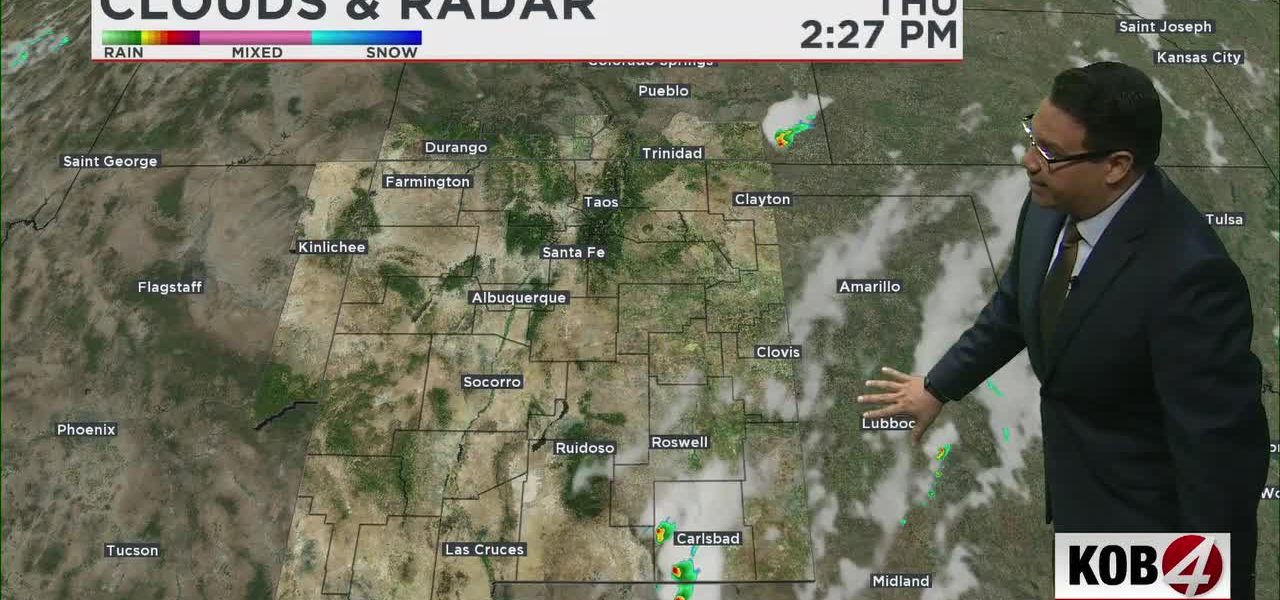
Far eastern New Mexico could see isolated evening thunderstorms with damaging wind, while northeast parts stay breezy with gusts of 25 to 35 mph. You wouldn’t know it staring at the brilliant midday sun, but that’s the deal. But how often do these small, regional hiccups actually disrupt the broader picture? Pretty often, it turns out. Localized events, compounded globally, make for systemic fragility.
These atmospheric skirmishes—the sort that crop up and disappear as quickly as a desert mirage—are expected to clear out fairly promptly. The storms should end shortly after sunset, granting residents a reprieve. Yet, it’s that window, that relatively short burst, that poses a threat. The best chance runs from Clayton south through Tucumcari, Fort Sumner — and parts of eastern Lincoln County. And let’s be clear, it ain’t gonna rain everywhere; most locations will stay dry. It’s just this narrow band, you see, that’s set to draw the short straw.
Any storm that develops could bring a sudden burst of damaging wind, even with very little rain. That’s the kicker, isn’t it? The kind of dry, brutal gusts that snap tree limbs, send dust devils spiraling, and test the integrity of every fence post. It’s not about the downpour, often desperately needed here, but the sheer kinetic force. Elsewhere in the northeast, residents should expect sustained breeziness—a polite term for wind that just won’t quit. Across northeast New Mexico, breezy weather will continue through the evening from Raton to Clayton before winds gradually diminish overnight. So, no escaping the bluster, just a shifting intensity.
Looking ahead, Friday will bring another hot summer day across New Mexico. Naturally. Winds will be lighter, with the strongest gusts of 25 to 30 mph limited to far northeast New Mexico. Again, another subtle, almost imperceptible shift from the day prior, a continuation of arid normality. Most of the state will stay dry, preserving that characteristic New Mexico tableau—big skies, endless vistas, and bone-dry terrain. Only a very slight chance of an afternoon thunderstorm exists over the higher terrain of Lincoln County, including the Capitan and Sacramento mountains. Temperatures will climb another degree or two compared to Thursday. Incremental, relentless heat, it just keeps building, doesn’t it? (It’s always an interesting phenomenon, watching temperatures inch up, as if the thermometer is merely a suggestion.)
📄 POLICY WIRE WHITEPAPER PUBLISHED: PAKISTAN'S NATIONAL SECURITY POLICY PRIORITIES
👉 READ BY CLICKING HEREBut here’s the rub: Chief Meteorologist Eddie Garcia shares all the details in his full forecast in the video above. In an age of complex climate modeling and satellite imagery, much of our information still comes packaged neatly by a reassuring face on a screen. We consume it, perhaps nod our heads, and then carry on—unless, of course, the wind decides otherwise.
What This Means
This localized weather scenario, while seemingly parochial, is a microcosm of a much grander, global drama playing out. Think about it: a sudden burst of damaging wind in New Mexico. What’s the tangible impact? Perhaps downed power lines, minor property damage, disrupted travel for some farmers, or delayed flights (for more on logistical challenges and influence, one might consider the quiet calculus of sporting influence). But consider the same localized, unpredictable event—or worse, a series of them—in, say, Pakistan’s Punjab province or India’s Gangetic plains, regions where subsistence agriculture directly underpins the lives of hundreds of millions. A short, damaging wind burst there isn’t merely an inconvenience; it can mean total crop failure for smallholder farmers. It can tip communities already on the brink into severe food insecurity, fuel internal migration, and exacerbate existing socioeconomic tensions. It isn’t just about the immediate loss; it’s about cascading vulnerabilities. It’s a matter of policy, too, not just meteorology.
Economically, predictable weather is the bedrock of planning. From crop yields — and supply chains to insurance premiums and public infrastructure, stability is currency. When the weather behaves less like a season — and more like a volatile stock market, the financial impacts ripple out. Investors hesitate, governments are forced to reallocate resources to disaster response instead of development, and populations grow increasingly wary of a future they can’t forecast. The implications for regional stability, particularly in already delicate geopolitical environments across the Muslim world—which frequently face water stress and desertification alongside political turbulence—are substantial. The cost of ‘another hot summer day’ and ‘breezy weather’ far outstrips the minor annoyance in developed economies. For fragile states, it’s a direct threat to national security and human existence.