
Defense Challenges DOJ Case Against Ex-FBI Officials in Hunter Biden Probe
Defense attorneys question evidence and motives in DOJ criminal case charging two former FBI officials with lying to Congress about Hunter Biden probes.

POLICY WIRE — Washington, D.C. — A high-stakes criminal prosecution targeting two former FBI counterintelligence officials could face serious hurdles after defense attorneys aggressively challenged the reliability of the government’s evidence and questioned the underlying motivations of the charges directed by Director Kash Patel.
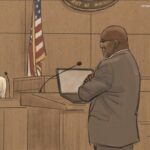
During a rigorous two-day evidentiary hearing in federal court, legal counsel representing Nikki Floris and Bradley Benavides cross-examined FBI agent Bryan Witt regarding the genesis of the inquiry. The defense scrutinized the bureau’s basis for claiming that the two former officials intentionally misled the House Judiciary Committee about their involvement in various Hunter Biden investigations.
U.S. Magistrate Judge Zia Faruqui announced intentions to thoroughly examine the charging document line by line. The judge aims to determine whether sufficient probable cause exists to establish that a crime actually took place, with that meticulous judicial review scheduled to continue on Thursday.
While testifying on the stand, Witt conceded that federal agents failed to interview vital witnesses, including Floris herself and congressional staffers possessing direct firsthand knowledge of the statements given to the House Judiciary Committee.
Despite those investigative gaps, Witt assured defense counsel on Tuesday that he maintains full confidence in the truthfulness of the accusations leveled against Benavides and Floris.
Defense attorneys utilized pointed questioning to dismantle the notion that their clients knowingly provided false statements, highlighting how specific questions lacked the rigorous precision required for the government to secure a conviction at trial.
As an illustration, when Floris—who operated outside of criminal casework—was asked if she participated in the Hunter Biden investigation, the interrogator omitted any specific reference to which inquiry was meant. Witt admitted on record that multiple distinct criminal and counterintelligence probes involving Hunter Biden existed.
Margaret Donovan, serving as Floris’ attorney, pressed the agent on the ambiguity by stating that establishing a false statement requires a clear comprehension of the specific question being answered. Witt suggested the query likely pertained to the Baltimore field office’s criminal investigation.
Although neither Floris nor Benavides formed part of the active Baltimore investigative squad, prosecutors assert the pair conferred with that team before delivering a defensive briefing on potential Russian disinformation to Senators Chuck Grassley and Ron Johnson.
The criminal proceeding against Floris and Benavides has drawn scrutiny for its unusual path since emerging last week. Rather than seeking a standard grand jury indictment, prosecutors utilized a criminal complaint—a legal instrument typically reserved for felony matters involving immediate threats to national security or public safety.
In a late-night legal maneuver just prior to Tuesday’s court session, prosecutors attempted to introduce fresh charges alleging obstruction of Congress via an unsigned and unsworn superseding complaint. Magistrate Judge Faruqui quickly rejected the move as improper and unprecedented.
While the magistrate discarded the flawed superseding complaint from the official record due to its lack of proper judicial vetting, he permitted the hearing on the initial complaint to move forward.
Defense counsel subsequently exposed notable discrepancies between the two complaint versions, particularly regarding whether a key congressional staffer personally witnessed the testimony provided by Floris and Benavides.
Witt later admitted that House Judiciary Committee Republican Counsel Steve Castor neither attended the testimony nor reviewed the transcript. Furthermore, Witt acknowledged that agents were strictly barred from interviewing any other congressional staff members, a restriction defense lawyers argued severely undermines the materiality of the alleged false statements to the congressional inquiry.
When Donovan asked if investigators reached out to Democrats for their perspective on materiality, Witt answered negatively, noting that agents were instructed to rely solely on written questions.
Upon being asked if he recognized the existence of a general counsel representing Democrats, Witt stated that nobody explained the partisan dynamics of the committee to him.
Prosecutors defended the limited investigative outreach on Tuesday by citing the Constitution’s Speech and Debate clause, which shields the legislative branch’s internal deliberations from executive branch intrusion.
In a striking revelation, Witt testified that Patel instructed his supervisor in the Kansas City field office to launch the investigation. This directive occurred merely a day after President Trump delivered a televised address urging the Justice Department to examine an alleged cover-up by intelligence officials regarding Chinese interference efforts in the 2020 election.
Alongside that speech, the White House published a collection of classified documents indicating Floris helped recall a classified report from an Albany field office analyst. That report alleged China fabricated fraudulent driver licenses to manufacture mail-in ballots, though questions regarding the source’s credibility had surfaced.
Witt confirmed his initial assignment was determining whether the former intelligence officials suppressed evidence concerning China. However, after agents reviewed transcripts of the 2023 testimony given by Benavides and Floris to the House Judiciary Committee, the focus of the probe shifted.
Margaret Donovan criticized Patel’s deep involvement in the matter, stating he effectively inserted himself as both a witness and a primary case agent, adding to the unconventional nature of the case.
During Wednesday’s testimony, Witt confirmed that both Patel and the deputy director of the FBI actively tracked the investigation’s advancement, with case personnel routinely transmitting updates directly to FBI headquarters.
Witt detailed at least two instances where Patel joined the case team via video conference, alongside in-person visits to the Kansas City field office by FBI deputy directors.
Prosecutor Cory Jacobs argued before the magistrate judge that the historical origins of the investigation bear no relevance to establishing probable cause, suggesting those arguments belong in future legal proceedings.
Jacobs expressed concern that the hearing had drifted far from its intended scope, warning that certain testimony would prove difficult to undo once introduced.
Reporting by Policy-Wire (PW)