

D.C. Devolves: Walls Erected, Funds Frozen, and Empires Challenged
POLICY WIRE — Washington, D.C. — They’re not just moving desks inside the Pentagon; they’re building walls. Literally. Or at least, creating uncrossable lines for journalists, transforming what...

POLICY WIRE — Washington, D.C. — They’re not just moving desks inside the Pentagon; they’re building walls. Literally. Or at least, creating uncrossable lines for journalists, transforming what was once the Department of Defense press office into a “Sensitive Compartmented Information Facility.” A nice little bureaucratic turn of phrase for “Keep Out.” That’s one way to start a week in a capital already reeling from war, whispers, and looming legal showdowns.
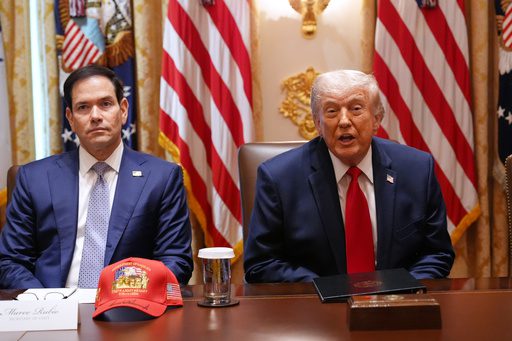
Because of course, it wasn’t enough to simply have an administration perpetually at odds with the fourth estate. Now, the media can’t even get their feet wet inside the very hallways meant for transparency, an aggressive gambit confirmed by acting Pentagon press secretary Joel Valdez, who found “nothing controversial” about designating public access space as a secure zone because speechwriters now occupy it. You can’t make this stuff up. This latest brick in the wall arrives as Secretary of State Marco Rubio preps for his first Congressional appearance since the Iran conflict began.
It’s a tough spot, that. Facing a litany of questions about a “fragile or stalling” diplomatic effort while your own government shutters doors to scrutiny. Rubio, a former senator who’s become the administration’s globe-trotting face, will attempt to navigate the minefield of back-to-back Capitol Hill hearings this Tuesday. Lawmakers, including a small but growing faction of restive Republicans, aren’t just looking at the State Department’s annual budget request; they want answers on the astronomical price tag and widening regional impact of this new Middle Eastern “engagement.”
“This is about showing strength,” Rubio’s office released in an emailed statement late Monday, preempting critics. “When you deal with hostile regimes like Tehran, diplomacy isn’t tea and cookies; it’s a cudgel, carefully wielded. We’re containing them, even if it looks messy from here.” Messy doesn’t quite capture the delicate regional ecosystem, especially in countries like Pakistan, already walking a tightrope between alliances and struggling economies, wary of any conflict that further destabilizes the Muslim world and feeds extremism. And they’re watching every move.
Back on the home front, the political pot continues to boil. An appeals court panel, sharply divided, declared the Pentagon’s transgender troop ban illegal, a policy championed by the administration. It’s another legal blow, mind you, one that echoes with deeper culture war clashes across the nation. While the Supreme Court allowed enforcement last year, this new ruling offers a glimmer of hope for some — though not all — current service members. To delve deeper into this ongoing saga, readers can explore how From Barracks to Benches: Transgender Troop Ban Rekindles US Culture Wars, Supreme Court Looms.
Then there’s the whole sticky mess of the $1.776 billion settlement fund. Designed to compensate — allegedly — President Trump’s political allies, the Justice Department initially paused its implementation following a court order. Now, Republicans want more information, especially given whispers the President himself is reconsidering it entirely. That sum, let’s remember, represents an incredible financial boon for its recipients, coming out of the federal coffers. Acting Attorney General Todd Blanche will likely find himself in the hot seat too, with budget talks serving as a convenient pretext for grilling him about this contentious payout. “The Department is committed to upholding judicial orders and the rule of law,” Blanche stated through a spokesperson Monday, a phrase that often rings hollow when political winds shift. “Our actions will always reflect a dedication to those principles, regardless of the political noise.”
Even inside the Democratic establishment, things aren’t exactly kumbaya. Former first lady Jill Biden surprised some (or played surprised, take your pick) that Kamala Harris had penned a memo criticizing Joe Biden’s 2024 decision. “I was a little surprised she wrote that,” Jill Biden chirped on MSNOW, attempting to project an image of familial harmony, despite her husband’s cancer diagnosis taking “its toll” and forcing him to take it easier. That’s real talk, even if it’s softened by political necessity.
What This Means
This week’s confluence of events paints a stark picture: an administration increasingly isolated, battling internally, and facing mounting pressure from an emboldened — if not always united — opposition. The Pentagon’s move to restrict press access isn’t just about controlling narratives; it signals a defensive posture, a bunker mentality setting in as challenges multiply. On the economic front, the nearly $1.8 billion settlement fund (confirmed by Justice Department figures) — if ultimately dispensed — isn’t merely an allocation of funds; it’s a political loyalty test that could further entrench perceptions of cronyism, complicating crucial legislative efforts like funding for immigration enforcement, which Republicans abruptly abandoned.
Globally, the Iran conflict, defended vigorously by officials like Rubio, continues to be an economic drain and a regional destabilizer, playing into broader narratives of Western interventionism that resonate deeply across South Asia and the Muslim world, potentially fanning flames of discontent and complicating U.S. foreign policy objectives in those critical regions. These are not isolated incidents; they’re interconnected threads in a grand political opera, where every movement, every whisper, every legal challenge pulls at the delicate fabric of governance, hinting at a deepening crisis of legitimacy that won’t simply fade away with the news cycle.