


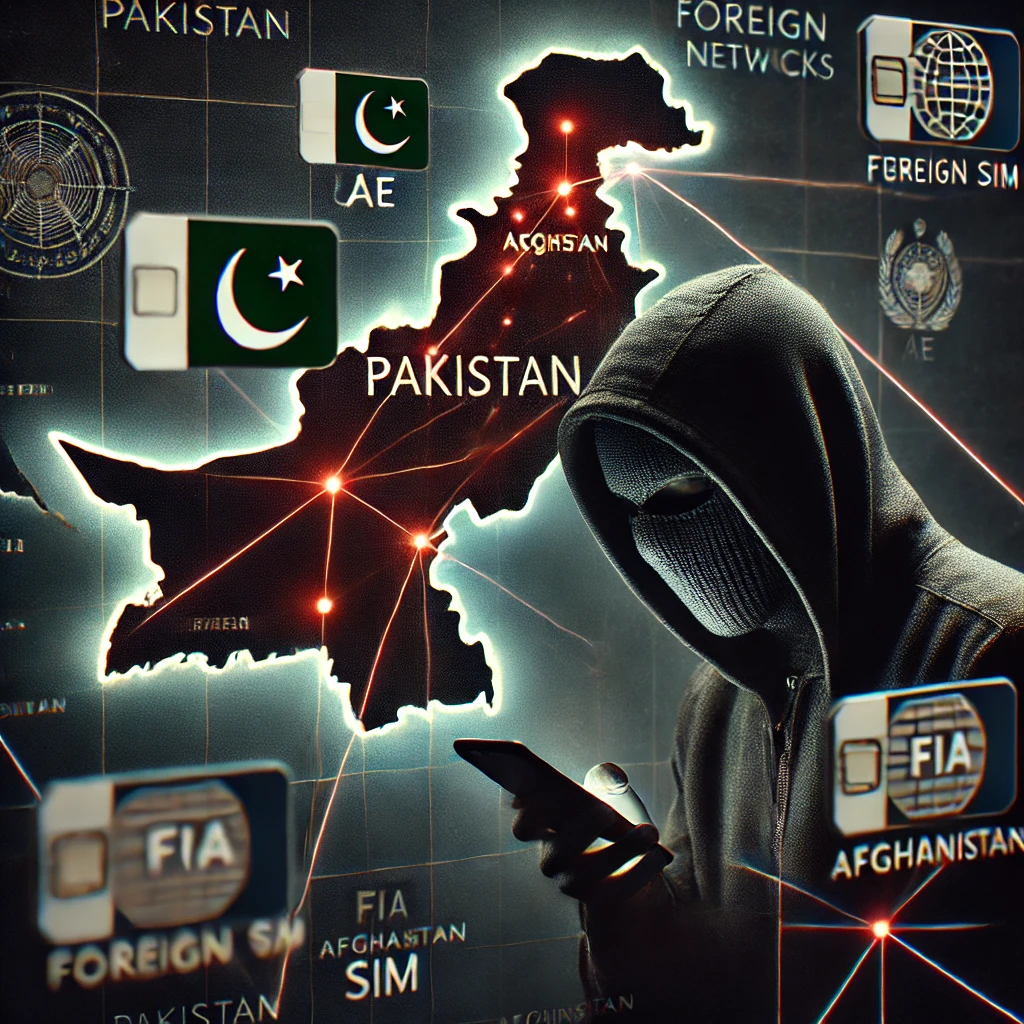
Criminal Networks and the Foreign SIM Problem in Pakistan
Pakistan has recently intensified its crackdown on the unauthorized use of foreign SIM cards, a move driven by mounting national security concerns, economic considerations, and the growing misuse of...

Pakistan has recently intensified its crackdown on the unauthorized use of foreign SIM cards, a move driven by mounting national security concerns, economic considerations, and the growing misuse of these SIMs for illicit activities. While the decision to curb their proliferation is rooted in safeguarding the country’s digital and financial ecosystem, many citizens remain oblivious to the gravity of the situation. Instead of understanding the real threat, a significant portion of the population reacts impulsively, often perceiving such actions as unnecessary government interference. This reaction, fueled largely by misinformation on social media, overlooks the fact that foreign SIMs are not just harmless communication tools but are actively being exploited for identity theft, financial fraud, tax evasion, and even organized crime.The appeal of these SIMs lies in their ability to provide international outreach, wider coverage, and anonymity, making them attractive not only for businesses and individuals engaged in cross-border communication but also for cybercriminals. Their ability to mask identities and conceal digital footprints has made them an essential tool for scammers, blackmailers, and those involved in espionage and terrorism. The recent crackdown by the PTA and FIA revealed that criminals were using pre-activated international SIM cards to carry out untraceable transactions, manipulate unsuspecting individuals, and conduct financial scams with impunity. Reports indicate that cybercriminals exploit these foreign numbers to bypass security protocols, execute phishing attacks, and commit large-scale identity theft. The issue has become so widespread that cybercrime units struggle to keep up with the sheer volume of complaints.According to a Bloom Pakistan report, simultaneous raids were conducted across multiple cities, including Abbottabad, Skardu, Peshawar, Lahore, and Sialkot. Several individuals were arrested, and many illegally activated SIM cards were confiscated. These SIMs were linked to cyber fraud, abduction cases, blackmailing, and even terrorist activities. More alarmingly, foreign SIMs have played a role in disrupting investigations, particularly those concerning terrorism financing and espionage. By allowing criminals to operate without detection, they have created loopholes that law enforcement agencies have struggled to close for years. Yet, instead of recognizing the authorities’ efforts, social media platforms became flooded with complaints, conspiracy theories, and accusations that these measures were meant to limit personal freedoms.The unchecked influence of social media has played a significant role in distorting the narrative surrounding this issue. Whenever an official measure is introduced, it is quickly spun into a negative story, with people believing whatever version trends first rather than questioning the larger implications. Instead of asking, “How do these SIMs impact our security?” people are more likely to complain about the government restricting communication. This mentality allows criminal networks to thrive as they continue exploiting public ignorance while law enforcement agencies struggle to gain support for necessary reforms. Many Pakistanis remain unaware that SIM cards acquired through unauthorized means can be used to access their personal banking details, trick them into handing over sensitive information, and execute fraudulent transactions. Numerous cases have emerged where victims lost their entire savings simply because they unknowingly shared their credentials over calls made from these foreign SIMs, believing they were speaking to a legitimate institution.Beyond individual scams, these SIMs have contributed to large-scale financial losses for the country. Their role in tax evasion is particularly concerning, as individuals and businesses using them bypass local telecommunication regulations, depriving Pakistan of substantial revenue. The illicit trade of foreign SIMs has turned into a multi-million-rupee underground business, prompting authorities to take stringent measures to curb their use. The latest operations have led to the seizure of more than 12,000 illegal SIMs worth approximately 2 million rupees and the identification of over 100 individuals involved in their distribution. Furthermore, authorities have identified 29 online pages involved in selling UK-based SIMs, which are now being blocked. One of the most significant breakthroughs occurred at Multan airport, where FIA officials arrested a suspect attempting to smuggle 6,700 foreign SIMs concealed in his luggage. Earlier in January 2024, a raid at a Sheikhupura mobile phone franchise resulted in the confiscation of 11 Biometric Verification System (BVS) devices used for unauthorized SIM activation.The challenge of foreign SIM misuse is not unique to Pakistan. Countries worldwide have been struggling to combat the illicit trade of unregistered SIMs, and even the United Kingdom has recognized the risks posed by “SIM farms”—devices capable of housing multiple SIMs simultaneously, often used for financial fraud and large-scale digital operations. In response, the UK government has proposed legislation to ban the manufacture, import, sale, hire, and possession of SIM farms. These international efforts align with Pakistan’s actions, reinforcing the fact that the crackdown is not about limiting communication but about securing digital spaces currently being misused for illegal activities.Smuggled into Pakistan primarily from UK-based telecom providers such as GiffGaff, Lyca, EE, O2, Three, and Lebara, these SIMs are ordered online free of cost and delivered instantly. Since Pakistan bans online ordering, passengers bring them in and sell them openly for prices ranging from Rs. 1,000 to 5,000. Their widespread misuse is evident in how they facilitate unauthorized financial transactions through PayPal and Payoneer accounts, services not officially available in Pakistan. Moreover, they are frequently used to create social media accounts under fake identities, which are then exploited for propaganda, financial fraud, and even kidnapping scams. More alarmingly, they serve as essential tools for terrorist activities and espionage, allowing perpetrators to operate without leaving a trace.Recognizing the issue’s urgency, Pakistan’s Federal Board of Revenue (FBR) has introduced strict regulatory measures to control the situation. Ordering foreign SIMs online from Pakistan is now banned, and activation is only possible through roaming agreements between telecom companies. A Temporary Registration (TR) system has been implemented for overseas Pakistanis and foreign nationals, allowing them to use only one handset for up to 120 days, which must be declared to FIA officials upon arrival at the airport. More importantly, there is no legal provision for the bulk import of these SIMs into the country.Despite these efforts, a significant challenge remains: the public’s reluctance to acknowledge the dangers associated with foreign SIMs. Law enforcement agencies are not the enemy in this situation; their goal is to protect citizens from threats they often fail to recognize. Those arrested in the recent operations were not innocent vendors trying to make a living, they were part of a sophisticated supply chain designed to enable fraud and deception. The SIMs they sold were directly linked to financial scams that have ruined countless lives, yet the same people who suffer from these crimes are the ones resisting measures designed to prevent them.
Author