


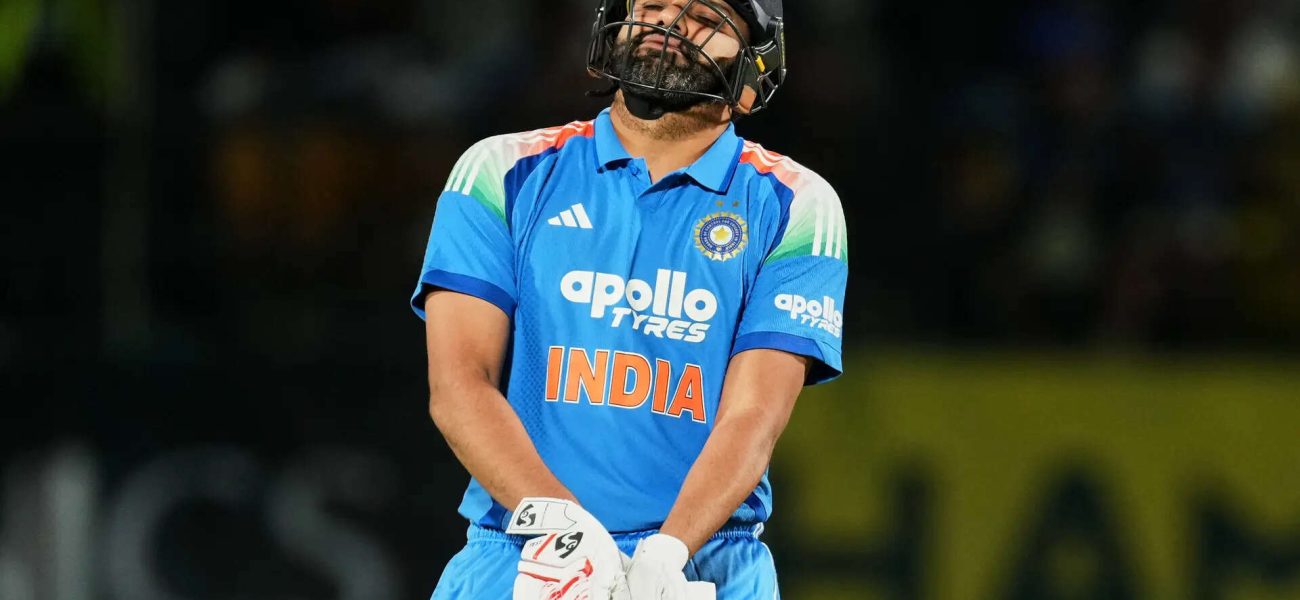
Cricket’s Relentless Clock: Star Batters Face Successor Speculation
POLICY WIRE — New Delhi, India — The roar of the crowd, the blinding flash of endorsements, the fleeting glory of victory — it all has an expiration date, often brutally enforced...

POLICY WIRE — New Delhi, India — The roar of the crowd, the blinding flash of endorsements, the fleeting glory of victory — it all has an expiration date, often brutally enforced by an unforgiving clock. Even for the most celebrated athletes, the whisper starts quietly, a faint tremor in the stands, then a murmur in the tabloids. Before long, it’s a clamor, questioning when exactly a titan will finally crumble, opening the gates for the next hungry generation.
It’s not about current form, not truly. It’s about an economic and cultural appetite for novelty, a voracious hunger for the ‘next big thing’ that characterizes elite sport across the globe. But this particular drama plays out with unique fervor in a cricket-obsessed region like South Asia, where careers are often measured not just in runs, but in national sentiment and multi-million dollar sponsorships. For India’s premier batsmen, Rohit Sharma and Virat Kohli, that clamor has grown into an undeniable buzz, one former England spinner Graeme Swann calls “inevitable.” He told the Press Trust of India (PTI) that, “people naturally start looking for your successor, no matter how well you do.” You see, it’s just how this machine works. [QUOTE_PLACEHOLDER]
And boy, is the machine looking. India still has a couple of one-day internationals left in its current series against Afghanistan, but the sporting chattering classes are already pivoting to what’s next: July’s three-match tour of England and, of course, the preparations for next year’s ODI World Cup. Swann observed that “even if you’re at the top of your game, they’re still looking like, who will be the next Virat? Who will be the next Rohit when they go? That’s very natural.” He’s not wrong, you know. It’s the stark reality facing every sporting icon once they hit the “second half of your career, if you like.”
Because once an athlete has “one or two low scores, everyone starts looking over your shoulder and seeing who’s next in line.” And — surprise, surprise — the “next in line” already has a name: Vaibhav Sooryavanshi. The fifteen-year-old phenom, hot off an “extraordinary IPL season”, has already nabbed a call-up for India’s T20I tour. The audacity of youth, right? Swann didn’t pull any punches, saying, “He is world-class — and I’m glad I’m not playing anymore.”
But the real juice is in the impending showdown. The England series is poised to become an almost theatrical audition for these veterans. The weight is certainly on them. Swann figures “it’s a huge six weeks for Rohit,” even if he concedes that Sharma “looks in great touch” and remains “one of the best players going, let’s face it.” He even quipped, “So if I was an English bowler, I wouldn’t really want to bowl against a Rohit Sharma who’s desperate to prove a point and keep his place.” And who would, really? A cornered beast can be terrifying.
Still, the stakes are undeniably high, particularly with the 2027 ODI World Cup looming. While Swann highlighted Kohli’s formidable IPL campaign — amassing 675 runs in 16 matches during IPL 2026 — he dismisses the notion that the England series is some final, definitive tryout. “India have got to make sure they’re not sidetracked by that,” he insisted. “But this is Rohit and Virat. They know what they’re doing and they’ll go out there.” A healthy dose of optimism, perhaps, for two players operating under a microscope no different from political figures facing constant public scrutiny.
This generational friction isn’t unique to cricket; you see it in global football with fading superstars and in local municipal politics when a fresh face challenges a long-serving incumbent. But in countries like India and neighboring Pakistan — where cricket transcends mere sport to become an obsession, a national religion — the stakes feel a magnitude higher. Careers here define legacies; retirements become national conversations. Look at the outpouring when an icon like Shahid Afridi eventually stepped away in Pakistan; it was a socio-cultural event, not just a sporting footnote.
📄 POLICY WIRE WHITEPAPER PUBLISHED: PAKISTAN'S NATIONAL SECURITY POLICY PRIORITIES
👉 READ BY CLICKING HEREThe business of cricket, particularly India’s immensely popular Premier League (IPL), churns talent with a capitalist zeal. It’s a factory that guarantees an unending supply of contenders, ensuring veterans constantly feel the hot breath of youth on their necks. Just consider the sheer financial muscle: the Indian Premier League alone generated approximately $1.1 billion in revenue in 2023, according to a report by Reuters. That’s a huge economy, driven by star power, which demands constant rejuvenation.
What This Means
This discussion isn’t merely about who scores runs; it’s about the deep political economy of professional sports, especially in nations where athleticism intersects fiercely with national identity. In India, like in Pakistan, cricket isn’t just a game. It’s a barometer of national pride, an emotional release for hundreds of millions. The ‘successor’ debate impacts not only player contracts and endorsements but also team sponsorships, broadcast rights, and fan engagement. A dip in form from a marquee player can reverberate through marketing departments — and investor calls.
For governing bodies like the BCCI (Board of Control for Cricket in India), navigating this transition successfully is an art form. You can’t alienate the established fan base attached to legends, but you absolutely need to cultivate new idols to keep the commercial juggernaut rolling. The rise of someone like Sooryavanshi means future revenue streams, but also tricky conversations about sidelining heroes. It’s a delicate balance — blending sentiment with cold, hard commercial logic. It’s always a calculation. But what if this succession happens badly? A disgruntled legend, a dip in team morale, a backlash from fans — any of these could dent India’s carefully constructed global cricket brand. For the whole South Asian region, which often looks to India’s cricketing prowess, a smooth transition guarantees continued stability for the sport as an economic driver and cultural touchstone. Otherwise, there’s risk, political risk even, in disappointing a passionate public. Perhaps the Russians know a thing or two about dealing with disgruntled stars? Maybe exiles in Berlin have some lessons to share on how public perception can turn.