


Congress Eyes Expanded Safety Nets as AI Job Displacement Fears Grow
Lawmakers are introducing new legislation to protect American workers from AI-driven job losses, proposing expanded benefits and retraining programs.

POLICY WIRE — Washington, D.C. — As artificial intelligence continues to advance, a growing number of federal lawmakers are taking proactive steps to prepare for potential labor market instability. Congress is currently reviewing a series of legislative proposals aimed at shielding the American workforce from the risks of AI-related job displacement.
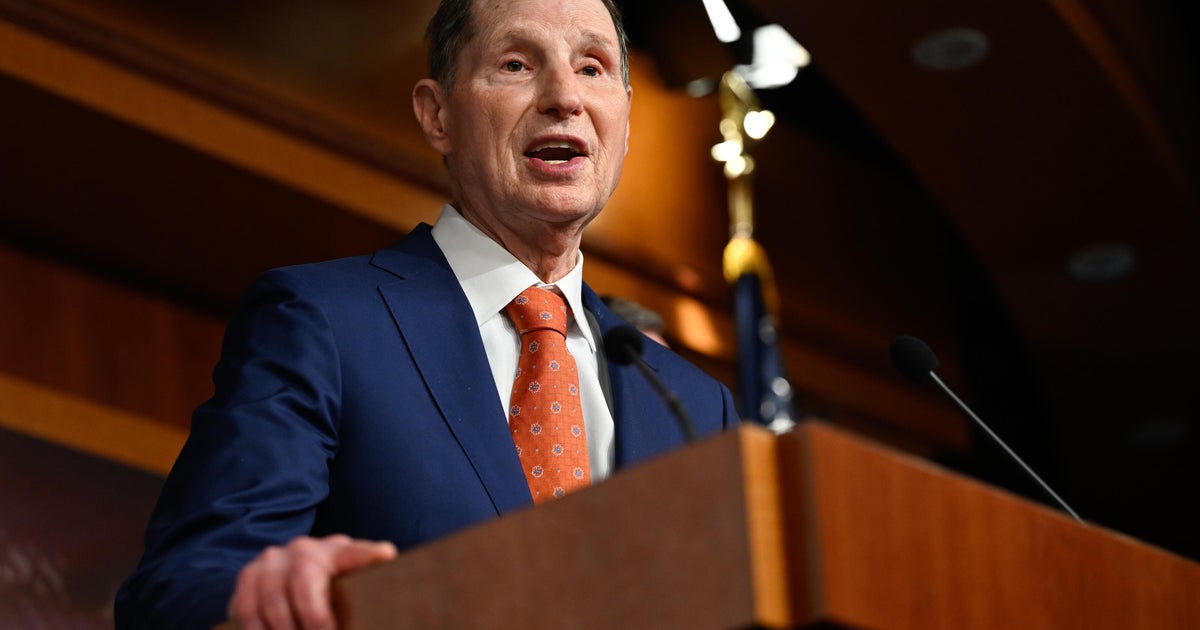
On Friday, Sen. Ron Wyden, a Democrat from Oregon, introduced The Stability and Opportunity for Workers Act. This legislation seeks to bolster unemployment benefits during periods of high economic distress, specifically proposing an extension of benefits to 52 weeks if the national unemployment rate hits 8.5%, effectively doubling the standard 26-week limit.
According to a statement from Wyden’s office, the bill also focuses on providing education and retraining opportunities for individuals whose positions are eliminated by AI, helping them transition into higher-paying roles. These efforts arrive alongside stark warnings from industry leaders regarding the potential for widespread job losses.
Last year, Anthropic CEO Dario Amodei cautioned that AI could potentially eliminate half of all entry-level white-collar jobs, projecting that unemployment could climb to between 10% and 20% within the next one to five years. Microsoft co-founder Bill Gates has similarly expressed concerns, noting in a recent essay that millions of jobs could be at risk due to the technology.
While economists observe that these dire predictions have not yet manifested in large-scale workforce displacement—with most AI-related layoffs currently confined to the tech sector—public anxiety remains high. A recent poll from The Associated Press-NORC Center for Public Affairs Research indicates that nearly 80% of Americans believe it is vital to implement protections for workers in the era of AI.
Legislators have introduced several other measures to address these concerns. Last month, Sen. Mark Kelly, a Democrat from Arizona, proposed a bill that would impose three distinct excise taxes on the AI industry, including a 5% tax on digital advertising revenue, an AI usage tax, and a 50% excess profits tax, with proceeds earmarked for worker retraining funds.
In August, Democratic Reps. Greg Casar of Texas, Valerie Foushee of North Carolina, and Sara Jacobs of California introduced legislation to tax AI companies based on token usage. According to Rep. Casar’s office, the tax rate would scale alongside the unemployment rate, with generated revenue used to create new jobs to offset AI-driven layoffs.
Additionally, a bipartisan effort led by Sen. Mark Warner, a Democrat from Virginia, and Sen. Josh Hawley, a Republican from Missouri, aims to increase transparency. Introduced last year, their bill would require major corporations and federal agencies to report AI-related layoffs to the Department of Labor for public disclosure. A companion version of this bill was introduced in the House this July by Reps. Steven Horsford of Nevada, Sara Jacobs of California, and House delegate James Moylan of Guam.
Reporting by Policy-Wire (PW)