


Colombia’s Gritty World Cup: Knockout Stage Secured
POLICY WIRE examines Colombia's gritty World Cup journey. From defensive dominance to attacking woes, see how they reached the knockouts & its national impact.

POLICY WIRE — Kansas City, USA — For a team hailed as contenders, securing a spot in the World Cup knockout stage isn’t usually an exercise in nerve-jangling persistence. Yet, here we’re. Colombia, a side many pencil in for deep tournament runs, hasn’t merely glided into the Round of 16. No, they’ve scraped, battled, and — dare I say — occasionally flailed, demonstrating a fascinating dichotomy of defensive grit and attacking profligacy. It isn’t always pretty, this path to glory, but then, glory rarely is.
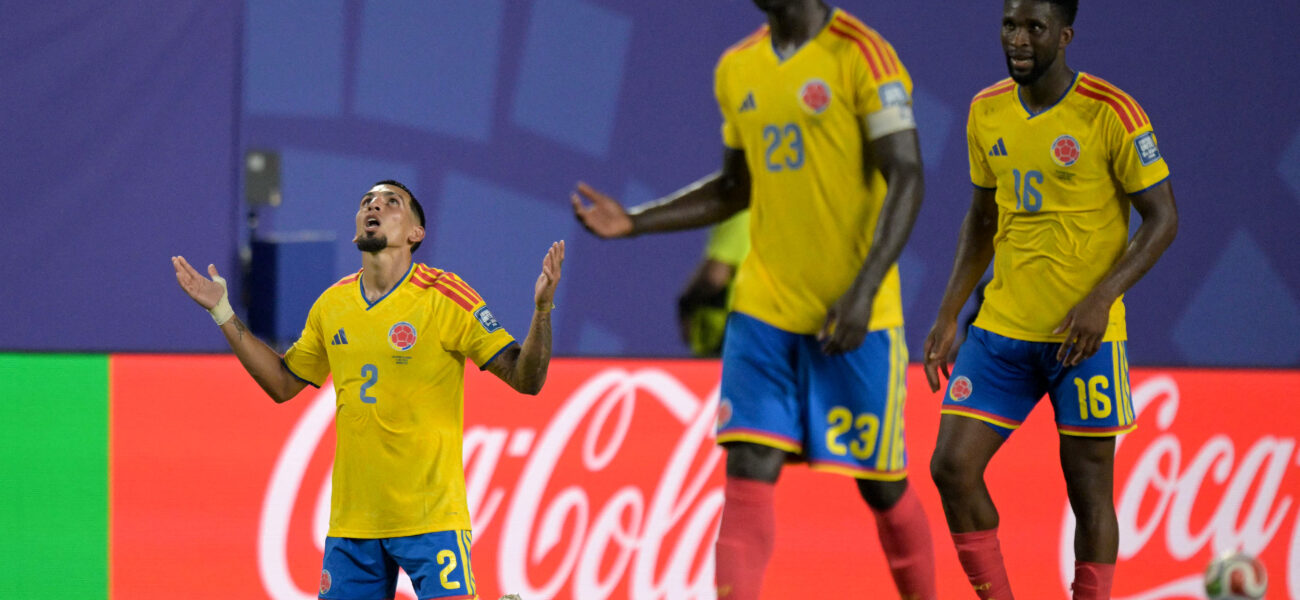
Consider the recent dust-up in Kansas City. On paper, a decisive victory over Ghana, 1-0. A ticket punched, no fuss. But the pitch offered a rather different narrative. A bruising encounter, frankly, that saw Los Cafeteros manage to “book their place in the Round of 16 at the 2026 World Cup, where they will face Switzerland.” Simple enough words, but they don’t quite capture the messy truth of ninety minutes under the glare. One goal did it: Jhon Arias’ [QUOTE_PLACEHOLDER] Just one, despite a performance that was [QUOTE_PLACEHOLDER] It’s that gap between intent and execution that keeps fans on edge, makes pundits furrow brows, and ultimately, defines tournaments.
Ghana, bless ’em, made an early show of it. They [QUOTE_PLACEHOLDER] even mustering [QUOTE_PLACEHOLDER] But it didn’t stick, did it? They promptly [QUOTE_PLACEHOLDER] Then the injury bug bit. Cordoba, a fresh face, was [QUOTE_PLACEHOLDER] And wouldn’t you know, it was Suárez who sparked the breakthrough. The forward [QUOTE_PLACEHOLDER] only for Arias, unmarked, to [QUOTE_PLACEHOLDER] From that moment on, predictably, [QUOTE_PLACEHOLDER] Ghana’s response? Or rather, their lack of one? They [QUOTE_PLACEHOLDER] A testament, perhaps, to how quickly fortunes can turn and how momentum, once lost, is a brute to reclaim.
And what followed wasn’t a clinic. Far from it. [QUOTE_PLACEHOLDER] But close only counts in horseshoes — and hand grenades. Ati-Zigi, the Ghanaian keeper, pulled off saves, including from [QUOTE_PLACEHOLDER] Luis Díaz, a name whispered with reverence and frustration, even [QUOTE_PLACEHOLDER] Moments later, he [QUOTE_PLACEHOLDER] The forward’s relentless drive is undeniable, but so too is a perplexing habit of finding himself on the wrong side of the linesman’s flag. He’s “been caught offside eight times at this 2026 World Cup, the highest number for a single player in a single edition since 2014, when Robin van Persie reached 13 with the Netherlands.” That’s a statistic that speaks volumes about ambition clashing with timing. And it ain’t helping his side sleep easy.
Colombia [QUOTE_PLACEHOLDER] Davinson Sánchez [QUOTE_PLACEHOLDER] Quintero [QUOTE_PLACEHOLDER] and Ríos was, again, [QUOTE_PLACEHOLDER] By contrast, [QUOTE_PLACEHOLDER] It’s a tale as old as football: a team that can’t quite finish but whose opponent can’t quite create. The upshot? [QUOTE_PLACEHOLDER] It’s this frustrating duality, this beautiful mess, that makes the World Cup so compelling. This is, by the way, “the first time in their World Cup history, Los Cafeteros have also gone three consecutive matches without conceding a goal.” A fact that highlights their defensive fortitude, even if it masks offensive angst.
📄 POLICY WIRE WHITEPAPER PUBLISHED: PAKISTAN'S NATIONAL SECURITY POLICY PRIORITIES
👉 READ BY CLICKING HEREWhat This Means
Colombia’s progression, gritty as it was, holds genuine political — and economic implications. In Latin American nations, where football isn’t just a sport but a fervent expression of national identity, a deep World Cup run can be a potent unifying force, a distraction from everyday woes, and a source of collective pride. For governments, success on the global stage offers invaluable soft power. It boosts a country’s brand, attracts tourism, and potentially opens doors for trade deals, much like diplomatic missions do, but with far greater fanfare. Economically, prize money aside, individual player valuations skyrocket—making for lucrative transfers—and domestic leagues see renewed interest. Beyond direct monetary gains, a strong national team can also elevate public health discourse around sport — and fitness. You can almost feel the entire nation holding its breath as they contemplate a potentially deep World Cup’s Brutal Unveiling, for better or worse.
But there’s another angle here, especially for nations striving on the international stage. Think of how this gritty, sometimes frustrating, performance might resonate in places like Pakistan or Bangladesh. Countries there, despite their colossal populations and passionate football followings, rarely crack the global elite in ‘the beautiful game’. They often face infrastructure challenges, funding gaps, — and a fierce battle for talent against cricket’s dominance. Colombia’s current squad isn’t operating with an endless supply of generational talent. Their strength, as evidenced by their three clean sheets, lies in organization, collective effort, and a willingness to grind out results. It’s a template, perhaps, for developing nations, including those across South Asia and the broader Muslim world, which struggle for global recognition in sports beyond their traditional strengths. But it’s also a stark reminder that even with organized talent, that last, crucial, finishing touch remains maddeningly elusive. The road is long, it’s winding, — and it ain’s always clear where the next goal’s comin’ from.
This team’s path feels less like a majestic parade — and more like a determined crawl through a minefield. But they’re through. That’s all that matters to their fans, — and probably to the national coffers. It sets up another test, another moment where precision must overcome passion. And that’s football, isn’t it? A game of exquisite triumphs and infuriating almost-moments. It leaves you wondering, though, if the struggle itself isn’t part of the spectacle—an enduring metaphor for perseverance in the face of persistent, niggling imperfection. It surely is for fans, both in Bogotá and Lahore, glued to their screens, waiting for that next bit of magic—or, at least, competence.