

Cold War Relic for a Digital Age: Trump’s Coal Gambit Battles Market Gravity
POLICY WIRE — WASHINGTON, D.C. — Imagine invoking a Korean War-era emergency statute, not for some sleek cyber-defense initiative or cutting-edge clean energy leap, but to resuscitate an industry...

POLICY WIRE — WASHINGTON, D.C. — Imagine invoking a Korean War-era emergency statute, not for some sleek cyber-defense initiative or cutting-edge clean energy leap, but to resuscitate an industry commonly linked to the steam locomotive and the very notion of obsolescence. And then tie it into powering the next generation of artificial intelligence data centers, no less. This isn’t a historical oddity from the archives; it’s the contemporary policy directive emerging from the highest office in Washington.
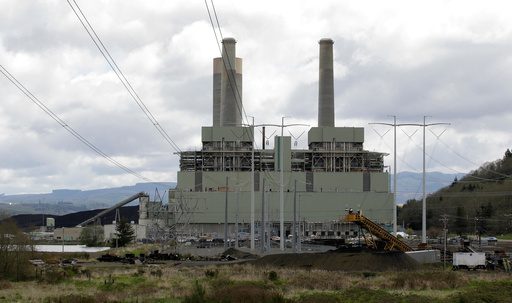
President Donald Trump recently doubled down on an embattled energy source, earmarking close to $700 million to shore up America’s perpetually struggling coal sector. His administration’s audacious play? Employing the Defense Production Act, a rather potent 1950 law designed for wartime mobilization, to pump new life into 13 existing coal plants spread across the country and, perhaps more remarkably, green-light construction on entirely new ones in Alaska and West Virginia—places that haven’t seen a fresh coal-fired power station rise since 2013.
The money isn’t just for building blocks, though. There’s a plan afoot to fire up a long-shuttered plant in Maryland. And to get coal out of the country? A long-delayed export terminal in Oakland, California, is finally slated for construction. The administration pitches these efforts as an economic shot in the arm, a White House official claiming these moves could support or create more than 14,000 jobs. But one has to wonder, at what cost, — and for how long?
It’s an attempt to turn back the clock, or at least halt its forward momentum. Trump wants you to know that [QUOTE_PLACEHOLDER] He says, [QUOTE_PLACEHOLDER] This latest initiative marks a continuation of a persistent drive, seen through open federal lands for mining and past infusions of $625 million to recommission plants. But the market? Well, it’s been voting otherwise.
Indeed, Energy Secretary Chris Wright and his team have been burning the midnight oil, issuing emergency orders left and right. They’ve forced plants in Michigan, Indiana, Colorado, Washington state—and even Orlando, Florida—to keep chugging along past their scheduled retirement dates. Why? Because the insatiable appetites of data centers, the relentless churn of artificial intelligence, and the quiet revolution of electric cars are gobbling up power. Wright claims these interventions prevented major blackouts during the deep freeze that gripped the country not long ago, saying his actions helped prevent major blackouts during brutally frigid weather that gripped most of the country in late January and early February.
But the irony here is sharp. You’ve got an administration making grand pronouncements about powering tomorrow’s digital economy with yesterday’s fuel, while simultaneously freezing permits for offshore wind projects, axing clean energy tax credits, and generally making life hard for renewables. Environmental Protection Agency Administrator Lee Zeldin, for example, just proposed revisions that would keep a Wyoming coal plant from closing, arguing it’s essential for families across the state. Interior Secretary Doug Burgum, another Cabinet member echoing the sentiment, even called coal the [QUOTE_PLACEHOLDER]
Naturally, environmental outfits are fuming. Kit Kennedy, managing director for power at the Natural Resources Defense Council, put it rather succinctly: [QUOTE_PLACEHOLDER] And then she adds, with that distinct dash of scorn, [QUOTE_PLACEHOLDER] Lena Moffitt, executive director of Evergreen Action, cut even deeper: [QUOTE_PLACEHOLDER] It’s hard to argue with the sentiment that higher electricity bills and dirtier air might just be the logical—if unwelcome—consequences of this strategy. She also said, [QUOTE_PLACEHOLDER]
For those keeping score, coal, which once supplied over half of America’s electricity, barely accounts for 15% in 2024. That’s a dramatic tumble from the roughly 45% it held back in 2010, the Energy Information Administration (EIA) tells us. Natural gas, by comparison, now provides about 43%, with nuclear — and renewables picking up the slack. Even global demand, while high in recent years, is expected to flatten or decline. But Rich Nolan, president and CEO of the National Mining Association, argues this strategy will “ensure that upgrades to existing energy assets are made” and help [QUOTE_PLACEHOLDER]
The ambition to ship American coal abroad runs into plenty of geopolitical headwinds too. Reciprocal tariffs from Beijing meant less coal headed to China, according to EIA. While Pakistan and other South Asian nations—countries facing their own pressing energy needs and often grappling with significant infrastructure gaps—do represent potential markets for coal exports, the sheer logistical hurdles and existing plentiful reserves globally make any such venture an uphill climb. It also pushes them towards a dirtier future, contradicting global trends. And for those poor souls in Oakland, their neighborhoods will be saddled with health and safety worries from coal trains, all so distant Asian markets might get a chunk of American black gold.
What This Means
Politically, this is pure red meat for Trump’s base, a powerful symbolic gesture that screams defiance against environmentalism and globalist trends. But economically? It’s like pouring premium fuel into a carbureted engine when everyone else is driving electric. The market signals have been loud and clear for years: coal is an increasingly expensive, environmentally problematic power source that can’t compete with cheaper natural gas or rapidly scaling renewables. This $700 million injection isn’t a long-term strategy; it’s a political defibrillator attempting to restart a heart that’s been weakening for decades.
For Pakistan, for instance, an uptick in U.S. coal exports might present a superficially cheaper energy option in the short term, but it wouldn’t alter the long-run trajectory of global energy transitions toward cleaner sources. It might even further entrench fossil fuel dependence, making it harder for these nations to meet their own climate targets or invest in sustainable power infrastructure. This plan isn’t about fostering future economic competitiveness; it’s a subsidy to delay the inevitable, forcing taxpayers to prop up an industry that simply isn’t economically viable without significant governmental intervention. The grid needs stability, absolutely, but doing it this way just shoves the eventual—and expensive— reckoning further down the road, leaving future generations to clean up the air and the fiscal mess.