

City’s Collective Gasp Turns to Breathless Relief as Star Sidesteps Disaster
POLICY WIRE — New York City, USA — An entire metropolitan area, it seems, just held its collective breath. They’d witnessed their high-flying star, Jalen Brunson, grimace, stumble, and then disappear...

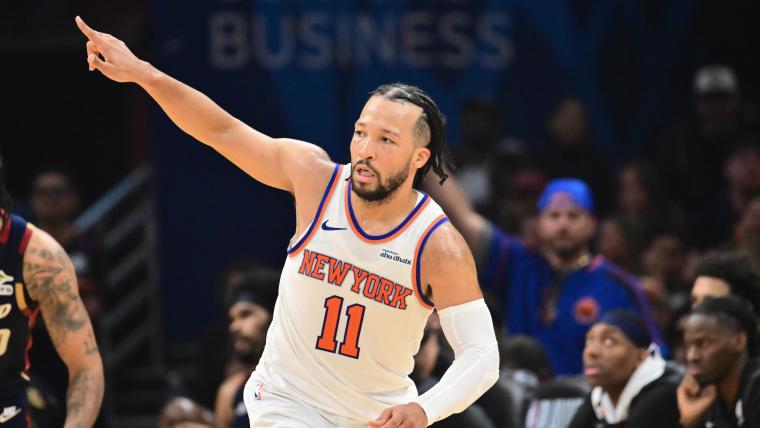
POLICY WIRE — New York City, USA — An entire metropolitan area, it seems, just held its collective breath. They’d witnessed their high-flying star, Jalen Brunson, grimace, stumble, and then disappear down the tunnel, only to emerge, miraculously, not just intact but ascendant. It was a narrative turn so dramatic, so perfectly engineered, you’d think it had been penned by the most cynical of scriptwriters – a high-stakes moment where the entire championship aspirations of the New York Knicks dangled precariously on an ankle. This wasn’t just a basketball game; it felt like a national referendum on collective urban anxiety.
The immediate aftermath of that pivotal Game One against the San Antonio Spurs wasn’t about who took the trophy, at least not yet. Instead, the discourse swirled around a familiar, crushing fear: the fragility of an athlete at the peak of his powers. Spectators across the globe, from Brooklyn bars to expatriate communities glued to screens in Karachi, watched the replay with a sickening thud—a superstar collapsing, a season teetering. But here’s the kicker: The whispers of catastrophe? They were utterly misplaced. Brunson omitted from Knicks’ early injury report for game two, providing an immediate, palpable easing of tensions that’s genuinely rare in the brutal theater of modern professional sports. [QUOTE_PLACEHOLDER]
It’s a peculiar thing, this vicarious anxiety. You get sucked into the performance, don’t you? These games, they’re not just sports; they’re allegories for grander struggles, where individual effort clashes with sheer unpredictable chance. That first Finals outing was a true slugfest, too. The lead shifted ten times, for crying out loud, — and the score was knotted up six times over four periods. Talk about a nail-biter. But let’s be real, the true narrative hook arrived when Brunson got caught under the basket, landed funny after a layup, and you saw him limp—a classic gut-punch moment that stops everyone in their tracks.
But the man’s a fighter, no question. Despite that visible discomfort — and the mid-game locker room detour, he returned to absolutely decimate the Spurs. His performance was truly out of this world, contributing 19 of his 30 points in the second half alone. That second-half blitz was phenomenal, seeing the Knicks outscore the Spurs by 17 points, according to The Sporting News. A phenomenal swing. His supposed injury became less a debilitating factor and more a plot device for his late-game heroics, a feat that would make any grizzled veteran — or any struggling political campaign, for that matter — take notes on comeback narratives.
Now, while you wouldn’t typically link American professional basketball to the geopolitical machinations of Islamabad or the economic currents of the South Asian market, think for a minute about the global reach of these dramas. Consider the millions of South Asians, many with direct or familial ties to regions like Pakistan, who avidly follow the NBA. This isn’t merely about basketball; it’s a shared global experience of triumph and setback, resilience and vulnerability. A superstar’s injury scare in New York City sends ripples through diaspora communities and captures attention on feeds across the continent, becoming a brief, shared topic in societies grappling with far more profound anxieties. It’s a collective narrative of hope, no less important (if less substantial) than the narratives of stability that political leaders so desperately try to craft for their populaces.
And let’s be frank: this collective sigh of relief wasn’t confined to Gotham. Game two of the Finals isn’t until Friday night, sure, so a lot can still change. But for the time being, there’s an almost palpable lightness in the air. The star guard hasn’t appeared on the Knicks’ injury report for game two, offering a moment of unexpected calm in what’s bound to be a pressure cooker series. This omission, coming after the grim images of Brunson going into the locker room, has fans (and their worried local businesses) breathing a whole lot easier. It’s almost as if a looming economic downturn has been momentarily averted, or a contentious policy debate put on hold—a brief reprieve for the anxious.
What This Means
Beyond the simple fact of an uninjured player, this episode speaks to the powerful, often irrational, forces that drive public sentiment and, by extension, the economy of attention. The sudden disappearance, the brief suspense, and the triumphant return: it’s a micro-drama that mirrors the larger political economy of fear and reassurance. A team’s success, heavily reliant on its perceived leadership (like Brunson’s), has quantifiable impacts on local economies through tourism, merchandise, and media consumption. One could argue the stock market’s reaction to positive economic data isn’t entirely dissimilar to a city’s jubilation over a key player’s health. The stakes, while different, engage the same psychological machinery.
Politically, the story also offers a lens through which to view leadership resilience. A politician, much like a star athlete, faces intense scrutiny, with every misstep amplified. Their capacity to return from a metaphorical stumble – be it a policy setback or a public gaffe – can determine the future of their mandate. What this Knicks scare demonstrated is the power of appearances; the absence of a negative report, much like the successful passage of critical legislation, can avert crisis. The immediate policy implication here is subtle but real: public trust, built on reliability, is a fickle beast. For policymakers, understanding these sudden swings from panic to relief, even if triggered by sports, offers insights into managing expectations in volatile landscapes.
And this goes further, even impacting the geopolitics of fandom. Nations invest in sports not just for athletic prowess, but for the soft power projection it offers, shaping national identities and connecting disparate populations. When an athlete’s injury is averted, it’s not just a win for the team; it’s a momentary stabilization of a cultural touchstone that, for many, provides a sense of escapism and unity, however fleeting. It reinforces the idea that even in a world riddled with uncertainty, sometimes, just sometimes, the good guy (or at least, the fan-favorite) gets to dodge the bullet.