


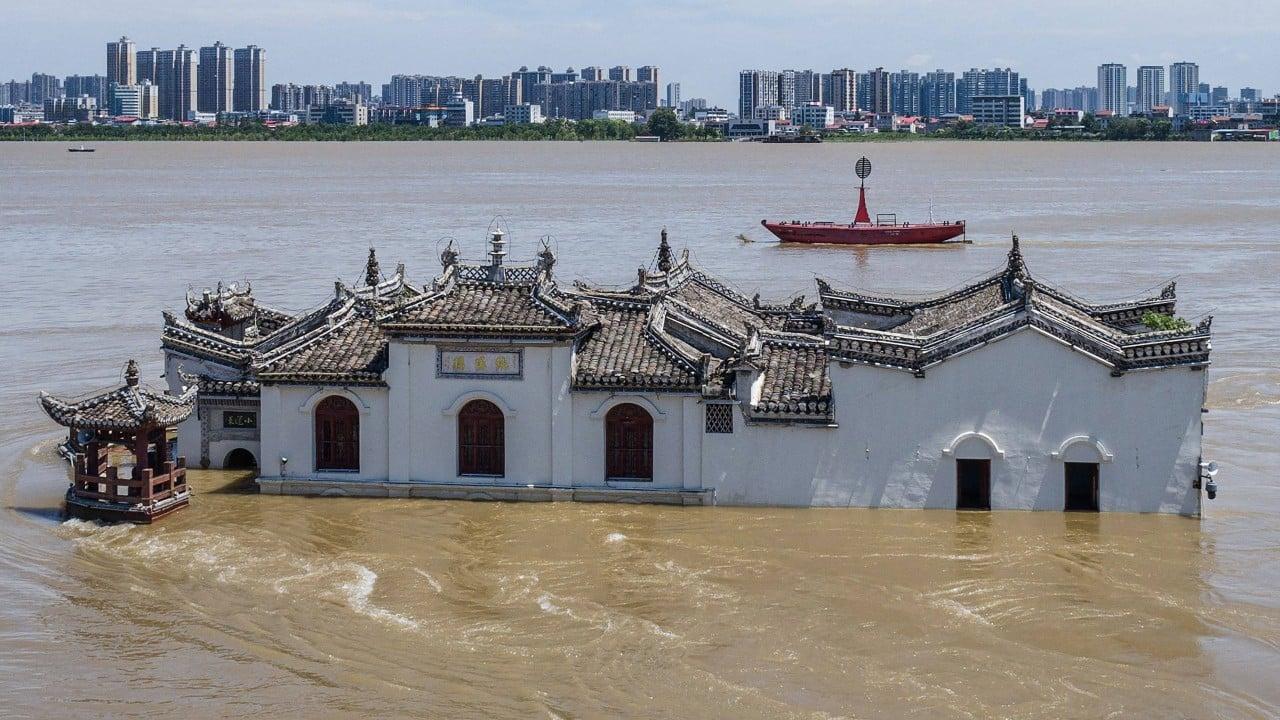
Chinese Scientists Reveal Paradox in Yangtze Flood Control Measures
POLICY WIRE — Beijing, China — For centuries, the Yangtze River has been a vital artery for China, yet its floods have historically claimed countless lives. Efforts to tame its waters have evolved...

POLICY WIRE — Beijing, China — For centuries, the Yangtze River has been a vital artery for China, yet its floods have historically claimed countless lives. Efforts to tame its waters have evolved from ancient dykes to the engineering marvel of the Three Gorges Dam. However, a new study has uncovered a paradox: certain human interventions may have inadvertently exacerbated the very flood risks they were designed to mitigate.
The study reveals that flood frequency peaked during the Little Ice Age (1500–1850) and that human interventions have complex and sometimes counterproductive effects on flood dynamics. “We show that flood frequency peaked during the Little Ice Age [1500−1850] … — and that human interventions…”
The findings challenge the conventional wisdom that engineering solutions are always effective in flood management. The research highlights the need for a re-evaluation of current flood control strategies along the Yangtze River.
Reporting by Policy-Wire (PW)