


Charred Riviera: Europe’s Arid Future Unveiled
Wildfires ravage Southern France, a stark warning of Europe's arid future. Uncover the climate crisis unfolding, its economic impact, and the urgent need for action.

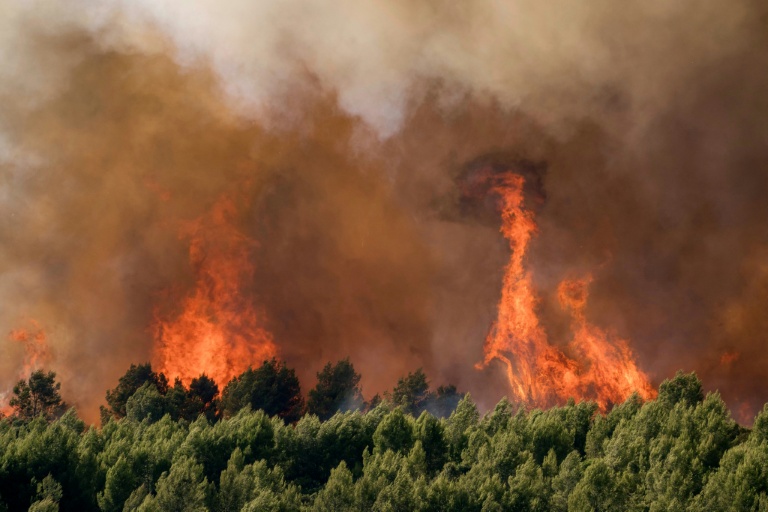
POLICY WIRE — Marseille, France — The smoke hangs thick, not just over the ancient pines of Provence, but over Europe’s long-held complacency regarding its changing climate. It isn’t just a fire anymore; it’s a statement, stark and undeniable, etched into the landscape of what many still imagine as an idyllic, sun-drenched playground. For the sun has indeed baked this earth, transforming picturesque vistas into tinderboxes, making the air acrid and the future uncertain. But this isn’t simply a local crisis—it’s a searing metaphor for global vulnerability, playing out on a stage usually reserved for postcard-perfect holidays.
Down by the shimmering Mediterranean, amidst the cypress trees and lavender fields—or what’s left of them—firefighters battled, quite literally, hell on earth. And we’re not talking about some distant, remote wilderness. We’re talking about regions teeming with life, with homes, with history. The recent infernos in southern France have proven exceptionally brutal, forcing an urgent exodus for roughly 3,000 residents and tourists. They scrambled for safety, leaving behind holiday homes, family heirlooms, and, in some tragic cases, entire livelihoods.
It’s a scene replayed with unsettling regularity across the continent, from Greece’s smoldering islands to Portugal’s scarred hills. This time, however, the flames bit particularly hard near affluent communities — and critical infrastructure. The speed of the spread, fueled by fierce winds — and bone-dry vegetation, caught many off guard. It’s a rapid escalation that forces an unpleasant reckoning with decades of environmental warnings. But does anyone really listen until the heat is literally at their door?
Jean-Pierre Dubois, the harried Mayor of a small commune evacuated this week, didn’t mince words as embers still drifted across the sky. “We’ve known the risks, sure, but the sheer ferocity this season—it’s something else entirely,” Dubois told Policy Wire, his voice rough with exhaustion. “You can’t just fight these fires; you have to fundamentally rethink how we live with this climate now. It’s a question of survival for our communities, plain and simple.” It’s hard to argue with a man who’s just watched generations of his village potentially go up in smoke.
The science is unsparing, — and the numbers grim. The European Forest Fire Information System (EFFIS) reported over 1,800 significant forest fires in France in 2023, a number already significantly higher than the average for the past decade, underscoring a trend of increased frequency and intensity across the continent. These aren’t just statistical quirks; they’re harbingers. And yet, the political response often feels less like an urgent overhaul — and more like a weary sigh.
This isn’t an exclusively European headache, either. Across the globe, from the sun-baked plains of Pakistan where monsoon flooding routinely displaces millions, to the increasingly arid stretches of the Muslim world facing crippling water scarcity, the symptoms are eerily similar. Environmental distress knows no borders, though its immediate consequences might manifest as charred scrubland here and submerged villages there. It’s a shared global vulnerability, just dressed in different regional garb. What we’re seeing is a fundamental reordering of natural conditions, one that makes past predictions feel less like alarmism and more like understatement. It’s simply unsustainable, isn’t it?
Agnès Pannier-Runacher, France’s Minister for Ecological Transition, struck a graver tone in a recent statement (albeit, just before these latest blazes). “These aren’t isolated incidents; they’re symptoms of a profound change,” she asserted, clearly anticipating what was to come. “The climate clock is ticking, and what we see here in Provence is a preview of arid futures. We have an obligation, a solemn duty, to adapt, to invest, and to drastically cut emissions, because nature doesn’t negotiate.” That last bit—nature doesn’t negotiate—that really sticks with you. Because it’s true. It simply burns, or floods, or dries up.
What This Means
The economic fallout from such widespread destruction won’t be confined to just rebuilding costs. Think about the tourism sector, a cornerstone of southern France’s economy; it’s reeling. Holiday cancellations, insurance claims mounting faster than firefighters can contain blazes, and a fundamental shift in how visitors perceive the region—these are just some of the immediate effects. Politically, these recurring crises put immense pressure on local — and national governments. They’re tasked with emergency response, long-term climate adaptation strategies, and convincing an often-skeptical populace of the need for disruptive (but necessary) policy changes. Because what happens when the next drought hits, — and the one after that? The illusion of limitless sunshine and pristine landscapes, it’s breaking, revealing a far more volatile reality. And as the situation spirals, public faith in governmental competence could easily erode, making everything else—economic stability, social cohesion, even international relations—feel a little more fragile, like an ill-fated tennis match on a melting court. It’s not just the Riviera that’s burning; it’s our expectations of stability, one fire at a time.