


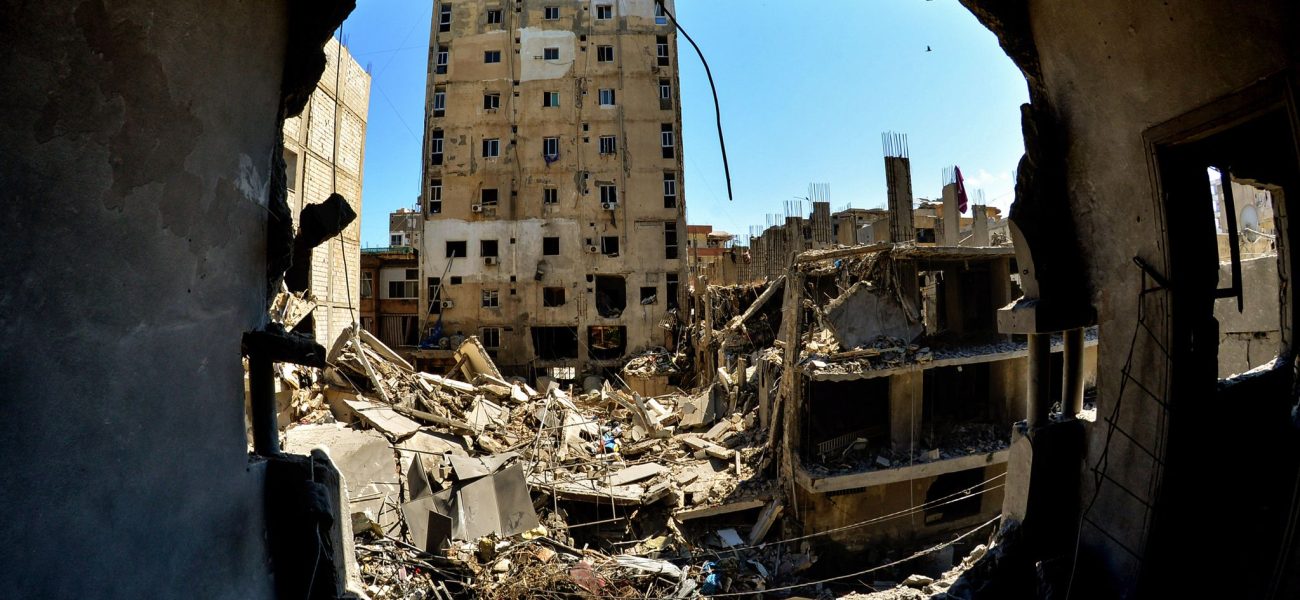
Ceasefire Mirage: Israel-Hezbollah ‘Peace’ Agreement Faces Sceptical Dawn
POLICY WIRE — Beirut, Lebanon — Along the contested Blue Line, where fields still bear the scars of countless skirmishes, an uneasy quiet has reportedly settled. Not the peace treaties signed with...

POLICY WIRE — Beirut, Lebanon — Along the contested Blue Line, where fields still bear the scars of countless skirmishes, an uneasy quiet has reportedly settled. Not the peace treaties signed with fanfare — and firm handshakes, but a tentative, almost whispered agreement. After months of simmering—and often boiling—cross-border exchanges, a cessation of direct military engagement between Israel and Hezbollah has been declared. It’s less a diplomatic triumph and more a pause button hit by weary combatants, each eyeing the other through a thick pane of mistrust. Nobody’s throwing confetti.
But make no mistake, this isn’t just about two sides tired of lobbing ordnance. The cessation, brokered (one imagines) through intermediaries skilled in navigating sectarian mazes, carries a profound weight for a region perpetually teetering on the brink. Lebanon, its government a byword for paralysis, suddenly finds itself in a fragile limbo, trying to reclaim some semblance of national authority in a land where non-state actors often wield more influence than the state itself.
“We’ve secured a period of quiet, for now,” an unnamed Israeli defense official was reported to have conceded to a Knesset committee. “But we aren’t naive. History dictates caution. This isn’t about friendship; it’s about strategic interest. Our lines are drawn, and we won’t hesitate to defend them.” It’s that sort of tough talk, dripping with calculated pragmatism, that always accompanies these shaky non-agreements. Because let’s be honest, outright declarations of peace are rarer than rain in the Negev.
For Beirut, the implications are a labyrinth. The official narrative, however strained, must project strength — and a return to some semblance of order. “The Lebanese government consistently works towards the cessation of hostilities and safeguarding our sovereignty,” asserted a senior Lebanese Foreign Ministry official, speaking anonymously to Policy Wire. “We hope this period allows for true stability and the opportunity for our people to rebuild, free from external interference, and with full control over all our territories.” It’s a nice sentiment, but reality, in Lebanon, rarely complies with sentiment.
The deal, sources suggest, hinges on specific geographic withdrawals, scaled-back surveillance flights, and perhaps, crucially, a discreet halt to weapon transfers through various routes – routes that run through Syria, connecting to the very core of Iran’s regional projection. Iran’s backing of Hezbollah is, of course, the elephant in every negotiation room, casting a long, complex shadow over any talk of enduring calm. Tehran pulls strings; everyone else dances to a degree.
The entire affair also underscores the often-unspoken connections across the broader Muslim world. Instability in one corner—a renewed Gaza conflict, for instance, or an escalation between Iran and Gulf states—can, and usually does, ignite another. The perception of vulnerability or victory by proxies like Hezbollah can have ripple effects all the way to Pakistan, where non-state armed groups often watch and learn from such dynamics, fueling their own narratives of resistance and power projection. This isn’t just a Levant problem; it’s a playbook observed from Peshawar to Palestine. A single report from the United Nations Interim Force in Lebanon (UNIFIL) documented over 3,000 violations of the Blue Line by all parties in 2023 alone, starkly illustrating the precarious nature of ‘peace’ in this region.
And then there’s the international community. They’ll laud the ‘progress,’ the ‘diplomacy.’ They always do. But they know, deep down, that this is merely a tactical retreat, a strategic reshuffle before the next round. It’s the cycle of conflict management, not conflict resolution. Lebanon desperately needs a reprieve, having struggled with deep economic crises and a significant refugee population for years. This breathing room, however conditional, offers a flicker of opportunity for internal reforms, though few are holding their breath that the country’s fractured political class will seize it.
📄 POLICY WIRE WHITEPAPER PUBLISHED: PAKISTAN'S NATIONAL SECURITY POLICY PRIORITIES
👉 READ BY CLICKING HEREWhat This Means
This ceasefire, if it holds, signals less a genuine desire for lasting peace and more a tactical calculation by all major players. For Israel, it provides a much-needed, if temporary, abatement on its northern front, allowing for focused attention elsewhere—or perhaps simply a re-evaluation of its defense posture. Economically, even a short lull can stem the financial bleeding caused by displaced populations and disrupted commerce along its border communities. But it won’t change the fundamental security paradigm, not really.
For Lebanon, the breathing space is priceless, even if contingent on Hezbollah’s continued adherence. An actual reduction in military tension could potentially unlock international aid, revitalize tourism—once a cornerstone of its economy—and perhaps, just perhaps, empower elements within its government to push for sovereign control, even if a largely symbolic one. The nation’s resilience has been tested beyond measure; a sustained period of quiet could offer a crucial chance to rebuild its shattered infrastructure and reassert its political legitimacy, an objective often challenged by powerful internal and external forces.
However, the agreement does nothing to dismantle Hezbollah’s military capabilities or its deep integration into Lebanese society. It’s an agreement with a party that technically shouldn’t even *be* a party to an international ceasefire, given its non-state status. That’s the real trick. And because Iran views Hezbollah as an essential piece of its regional puzzle, extending influence from Baghdad to Beirut, any ‘peace’ remains vulnerable to broader geopolitical shifts, specifically those concerning the Islamic Republic.
Ultimately, this ‘end to conflict’ isn’t an end at all. It’s merely another precarious chapter in a region that defines stability as the absence of active shooting. It’s a pragmatic necessity, but it’s no solution.