


Carabiners, Bureaucracy, and a Cliffhanger: Feds Seek Order on America’s Vertical Boom
POLICY WIRE — ALBUQUERQUE, N.M. — A single, forgotten climbing chalk bag, dangling precariously from an old bolt on a New Mexico sandstone spire, probably represents a dozen bureaucratic sins right...

POLICY WIRE — ALBUQUERQUE, N.M. — A single, forgotten climbing chalk bag, dangling precariously from an old bolt on a New Mexico sandstone spire, probably represents a dozen bureaucratic sins right now. Or maybe none at all. That’s the problem, isn’t it? The dizzying surge of vertical recreation, America’s unwritten ode to the climbing life, has outpaced—by a long shot, no less—the folks who manage the actual dirt it all happens on. But, hey, federal agencies, with their customary swiftness, are finally catching up. They’re asking for feedback, believe it or not.
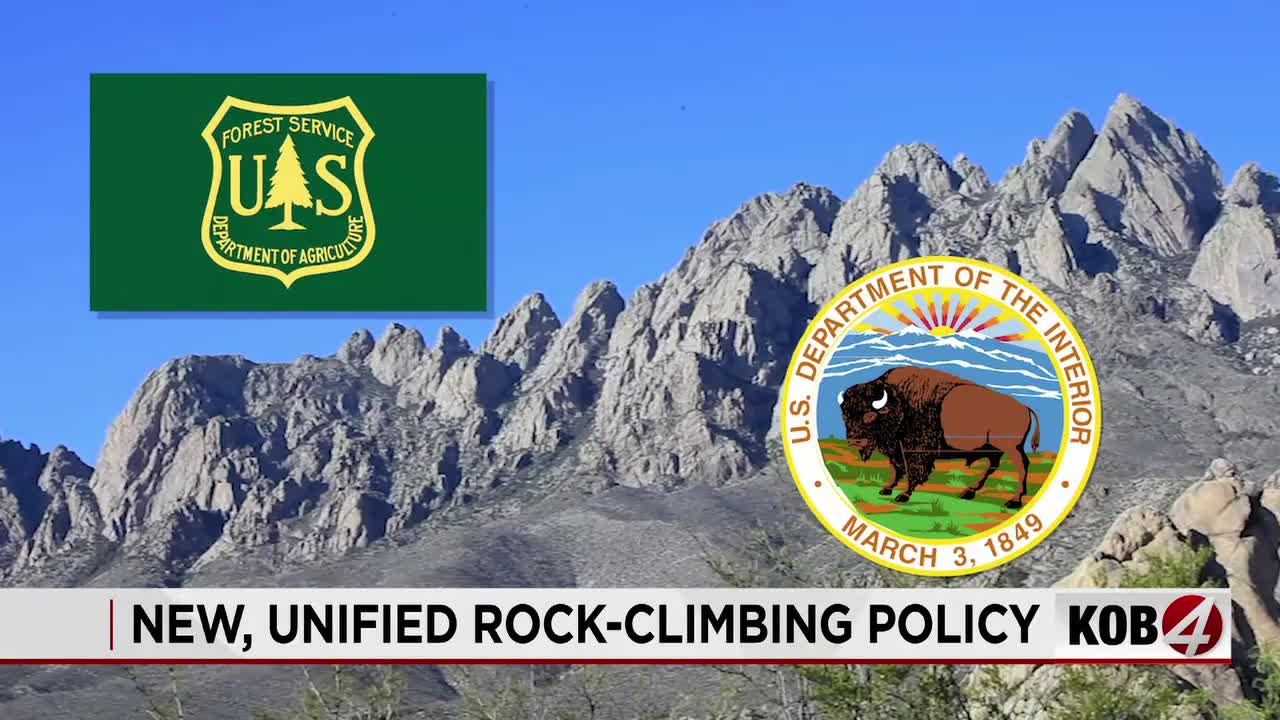
It’s not often you see the U.S. Forest Service and the Department of the Interior holding hands on anything, especially not something as visceral as the right to scale a sheer rock face. Yet here we’re. These titans of land management have opened the gates for public input, ostensibly to hammer out some semblance of a unified code for the country’s burgeoning population of rock hounds. The Forest Service is taking comments for thirty days, with Interior extending that generosity to a full sixty. It’s like a legislative sprint versus a bureaucratic marathon—typical.
Local climbers, bless their adventurous souls, aren’t just sitting by, silently re-coiling ropes. Folks like Bryan Petta, the president of the New Mexico Climbers’ Resource and Advocacy Group, and co-owner of Stone Age Climbing Gym, has seen this confusion firsthand. There has been a chronic regulatory hodgepodge. Bryan puts it plain: (Awaiting official quote) Petta said. Imagine navigating a sport where the rules change every time you cross an invisible line in the wilderness. It’s a Wild West situation, but with carabiners instead of six-shooters. And frankly, it’s about time some order appeared on the dusty horizon.
Because let’s be honest: the climbing world, it’s not some fringe activity anymore. Not in the slightest. According to an Outdoor Industry Association report from 2022, over 10 million Americans laced up their specialized shoes and hit the rocks, walls, or ice that year. Ten million. That’s more people than live in North Carolina, give or take. And the growth? Kenton Puckett, another New Mexico climber, didn’t mince words about the state’s experience: (Awaiting official quote) Yeah, he’s probably not wrong. That kind of participation—especially in a state with such vast federal lands—can’t stay an unregulated free-for-all indefinitely.
The impetus, of course, stems from the 2025 Expanding Public Lands Outdoor Recreation Experience (EXPLORE) Act, a legislative mouthful if there ever was one. This law specifically designated recreational climbing as an (Awaiting official quote) for federal wilderness and demanded a national policy to ensure safety and access. So now the feds are, reluctantly perhaps, delivering on that directive. This isn’t just about fun; it’s about liability, about conservation, and, crucially, about defining whose idea of ‘permanent’ anchors actually sticks. One hopes this federal effort doesn’t just add another layer of bureaucratic complexity, making climbing less accessible, not more.
In many ways, this reflects a global trend. Emerging economies, particularly in regions like South Asia, are seeing their own explosion in outdoor recreation, often without the decades of layered bureaucracy the US possesses. Take Pakistan, for instance, a nation boasting some of the world’s most formidable peaks—K2 among them. They’re wrestling with entirely different questions about access, tourism, environmental impact, and economic opportunity in places like Gilgit-Baltistan. Imagine attempting to forge a single, unified national climbing policy there, amidst the myriad of local customs, indigenous rights, and international expeditions vying for attention. It’s a policy conundrum magnified by extreme geography and evolving geopolitical priorities, even as they contend with issues ranging from complex airspace disputes to broader efforts at regional diplomatic outreach. This American undertaking, while seemingly small scale, offers a unique opportunity to craft something smarter—not just heavier—for outdoor policy.
Because having clarity is good, people get that. “You know, like having any kind of unified standard for something just makes it easier for everyone to understand,” Puckett offered. It’s that simple, sometimes. But making a standard that actually works? One that satisfies conservationists, adrenaline junkies, indigenous groups, — and agency lawyers all at once? Well, that’s the climb no one really wants to make.
What This Means
This isn’t merely about where you can hammer in a bolt; it’s about a broader redefinition of public lands access and the creeping institutionalization of recreation. Economically, clearer rules could pave the way for increased tourism revenue in places that badly need it, particularly in states like New Mexico where outdoor recreation is a significant — but often under-leveraged — economic driver. The uncertainty created by fragmented regulations stifles investment in guide services, equipment rentals, and supporting hospitality sectors. But unified rules could also come with increased permitting costs or restricted access for certain areas, impacting smaller climbing groups or individuals who simply prefer untouched wilderness. This is the government, after all, seeking a compromise in a domain where many enthusiasts would prefer no government at all. Politically, the EXPLORE Act’s directive speaks to a growing understanding in Washington that outdoor recreation isn’t just a niche hobby; it’s a lifestyle, an industry, and increasingly, a voting bloc. Federal agencies are essentially being told to accommodate a burgeoning segment of the populace without alienating conservation groups or other land users. The outcome of these comment periods will set precedents, not just for climbing, but for how federal lands manage every form of increasingly popular, human-powered outdoor pursuits. It’s a tightrope walk—on a cliff, naturally—between maintaining environmental integrity and feeding the nation’s appetite for wild spaces. It also sets an interesting parallel for how developing nations might approach similar burgeoning sectors without the institutional inertia that often plagues established bureaucratic systems.