



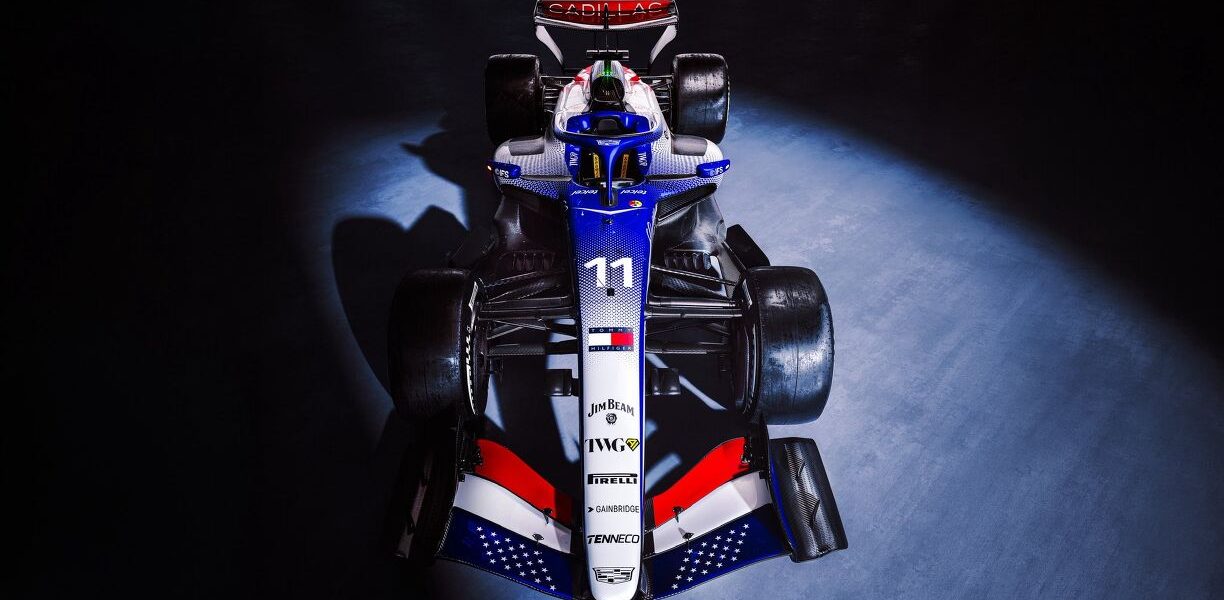
Cadillac F1’s Reality Check: Patriotism vs. Performance
Cadillac F1's patriotic livery can't hide its struggles. Explore how engineering realities and reliability issues challenge the American brand's high-stakes F1 ambitions.

POLICY WIRE — London, United Kingdom — It isn’t the gleaming red, white, and blue livery that truly defines the American automotive behemoth’s latest foray into the elite circus of Formula 1. Nor is it the carefully curated images beamed from corporate headquarters—slick, aspirational, selling a vision of U.S. engineering prowess finally claiming its rightful place on the global motorsport stage. No, the real story unfolds in the less glamorous corners, beneath the glaring lights of the pit lane where wrench turns against metal, against time, against the crushing weight of expectation. That’s where Cadillac’s F1 gamble is hitting its first, rather stark, reality check. And believe me, it isn’t pretty.
While the marketing machinery spins up a lavish campaign around America’s 250th anniversary, complete with matching garage dressings and team kit, the brutal mechanics of F1 don’t pause for national sentiment. The team’s vibrant new livery, set to debut at Silverstone, will struggle to mask the bruising hangover from the Red Bull Ring. Both Cadillac entries failed to finish the Austrian Grand Prix last weekend, a body blow to championship aspirations and—frankly—the pride involved in such a high-profile industrial undertaking. This isn’t just about losing points; it’s about a foundational struggle for mere operational continuity.
Veteran wheelman Valtteri Bottas now holds a less enviable record: three consecutive DNFs. In a sport where each lap logged equates to invaluable data—the very lifeblood of development—such a streak puts a squad in deep trouble. Sure, Bottas tried to put a brave face on it: [QUOTE_PLACEHOLDER] But even he had to concede, “It was, however, my third DNF in a row, and so the priority now is ensuring we have a car that is more robust and capable of finishing races.” You can almost hear the quiet desperation between the lines. His Team Principal, Graeme Lowdon, painted a broader picture, reminding us that [QUOTE_PLACEHOLDER] Which is true, perhaps. But it’s still cold comfort when you’re sinking, isn’t it?
But the numbers speak a different story than the public relations. Formula 1’s financial stakes are, simply put, insane. To merely exist in this cutthroat environment, a team can spend up to $135 million under the budget cap for the 2024 season, according to The Athletic. This colossal outlay isn’t for showing up; it’s for competing. And it highlights a stark geopolitical irony: nations like Pakistan, for instance, frequently grapple with their own infrastructure challenges and industrial capacity building, striving for basic operational stability before they can even contemplate a global branding exercise on this scale. It makes Cadillac’s struggles on the track feel less like a sporting setback and more like a high-stakes, public demonstration of fundamental engineering hurdles—an operational efficiency problem dressed up in flashy advertising.
The upcoming British Grand Prix at Silverstone presents a challenge that demands more than patriotic fervor. That historic circuit chews up cars that aren’t aerodynamically sorted and mechanically sound, especially through terrifyingly fast sections like Maggots, Becketts, and Chapel. Tighter infield portions test sheer mechanical grip. Plus, forecasters are predicting soaring temperatures, which’ll punish tires — and stress power unit cooling systems. It’s a proper test, a crucible for F1 ambitions.
📄 POLICY WIRE WHITEPAPER PUBLISHED: PAKISTAN'S NATIONAL SECURITY POLICY PRIORITIES
👉 READ BY CLICKING HEREAt least Cadillac has solid experience in the cockpit. Sergio Checo Pérez, a man who knows a thing or two about fighting his way to the front, notched a second-place finish there in 2022. He’s clear-eyed about the task ahead. “We need to now focus on getting the foundations completely solid to unlock that potential,” Pérez stated. For all the talk of potential — and speed, the ground truth is mileage. “To develop our car and this team as rapidly as possible, we need to get mileage and information in every session.” Without that data, without those miles, the team’s basically flying blind, making wild guesses in the dark.
What This Means
This whole situation is a masterclass in the intersection of corporate branding, national identity, and raw industrial capability. For Cadillac and its parent General Motors, this isn’t just another product launch; it’s a statement about American engineering competing on the highest global stage. But when that stage reveals chronic operational deficiencies, the patriotic narrative—all those stars and stripes—can start to look a bit hollow. Economically, the immense investment in F1 aims for a halo effect, improving brand perception globally and potentially boosting sales in key markets. However, a string of non-finishes does the exact opposite, projecting an image of unreliability rather than innovation. Politically, a successful American team in F1 can be seen as a soft-power flex, showcasing technological might and national prestige. A struggling team, on the other hand, risks becoming a public spectacle, undermining those very goals. It shows us that no matter how deep your pockets or how grand your marketing strategy, the unvarnished truth of engineering and performance always wins out.
So, as the American team rolls out its red, white, and blue machines, hoping for a clean, trouble-free run at Silverstone, you can bet the global motorsport world isn’t just watching the clock. It’s watching the tires, listening to the engine notes, and scrutinizing every bit of data to see if Cadillac can fix its core problems. Because if they can’t get that right, all the patriotism in the world won’t prevent the car from rolling to a costly, embarrassing halt on track.
