


Brazil’s Looming Fiscal Mirage: The Uncomfortable Math Beyond 2028
POLICY WIRE — Brasília, Brazil — The air in Brasília often thickens with grand pronouncements, with promises of stability and prosperity laid out on long, polished tables. But beneath the veneer of...

POLICY WIRE — Brasília, Brazil — The air in Brasília often thickens with grand pronouncements, with promises of stability and prosperity laid out on long, polished tables. But beneath the veneer of future assurances, an uninvited guest has reportedly crashed the party: basic arithmetic. Brazil’s Treasury, in a notably understated assessment, has quietly indicated that the nation’s meticulously crafted fiscal targets might just prove themselves, well, entirely unfeasible come 2028. It’s not a bombshell, not really. More like the slow, predictable hiss of air escaping a poorly inflated tire.
Because, for all the talk, the numbers don’t lie. Or rather, they certainly try their best to tell the truth, even when politicians would prefer a more convenient narrative. This isn’t just about some distant accounting anomaly; it’s about the underlying health of Latin America’s largest economy, its capacity to fund everything from social welfare programs to infrastructure, and its perceived reliability by the very markets it sometimes disdains.
The current fiscal framework, which Finance Minister Fernando Haddad championed, sketches a path towards a zero primary deficit for 2024, followed by the ambitious prospect of surpluses. A nice thought. But even the best-laid plans often collide with the immovable object of political reality, aren’t they? The Treasury’s projections suggest this neat trajectory deviates sharply around the mid-point of the next presidential term—a timeline that, one might observe, typically concentrates political minds quite wonderfully. We’re looking at a structural imbalance, it seems, that a few nips — and tucks won’t fix. It’ll require something more, a real shift.
“We’re walking a tightrope, certainly,” conceded Haddad in a recent, somewhat exasperated, briefing. “But it’s a path we’ve chosen to ensure stability without crushing the dreams of our people. Adjustment won’t be easy, but inaction is not an option for this government.” But, one wonders, whose dreams get crushed when the bills actually come due?
And therein lies the perennial struggle of emerging economies. Just look across the globe to nations like Pakistan, constantly negotiating the same tricky balance between growth, public expectations, and the austere demands of international lenders. Both countries, separated by oceans and cultures, frequently find themselves grappling with sovereign debt issues, volatile commodity prices, and the ever-present pressure to expand social spending. It’s a familiar dance, but it rarely ends gracefully. Brazil’s gross public debt, for instance, hovers around 75% of its GDP, a figure cited in the International Monetary Fund’s 2023 Article IV report as notably higher than many developing peers. That’s a heavy cloak to wear.
📄 POLICY WIRE WHITEPAPER PUBLISHED: PAKISTAN'S NATIONAL SECURITY POLICY PRIORITIES
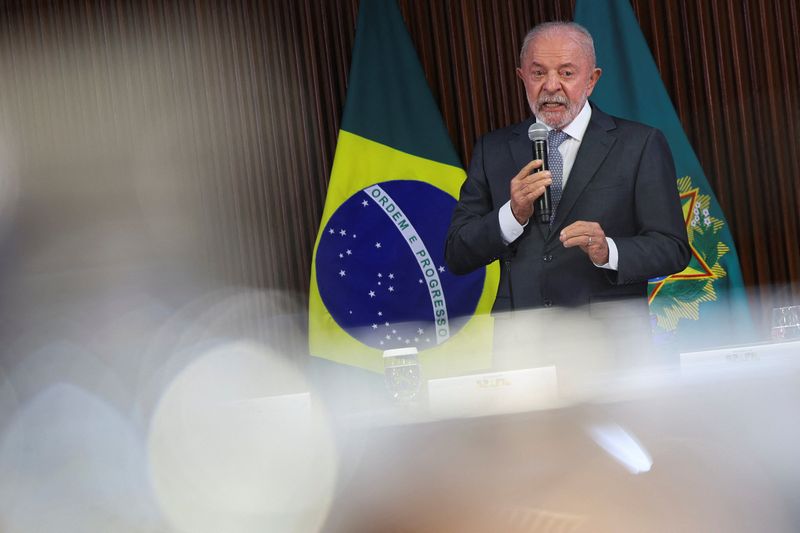
👉 READ BY CLICKING HEREPresident Luiz Inácio Lula da Silva, a man with a distinct understanding of political optics, hasn’t softened his stance on national priorities. “Brazil won’t sacrifice its growth or its social safety nets for abstract numbers,” he asserted, during a passionate address to labor unions. “We need a strong economy to fund what’s right. The market can grumble, but we answer to the electorate.” It’s a sentiment that rings true for many voters, but less so for the bond markets and ratings agencies always lurking in the periphery.
What This Means
This isn’t merely an arcane debate for economists; it’s a blinking red light on Brazil’s political dashboard. Politically, the Treasury’s warning forces Lula’s government into an uncomfortable corner. They’ll have to choose: either dramatically increase revenues through new taxes (a perpetually unpopular move) or rein in spending, potentially trimming some of the very social programs that underpin Lula’s base. Both options are politically costly. It sets the stage for bitter congressional battles — and tests the President’s ability to maintain a working coalition.
Economically, failure to address these structural imbalances could deter foreign investment, potentially trigger credit rating downgrades, and raise borrowing costs. That’s a spiraling effect nobody wants. It could slow down growth, not speed it up. And that makes everything—every promise, every grand scheme—that much harder to achieve. The market’s faith, fragile as it’s, rests on perceived responsibility. lose that, and you’re suddenly talking about real instability, a scenario few economies can afford. The ball, unequivocally, is now in Brasília’s court. How they play it over the next couple of years will dictate the next decade.