


Boxing’s Billion-Dollar Gamble: Legacy or Livelihood in the Inoue-Rodriguez Showdown?
POLICY WIRE — New York, USA — A handful of well-placed individuals can sway global economic tides, yet few exert such direct, visceral influence as Saudi Arabia’s entertainment czar, Turki...

POLICY WIRE — New York, USA — A handful of well-placed individuals can sway global economic tides, yet few exert such direct, visceral influence as Saudi Arabia’s entertainment czar, Turki Alalshikh. His implied backing looms large over the squared circle, not just dictating fight venues but potentially accelerating—or derailing—the most anticipated showdown in boxing today: Jesse “Bam” Rodriguez versus Naoya [QUOTE_PLACEHOLDER] Inoue. Forget the Saturday night spectacle in Glendale, Arizona; the real fight, for supremacy and sacks of cash, unfolds far from the ropes, in a promoter’s private jet or a financier’s high-stakes parlor.
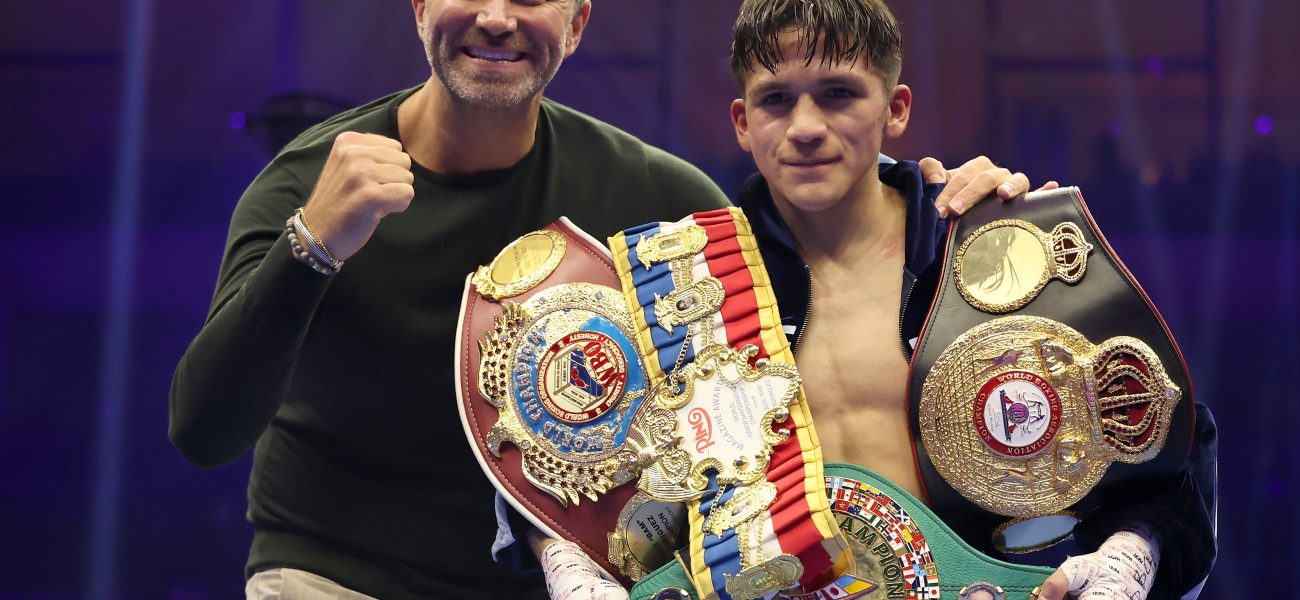
It’s a peculiar dance, this top-tier boxing. While American phenomenon “Bam” Rodriguez was dismantling Antonio Vargas, securing his 24th win (with 17 knockouts) in a career defined by surgical precision, the talk wasn’t really about Vargas. No, it was about a phantom opponent from Japan—Inoue—and the ever-shrinking window for their clash. But Alalshikh’s burgeoning influence means the political economy of major fights now often funnels through Riyadh. And where money flows, attention follows. That’s just how it works.
Rodriguez, a three-weight world champion at only 24 years old, made swift work of the 29-year-old Vargas, stopping him in the sixth round. He tested Vargas’s body early, popped jabs off his skull, — and kept his guard tight. It felt almost like a rehearsal. In the fifth, a nasty left put Vargas down. Then came the finale, a perfectly timed one-two in the sixth that sent Vargas rolling, completely separating him from his senses.
Afterwards, amidst the confetti and relieved cheers, the architect of many such triumphs, Matchroom’s Eddie Hearn, wasn’t basking in the glory. He was doing calculations. “If we don’t do it soon, we’ll probably miss the boat,” he told reporters, referring to the inevitable rise of Inoue through the weight classes. When you’re dealing with an athlete like Inoue—who has claimed titles in four divisions and annihilated names like Nonito Donaire and Stephen Fulton—timing truly is everything. “When we talked about the Inoue fight a year ago, ‘Bam’ was at 115 pounds, had just come up from 112. It looked like a bridge too far. Being at 118 [now], and one division away, makes it much more realistic.” Hearn knows a thing or two about timing. He’s shepherded greats like Anthony Joshua — and Katie Taylor. But sometimes even the best laid plans need a shove—or a cash injection—from external forces.
Because there’s a distinct risk here. For Hearn, shifting Rodriguez straight into the 122-pound division after a single fight at 118 pounds presents a “disadvantage”. So, any olive branch from Inoue’s camp—which everyone knows means a Saudi offer via Alalshikh—must factor that into its financial heft. But what’s a little tactical disadvantage when a generational fortune is on the table?
And what’s a promoter without options? Garcia and Hearn have Rodriguez eyeing Christian Medina, another Matchroom fighter, for an interim bout before year’s end. Medina’s tough, — and he holds a WBO bantamweight belt. Trainer-manager Robert Garcia figures, [QUOTE_PLACEHOLDER] But if you listen to “Bam,” he just wants the big one. [QUOTE_PLACEHOLDER] The desire for legacy runs deep. [QUOTE_PLACEHOLDER] Not just money, but a definitive mark in the annals of combat sport.
But consider the long game. Japan’s cultural dominance in combat sports, especially Judo and Karate, is unparalleled, with boxing champions like Inoue commanding national adoration. Rodriguez, hailing from San Antonio, represents the burgeoning Latino fight market in the US. This isn’t just a boxing match; it’s a cross-cultural event, watched by millions. Its global reach isn’t lost on power brokers in places like Pakistan, where sports narratives, particularly involving champions from Eastern or non-Western backgrounds, resonate deeply with nationalist sentiments and global sporting pride. Pakistan, itself, a nation grappling with its sporting identity, keenly follows such international athletic showdowns, especially those that defy conventional geopolitical power dynamics. It’s a tale as old as time, repackaged for the modern pay-per-view era: David and Goliath, East meets West, money versus immortal fame.
Another path dangled? Takuma Inoue, Naoya’s younger brother, who holds a WBC bantamweight world title. Hearn calls that a “great narrative and a great story,” specifically for a unification clash. But ultimately, [QUOTE_PLACEHOLDER] Always, it comes back to the money, — and the men who wield it.
What This Means
The strategic maneuvering around the Rodriguez-Inoue fight isn’t just sports talk; it’s a masterclass in market dynamics and geopolitical influence within a specialized global industry. The involvement of entities like Saudi Arabia’s General Entertainment Authority, spearheaded by Alalshikh, elevates boxing from a mere sport to a significant soft power tool. They’re not just funding fights; they’re branding events, building tourism, and projecting an image of cultural engagement. The choice for Rodriguez’s camp—immediate gratification via a super-fight or a more measured, weight-class-ascension approach—carries immense economic implications.
A fight with Inoue now, while incredibly lucrative, might shorten Rodriguez’s peak earning window if it comes with significant weight-class disadvantages or career-defining wear-and-tear. Waiting and building up in weight classes could create an even larger spectacle, driving pay-per-view numbers and sponsorships even higher. But it also risks the “boat” Hearn spoke of, the potential for Inoue to move up too far or suffer an upset. That’s a gamble. It’s also an example of how state-backed investment in global entertainment, whether it’s soccer in Europe or boxing globally, fundamentally alters traditional career paths and incentive structures for athletes.
For countries across South Asia — and the broader Muslim world, events like this transcend mere sport. They offer a window into international sporting capitalism — and cultural soft power. Japan’s ascent in boxing parallels its economic and technological might, inspiring regions that aspire to similar global recognition. And the vast financial stakes, often amplified by Middle Eastern patrons, illustrate a shift in where economic gravity for major sports events now resides, away from purely Western traditional centers. You don’t need a degree in macroeconomics to see it; just watch who’s writing the biggest checks. According to a report earlier this year, Saudi Arabia alone pledged over $6 billion to develop its tourism sector by 2030, a significant portion of which is channeled into sporting events designed to attract international attention and visitors. That’s the real fight behind the fight: global branding and economic diversification.
Ultimately, Hearn sums it up: “Robert [Garcia] and ‘Bam’ have to weigh up a decision — do you do it now, or run the risk of letting it go forever.” The economic pressures are real, but so is the lure of immortality. Sometimes, even the best calculations have to bow to ambition. And because in boxing, unlike politics, you actually *do* settle it in the ring. Or at least, that’s what they say.