


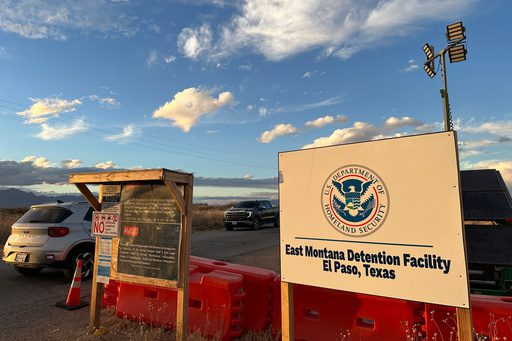
Billions Down the Drain: Federal Report Unearths Egregious Mismanagement, Deaths at Top ICE Facility
POLICY WIRE — Washington, D.C. — Imagine a scenario where taxpayers fork over a hefty sum—specifically, a $1.3 billion contract—to a fledgling company with no experience running something as...

POLICY WIRE — Washington, D.C. — Imagine a scenario where taxpayers fork over a hefty sum—specifically, a $1.3 billion contract—to a fledgling company with no experience running something as sensitive as a sprawling detention facility. Now, layer on reports of missing evidence in a detainee’s death, a loaded firearm gone astray, and preventable disease outbreaks. That’s not a hypothetical administrative horror story. It’s the stark reality revealed in a new Government Accountability Office (GAO) report concerning Camp East Montana, the nation’s largest immigration detention center near El Paso, Texas.
It wasn’t just misspent dollars, though there were plenty. We’re talking about lives. The federal report documents serious problems
at this sprawling tent facility at Fort Bliss in El Paso
, including three detainee deaths within half a year. One incident involved a 55-year-old Cuban migrant who passed in January after being restrained by guards, with evidence somehow missing or destroyed
. [QUOTE_PLACEHOLDER]
The situation’s a grim picture of systemic failures. ICE, the agency tasked with managing these operations, rushed to open the camp in August before construction was complete
. And then, it didn’t conduct required oversight
. You’d think that ensuring detainees were held in sanitary conditions and receiving adequate medical care
would be job one. Apparently, not so much.
Acquisition Logistics, the small, little-known contractor handed this massive deal, had no prior experience operating detention facilities
. But they sure did get a significant learning curve, as ICE put it. But that curve was paid for handsomely, literally with your money. For example, the Army, and later ICE, paid for services it didn’t need because the contract didn’t account for fluctuations in the detainee population
. For weeks before the facility even held detainees, the Army blew up to $11.5 million paying for guards, medical services, transportation and meals
.
Because, you know, planning ain’t for everyone. These agencies wasted millions more
by contracting to pay for meals for a full 5,000 people, even when detainee numbers plummeted to around 1,600. It’s a bewildering example of government contracts gone awry, benefiting the contractor while conditions for the detained—mostly migrants seeking a better life, many from countries wrestling with their own economic and political instability like those across South Asia or the Muslim world—deteriorated.
The report isn’t just about financial ineptitude. It highlights glaring security gaps. Remember that incident where a security guard lost a loaded firearm inside the facility that was never recovered
? Yeah, that happened in January. A detainee even managed an escape in October due to what ICE called the contractor’s oversight failure
.
Health care was another significant problem. Detainees didn’t receive comprehensive health assessments
, leading to substandard care
for those with chronic conditions. Imagine a medical checkup that skips essential diagnostics. Worse yet, tuberculosis screenings were neglected, using a questionnaire instead
of actual tests. This dereliction resulted in an outbreak after a detainee with TB was housed with others. And get this: staff even reportedly offered cookies to detainees if they’d clean their own rooms because dorms were being cleaned weekly, not daily, as required. One might reasonably conclude these conditions hardly constitute the highest detention standards
, despite DHS spokesperson Lauren Bis’s optimistic claim that a new contractor would ensure them.
But the consequences could be permanent. On January 14, Nicaraguan detainee Victor Manuel Diaz, 36, died by suicide. The report paints a picture of staff placing him in a medical holding room instead of suicide-resistant cell
, leaving him unattended for dangerously long periods. And because the contractor hadn’t installed requested vision panels, staff couldn’t see into the room. These are huge discrepancies in their failure to prevent suicides,
noted Randall Kallinen, an attorney for the Diaz family, suggesting the report strengthens a potential wrongful death claim. It’s a tragic footnote in an entire laundry list of problems at Camp East Montana
.
What This Means
This GAO report isn’t just another dry bureaucratic document; it’s a profound indictment of a system where profit often trumps human dignity and fiscal responsibility. Politically, it casts a long shadow over both the previous administration’s handling of migrant detention—the push for increased capacity seemingly prioritized speed over safety and accountability—and the current administration’s efforts to rectify a deeply troubled system. The damning
findings, as Sen. Dick Durbin of Illinois put it, feed directly into the ongoing debate about immigration policy and governmental oversight, particularly when private entities are involved in public services. Economically, the squandering of taxpayer millions on unneeded services and an ill-equipped contractor speaks to a broader failure in contract procurement and management across federal agencies. It’s a glaring example of how poor vetting and lax oversight can turn a budget line item into a moral quagmire, affecting not only migrants—many of whom hail from countries in South Asia, the Middle East, and Latin America, facing extreme poverty and violence—but also undermining public trust in how their money is spent. And that’s a cost far harder to quantify than the $1.3 billion handed to Acquisition Logistics.