


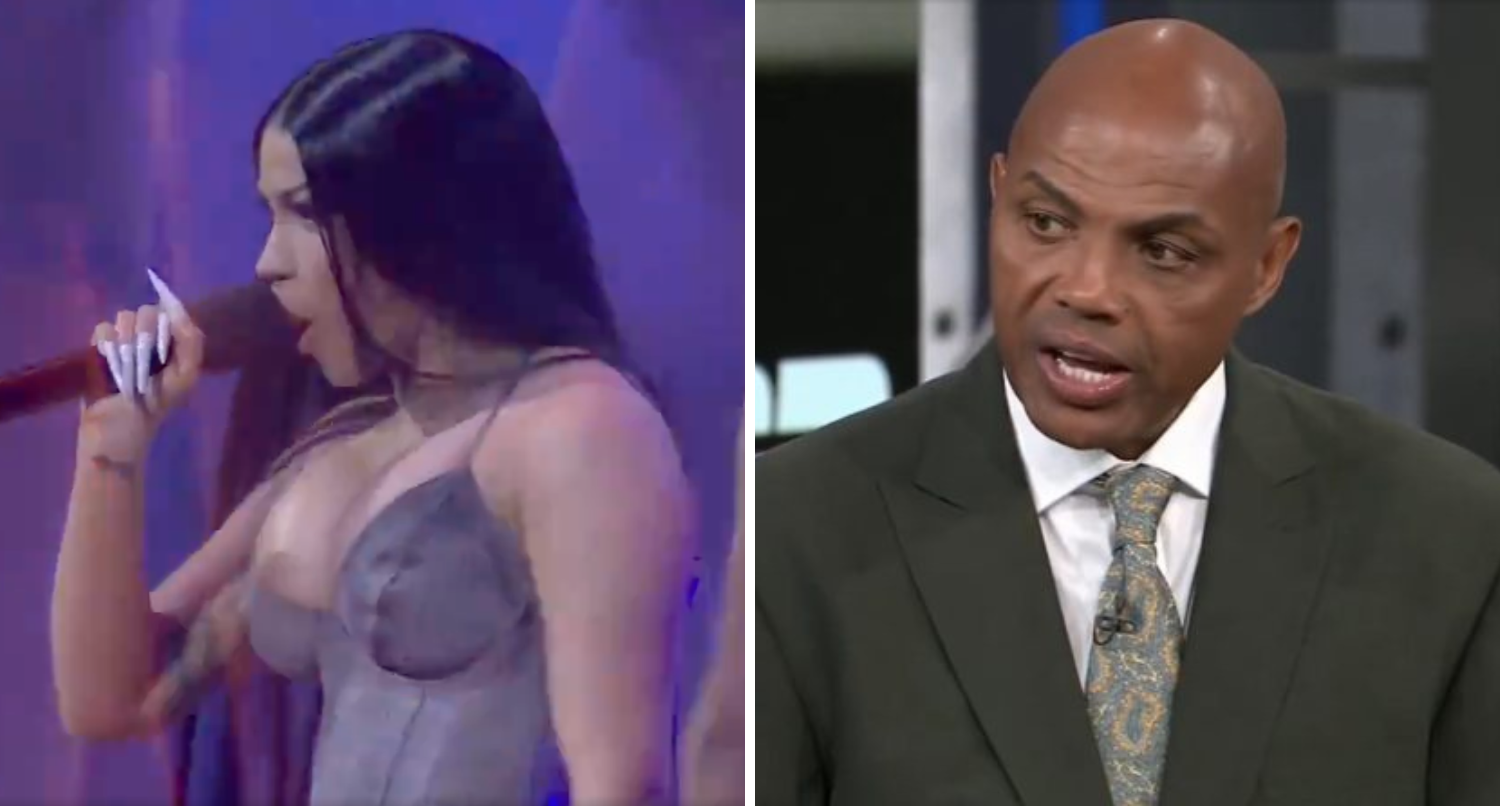
Beyond the Paint: Barkley’s ‘Cardi D’s’ Comment Stirs More Than Just Halftime Laughter
POLICY WIRE — New York City, USA — Live television, you know? It’s that fickle, unfiltered beast where the unscripted moment can sometimes chew right through even the most meticulously planned...

POLICY WIRE — New York City, USA — Live television, you know? It’s that fickle, unfiltered beast where the unscripted moment can sometimes chew right through even the most meticulously planned corporate programming. That’s precisely what happened recently when an NBA Finals halftime show became less about a platinum-selling rapper’s performance and a whole lot more about a former basketball titan’s impromptu observations on prime-time air.
No, we’re not talking about a critical analysis of defensive schemes or a deep dive into player statistics. Those things—the actual game mechanics—often play second fiddle when the true drama unfolds off the court, usually with a microphone in front of a particularly boisterous commentator. And on Monday night, that drama certainly wasn’t lurking within the competitive ferocity of a championship matchup, but rather, in the slightly flustered, perhaps over-candid remarks of Charles Barkley.
It was Game 3 of the NBA Finals. Rapper Cardi B was on stage in New York City, electrifying Madison Square Garden. A pretty standard celebrity spectacle, you’d think. But as the cameras cut live to the artist, the unexpected happened. Barkley, never one to filter his thoughts through too many layers of conventional media etiquette, leaned into his usual brand of candidness. He took a gander, he commented, and he ignited a small firestorm—not a wildfire, mind you, just a good, solid ember glow—on social media, all in the fleeting minutes of a commercial break. The broadcast producers, perhaps recognizing the irresistible allure of unfiltered commentary, kept that live feed rolling.
The comment? It’s etched into the recent history of internet soundbites now. Barkley declared, quite emphatically, [QUOTE_PLACEHOLDER] He continued, almost musing to himself and a captivated audience, “I’m pretty sure those aren’t B’s… She’s got the wrong initials.” A pithy observation on celebrity, anatomy, and branding, all rolled into a few seconds of live television. For anyone following the notoriously outspoken pundit—who, you know, has a rich history of such off-the-cuff remarks, recall his observations on the women of San Antonio, for instance—this wasn’t exactly out of character. The man isn’t shy; he isn’t concerned with treading the path most chosen by professional media types, not when a sharper, more provocative one lies open.
And so, as is often the case with such public pronouncements, his Inside the NBA co-hosts, Shaquille O’Neal and Kenny Smith, jumped right in. You’ve gotta think the showrunners weren’t complaining. Unscripted moments like this are, commercially speaking, pure gold. They generate chatter, memes, and an undeniable buzz far beyond what any carefully focus-grouped analysis of Wembanyama’s interior defense ever could. Indeed, it wasn’t the plays of Victor Wembanyama or Karl-Anthony Towns that commanded the post-halftime watercooler discussions. No, it was Barkley, all red-faced — and amused, utterly flustered by a celebrity’s on-stage presence.
You can find endless analysis of athlete performances or tactical breakdowns on the air. But something truly human and fallible—or, depending on your perspective, wonderfully unpretentious—like Barkley’s candor, is often far more engaging. It’s what transforms sports commentary from mere reportage into a cultural phenomenon. Because honestly, sometimes people aren’t just tuning in for the dunks; they’re there for the sheer spectacle, including the side narratives spun by its biggest personalities. The NBA Finals, in an era of fragmented attention spans, becomes not just a game, but a sprawling, live-action reality show, populated by larger-than-life figures, on and off the court.
According to Statista, average viewership for an NBA Finals game often hovers around 12-14 million across its various platforms. So, when Barkley speaks, a massive audience is listening—or, more accurately, chuckling and sharing clips on social media before the next segment even begins. This reach isn’t just confined to the North American market either. Thanks to globalization and digital platforms, such clips are disseminated everywhere, including the South Asian subcontinent.
What This Means
The incident might seem like a mere blip, a trivial soundbite from a sports broadcast. But that’s exactly the kind of casual dismissal that misses the broader implications. Economically, these unscripted, viral moments are digital currency. They drive engagement, boost viewership metrics—which networks then convert into higher ad rates—and keep a show, and a sport, perpetually in the public consciousness, transcending traditional sports reporting into full-blown entertainment. They’re, effectively, free advertising in an increasingly saturated media landscape.
Culturally, Barkley’s comment, though typical for him, feeds into a wider global discourse around celebrity, female representation, and public decorum. It’s a striking example of the sometimes jarring collision of public performance and personal interpretation that plays out in media today. Consider this: in places like Pakistan, where conversations around women’s public presentation are often far more circumspect, such a direct, irreverent comment from a male public figure, directed at a female celebrity, might elicit vastly different reactions. It highlights the stark contrasts between Western media’s increasingly boundary-pushing commentary and the more conservative social fabrics still prevalent in many parts of the Muslim world.
And yes, that comment, or the fact of its being aired — and then widely shared, makes waves even there. It contributes to the continuous, often unspoken, cross-cultural dialogue about what’s permissible, what’s scandalous, and what’s just plain good television. It’s a snapshot of media’s evolving power to shape perceptions, or perhaps, to merely reflect back to us our own evolving values.
Ultimately, these spectacles—where basketball and celebrity spectacle merge—illustrate the robust market for manufactured drama. They underscore how integral personality-driven content has become. You don’t just buy the product; you buy the entire circus. Barkley isn’t just an analyst; he’s an unfiltered, controversy-courting, viral content machine, and broadcasters, you can bet your bottom dollar, are all too happy to capitalize on that.
It’s a strategic gamble, playing fast and loose with traditional journalistic standards in favor of raw, authentic, even provocative personality. But it works. And it reinforces that in modern media, often the biggest play isn’t made on the court, but with a microphone, a celebrity, and a perfectly timed quip.