


Beyond the Bots: The Hardware Hiding Behind the AI Revolution
POLICY WIRE — The widespread discourse surrounding the race for artificial intelligence has, until recently, fixated predominantly on the software layer. Public...

POLICY WIRE — The widespread discourse surrounding the race for artificial intelligence has, until recently, fixated predominantly on the software layer. Public attention and industry buzz gravitate towards visible manifestations: the sophisticated algorithms, the increasingly capable chatbots such as ChatGPT, Gemini, or DeepSeek, and the seemingly endless stream of breakthrough models that redefine what machines can do. Yet, this focus, while understandable, may be obscuring a more fundamental — and arguably more consequential — struggle taking place behind the digital curtain.
As governments worldwide unveil grand national AI strategies and investors channel colossal sums into start-ups promising to revolutionize everything from healthcare to education with intelligent systems, the core battleground for the future of AI appears to be shifting. It isn’t merely about developing the smartest code or the most compelling digital interface. Instead, the real defining conflict of the AI age could well be centered not on the abstract elegance of algorithms, but on the tangible power of the machines themselves. (Reporting by Policy Wire)
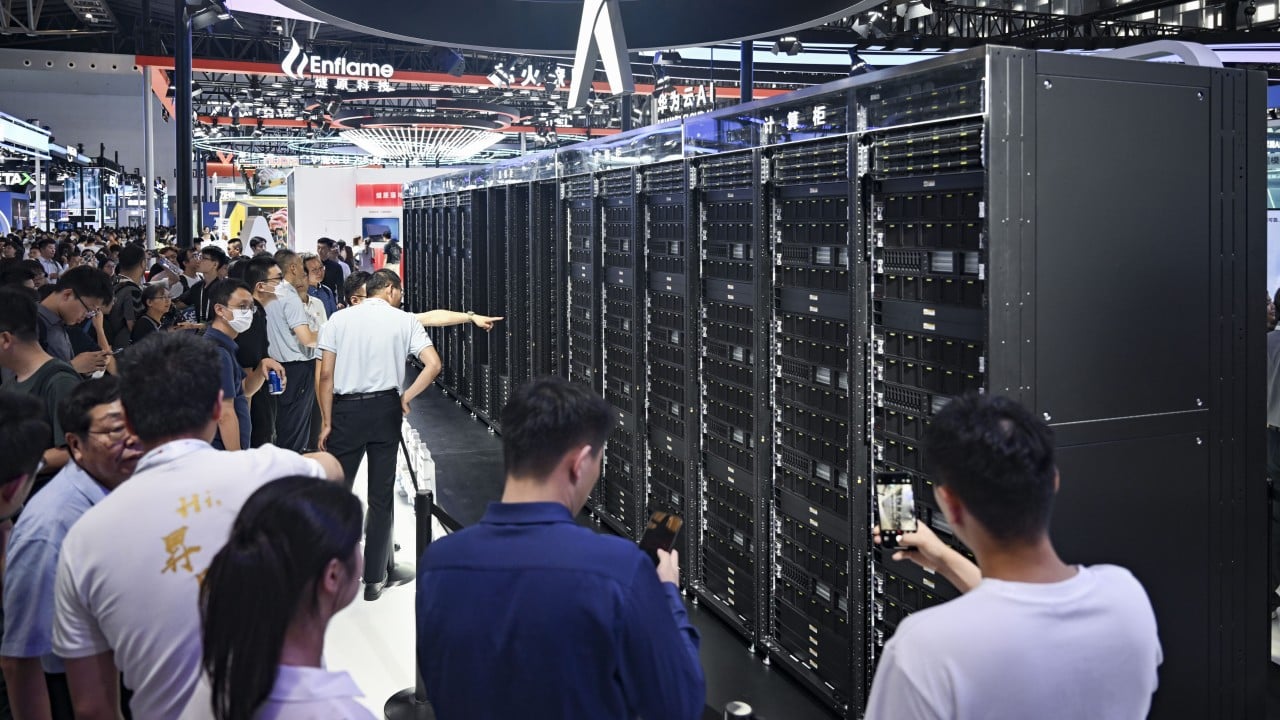
Every instantaneous chatbot response, every intricately detailed AI-generated image, every piece of synthesized content — all these perceived miracles of artificial intelligence — ultimately resolve into physical computation. This isn’t merely a philosophical distinction; it’s an operational reality. The digital marvels of generative AI are not spun from pure thought; they’re the output of vast, complex, and intensely power-hungry hardware. It’s this underlying physical infrastructure, the processors, servers, cooling systems, and the data centers housing them, that forms the silent backbone of the AI revolution. And it’s control over these assets that could dictate which nations and corporations emerge as true leaders in the years to come.
The spotlight on software development has, in many ways, overshadowed the extraordinary engineering and supply chain complexities inherent in producing the chips and systems required to run modern AI models. While companies vie for talent to build ever more intelligent software, an equally intense, if less publicly visible, contest unfolds for the resources capable of running that software. This includes the cutting-edge semiconductor fabrication facilities, the specialized graphics processing units (GPUs) that are indispensable for deep learning, and the extensive network infrastructure necessary to connect them.
Investing in AI start-ups or crafting national AI roadmaps makes little difference if the foundational hardware capacity isn’t secure. This suggests a strategic pivot for those genuinely committed to AI leadership: from solely fostering algorithm development to rigorously securing the physical means of production and operation. Such a shift in focus redefines the metrics of progress and the vulnerabilities that could stall, or even derail, ambitions in the AI sphere. The conversation, therefore, needs to expand beyond software iterations to encompass the raw, physical capability that powers them.
What This Means
The emphasis on the physical rather than purely virtual aspects of artificial intelligence underscores a significant strategic re-evaluation for policymakers, investors, and technology leaders. If the primary leverage point in the AI race transitions from algorithmic superiority to hardware control, it raises pertinent questions about global supply chains, manufacturing capacities, and geopolitical dependencies.
Nations that currently lack advanced semiconductor manufacturing capabilities or reliable access to critical AI hardware could find themselves at a distinct disadvantage, irrespective of their software innovation. This could lead to intensified competition for resources like rare earth minerals, specialized manufacturing talent, and the construction of state-of-the-art data centers. For businesses, it suggests that merely hiring top AI researchers might not be enough; securing guaranteed access to powerful computing resources could become an equally vital — if not more pressing — competitive differentiator. It forces a contemplation of whether the AI future will truly be shaped by an open ecosystem of competing algorithms, or by a more limited set of entities controlling the indispensable machines powering them.