

Berlin’s Cold Comfort: AfD Flirts with Kremlin Amidst European Freeze
POLICY WIRE — Berlin, Germany — While Europe shivers through a geopolitical winter, nervously eyeing Moscow’s every twitch, a significant chill isn’t just blowing in from the East....

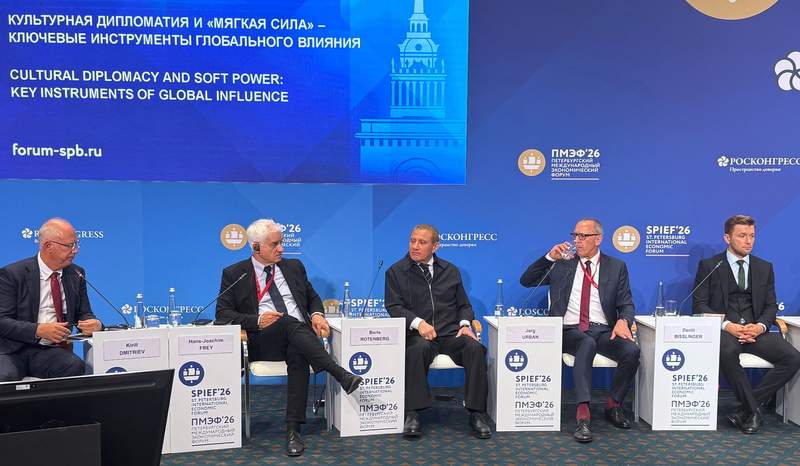
POLICY WIRE — Berlin, Germany — While Europe shivers through a geopolitical winter, nervously eyeing Moscow’s every twitch, a significant chill isn’t just blowing in from the East. It’s percolating right here, deep within Germany’s own political marrow. The Alternative for Germany (AfD), a party known for its strident nationalism and penchant for bucking the establishment, just doubled down on a deeply unsettling proposition: rekindle those old ties with the Kremlin. At a recent economic forum, its lawmakers didn’t merely suggest it; they practically begged for a détente, leaving plenty of European partners doing double-takes across their coffee cups. It’s less an economic debate, you see, and more a bare-knuckle brawl over Germany’s very soul—and its future alliances.
It wasn’t a whisper in a backroom. It was an outright pronouncement from AfD members attending what was, by all accounts, a rather thinly disguised Russian influence event. Their message? Sanctions against Moscow are shooting Germany—and by extension, Europe—in the foot. Forget the human tragedy unfolding in Ukraine; let’s talk about gas prices. “We simply can’t afford this self-imposed economic strangulation,” declared a senior AfD lawmaker, who preferred to remain unnamed on official record, but whose sentiments echoed the party’s public stance. “Europe’s industrial powerhouse is sputtering, while our government chases ideological phantoms. Re-engaging with Russia isn’t concession; it’s economic common sense. It’s a return to practical realities, before we completely decimate our own base.” And there it’s, the familiar siren song of perceived pragmatism draped in national self-interest.
But the pragmatic facade, well, it’s about as transparent as tissue paper to Berlin’s mainstream political circles. For most German lawmakers, especially those grappling with the fallout of Moscow’s aggression, any overture to Russia is nothing short of treasonous. “To even countenance such a betrayal now—as Ukrainian cities are shelled and innocent lives extinguished—is not just appalling, it’s a direct threat to the fragile unity we’ve built within the EU and NATO,” bristled Katja Müller-Hohenstein, a seasoned foreign policy spokesperson for the governing Social Democratic Party. “They aren’t just questioning energy policy; they’re undermining our entire collective security apparatus. Because when you do business with a clear aggressor, you legitimize them, plain — and simple.”
The AfD’s audacious move comes at a moment when the geopolitical sands are shifting at a breathtaking pace. Germany, once notoriously dependent, managed to slash its natural gas imports from Russia from over 55% in 2021 to a paltry 0% by late 2023, according to figures released by the German Federal Ministry for Economic Affairs and Climate Action (BMWi). That’s a dramatic pivot, executed under immense pressure — and significant economic cost. Yet, for the AfD, it’s a price too high, a virtue signal that’s broken the country’s economic backbone.
This isn’t just some quaint German internal squabble. The ripple effects extend far beyond European borders. When a major NATO and EU player starts broadcasting fissures of this magnitude, it sends signals to regions navigating their own complex geopolitical chessboard. Think South Asia. Nations like Pakistan, perpetually balancing relationships with competing global powers, watch such developments with keen interest. Perceived disunity in the Western bloc complicates their own foreign policy calculations, perhaps even tempting them to pivot further toward non-Western alignments, creating a more fragmented international order. The idea that Europe isn’t speaking with one voice on a threat this foundational makes allies elsewhere question the overall cohesion—and reliability—of what we loosely call ‘the West’.
But then, there’s the undeniable pull of a powerful nationalistic narrative that sells well with certain segments of the German populace—a narrative that paints the EU and NATO as burdensome, globalist overreaches that hobble Germany’s potential. The AfD taps directly into this vein, offering simple (if morally dubious) solutions to complex problems. They promise cheap energy and a return to German sovereignty, conveniently glossing over the wider implications of cozying up to a regime ostracized by most of the democratic world. They’re effectively telling Europe, “We warned you. This alliance, this global moral high ground, it’s just not worth it.” It’s a deeply uncomfortable message for Paris, Warsaw, and Washington, all struggling to maintain a united front as Moscow mocks invasion fears.
What This Means
This AfD maneuver, while perhaps not immediately altering German foreign policy, certainly injects a fresh dose of acid into European cohesion. Economically, it risks normalizing Russia’s war of aggression in the eyes of some, potentially chipping away at the existing sanctions regime over time—a dangerous precedent for any future state-sponsored violence. Politically, it empowers Russia’s narrative that the West is weak and divided, making future coordinated responses to Moscow’s provocations that much harder to forge. Internally, for Germany, it’s a symptom of deeper societal fractures; the party’s continued rise in polls (they’ve often polled as the second-most popular party) demonstrates a significant segment of the electorate feels unheard by traditional parties. This particular play also signals to partners in vital geopolitical arenas, including those in the Muslim world or South Asia, that European resolve is anything but monolithic. Don’t expect a German U-turn on Russia overnight. But do expect more discomfort for Chancellor Scholz, and more subtle recalibrations of trust among his European neighbors, as Germany’s domestic divisions spill into critical foreign policy debates.