


Beijing’s Taiwan Patrol: Escalation & Global Impact
China's 'routine' maritime patrol near Taiwan is a strategic escalation, threatening vital global trade routes and regional stability. Uncover its far-reaching consequences.

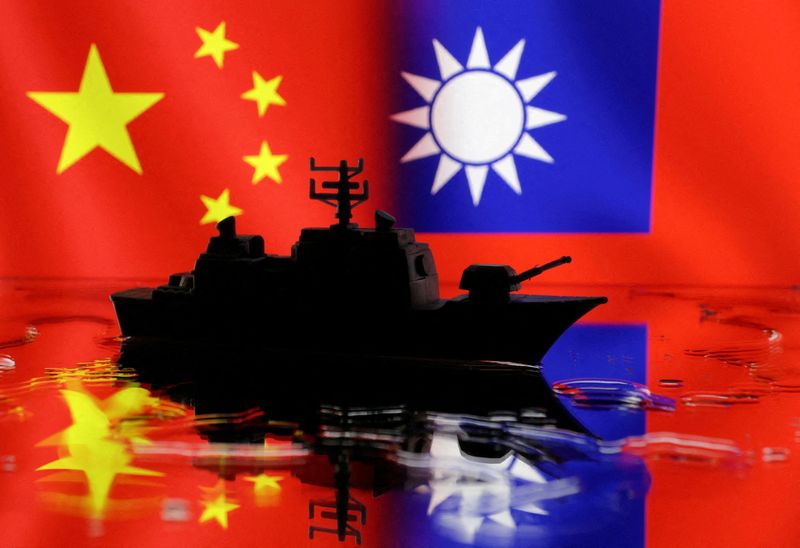
POLICY WIRE — Washington D.C., U.S. — The quiet thrum of Beijing’s maritime grey hulls, cruising uninvited through what many nations consider international waters off Taiwan’s eastern coast, isn’t just a naval exercise. It’s a blunt, unwritten communique—a deliberate broadening of China’s claims beyond its historical maritime lines, inch by careful inch. This latest maneuver, described by Beijing as a “routine patrol,” feels anything but routine; it’s a test, a flex, a stark assertion of dominion in one of the world’s most congested and sensitive shipping lanes. But it’s also a deeply concerning escalation.
It’s no accident these patrols are moving eastward. For years, Chinese forces primarily circled Taiwan to the west, closer to the mainland. Pushing east means encompassing Taiwan entirely, strategically — or so they think. This puts Japan’s southernmost islands, and vital shipping routes that weave through the Bashi Channel, firmly in Beijing’s sights. We’re not just talking about Taiwanese sovereignty here, are we? This is about the very architecture of regional security. And global trade, naturally.
Because let’s be real, Beijing’s intentions are crystal clear: to normalize its presence around Taiwan, slowly chipping away at the island’s de facto independence. Foreign diplomats have been quick to — how should I put it — express their *displeasure*. One high-ranking U.S. State Department official, speaking on background earlier this week, didn’t pull any punches. “These provocative actions undermine peace and stability across the Taiwan Strait and contradict established international norms,” the official told Policy Wire. “The United States continues to call for a peaceful resolution of cross-Strait differences, free from coercion.”
But the Taiwanese aren’t backing down, not by a long shot. “Our nation stands firm against any attempt to alter the status quo through intimidation,” said Taiwanese Foreign Minister Joseph Wu in a recent press briefing. He was unyielding. “We will continue to defend our democracy and freedom, and we urge the international community to recognize the dangers these actions pose to regional and global security.” Strong words. They’re not wrong, either.
It’s worth remembering that this isn’t an isolated incident. Chinese coast guard and naval vessels have been ramping up their presence in disputed territories throughout the South China Sea for quite some time now, pushing against nations like the Philippines, Vietnam, and even drawing Japan into increasingly tense standoffs. Each probe, each patrol, is a new brushstroke on a canvas Beijing hopes to paint entirely in its own colors. And this specific patrol — east of Taiwan — paints a far more encompassing picture of their aspirations.
📄 POLICY WIRE WHITEPAPER PUBLISHED: PAKISTAN'S NATIONAL SECURITY POLICY PRIORITIES
👉 READ BY CLICKING HEREFor nations in South Asia and the broader Muslim world, especially those reliant on intricate global supply chains, China’s increasingly assertive maritime behavior carries a unique set of anxieties. Roughly 50% of the world’s container traffic — carrying everything from energy resources to essential goods — transits through the Taiwan Strait, according to data from Taiwan’s Ministry of Foreign Affairs. Any serious disruption here, intentional or accidental, could send shockwaves. Imagine the supply chain chaos. Pakistan, for instance, heavily invested in the China-Pakistan Economic Corridor (CPEC) and already facing its own economic headaches, stands to feel the reverberations from any instability keenly. Interruptions to critical sea lanes could delay vital imports, spike freight costs, and hit nascent economic recoveries hard. It’s a very real concern for everyone, isn’t it?
What This Means
Beijing’s latest patrol is less about law enforcement and more about a calculated strategy of psychological warfare and strategic encirclement. It’s a high-stakes gamble aimed at incrementally asserting sovereignty without triggering a direct military conflict. But such probes increase the risk of miscalculation exponentially. An unexpected collision, a minor technical malfunction — one bad moment could easily ignite a broader confrontation that neither side explicitly wants, yet seems increasingly unable to avoid. The international community, led by the U.S. and its allies, is scrambling to deter this creeping expansionism, but without directly challenging Beijing’s muscle flexing, it’s a tough row to hoe. the implications for global trade — and investment can’t be overstated. International companies eyeing Asian markets — from Seoul to Mumbai — are forced to factor in a heightened risk premium for operations in what was once a relatively predictable maritime environment. The era of tranquil trade routes seems, for now, to be decidedly behind us. And that’s bad news for everyone’s bottom line.